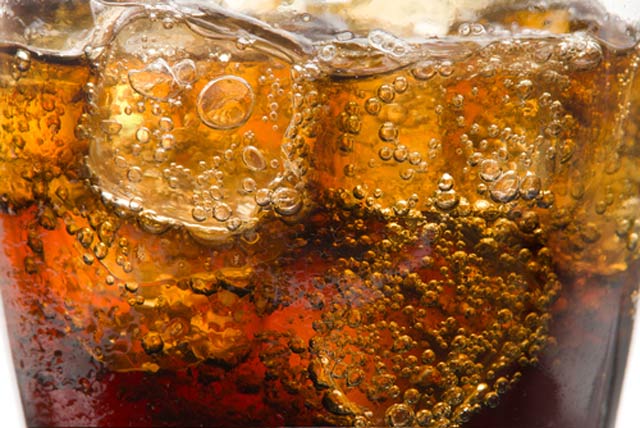
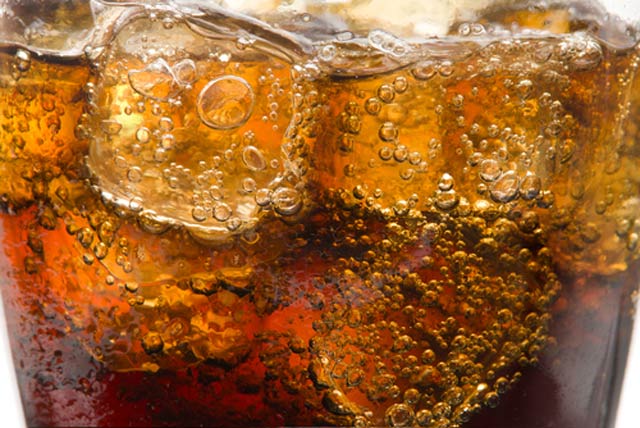
 Photograph by zhaoyan/Shutterstock
Even though that soda tax didn’t pass, soda is more expensive. But that’s because as demand for carbonated beverages has been edging down, Big Soda is charging more!
With local and national health initiatives educating the public about how soda adds empty calories and can add up—drinking one soda a day is the equivalent of an extra 10 pounds a year—consumers have been drinking less soda (even, gasp, turning to water). New statistics from Beverage Digest show that the average American “drank slightly under two sodas a day, a drop in per capita consumption of about 16 percent since the peak in 1998,” according to The New York Times. So “beverage companies have been making more money on carbonated soft drinks by raising prices. That allowed revenue from carbonated soft drinks to reach a record high last year of $75.2 billion in the United States.” What’s helping is that some companies are creating more sizes of sodas—apparently those mini 7.5-ounce cans of Coke are huge sellers.
Coca-Cola, Pepsi and other companies have made sure to diversify their beverage portfolios with non-carbonated drinks, to keep up with new demand with equally sugary energy drinks and sports drinks. Which also worries health advocates: The head of the California Center for Public Health Advocacy, Dr. Harold Golstein, says, “This is the next stage of where battle lines being drawn. Beverage companies are putting more and more emphasis on selling fortified beverages, as if fortified means healthier when in fact it often means more salt added to sugar.”