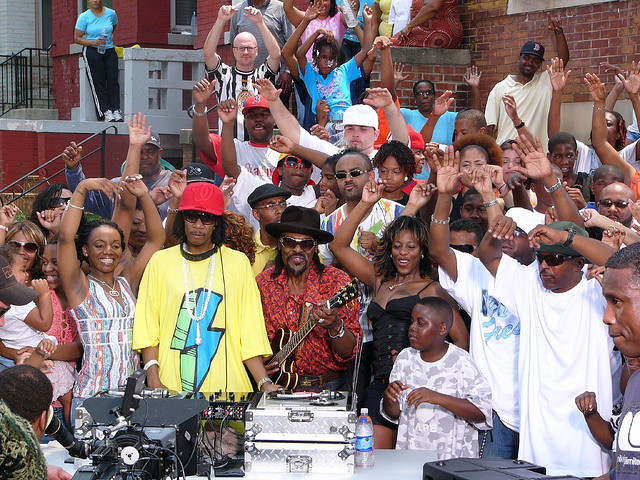
 Photo by Dale Sundstrom
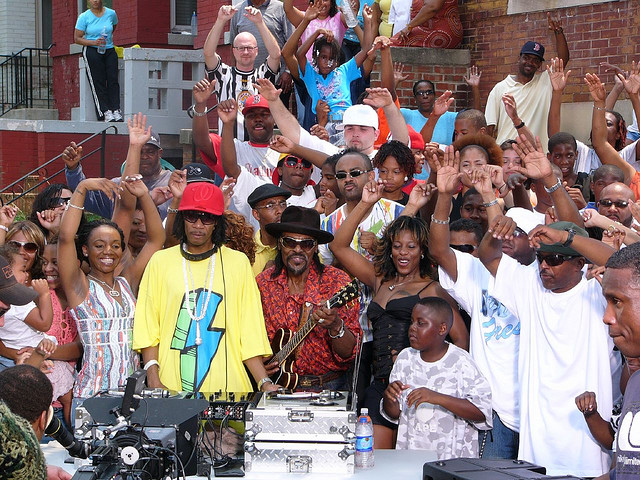
When he died earlier this month, Chuck Brown left behind a musical and cultural legacy that stretched across five decades and transformed the sonic landscape of Washington. Now, the D.C. Public Library is hoping to harness the Godfather of Go-Go’s significance on Washington’s history by adding a collection of artifacts from Brown’s career to its permanent archives.
An exhibit documenting Brown’s life and work will be the newest addition to the library’s Washingtoniana Division at its central Martin Luther King Jr. branch in downtown D.C. The library is looking for anything—concert fliers, posters, ticket stubs, photographs, even old newspaper reviews—that will create a documentary history Brown and the style of music he created.
Right now, the library’s go-go collection is rather thin. A catalog search for Brown turns up a handful of live albums, including a 2001 show at the 9:30 Club, but the library would like visitors and researchers to be able to be wound up more than that.
“We want an institution where his legacy and his music can be preserved and accessed by the public,” says Derek Gray, D.C. Public Library’s archivist. We don’t really have anything documenting the cultural legacy of go-go music in D.C. This is a major missing piece of our collection.”
The Washingtoniana Division features other musicians who have left indelible marks on the District, such as John Philip Sousa and Duke Ellington, but Gray said building a research-worthy collection of go-go relics will be a climb. He also said that the D.C. Public Library is the ideal research institution to house a Chuck Brown archive. Brown, in the past, was featured in the Library of Congress’ Folklife series. But if there are stacks of Brown memorabilia lying around somewhere, Gray is open to collaboration.
“I’d like to see what we get and see what kind of developmental partnership we could do with another institution in the city,” he says.
So far, Gray has received a small collection of audio tapes brought in by another library staffer. “I’m assuming we get a large amount of material,” he said. “Considering the music and the city its in.”
When the Brown collection is ready to go on display—as a permanent archive it will be a research facility from which materials can not be borrowed—Gray hopes it is on par with another recently opened archive devoted to a genre-building musician. He points to the Tupac Shakur Collection in Atlanta, which opened last year with dozens of boxes of manuscripts, musical notes, poems and correspondence between the rapper and his fans.