Martin Austermuhle
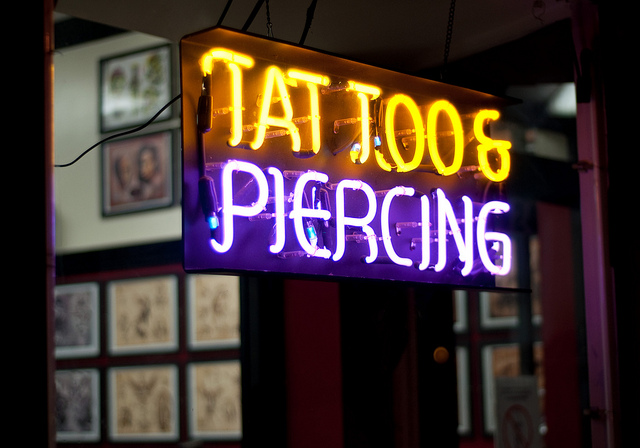 Photo by Kevin H.
Today the D.C. Council moved one step closer to joining the rest of the country in regulating tattoo artists and piercers with a first vote on legislation that would mandate basic health and safety standards for both.
At a legislative session this afternoon, the council unanimously gave initial approval on legislation introduced by Councilmember Yvette Alexander (D-Ward 7) in April 2011 that would put both tattoo artists and piercers—currently unregulated—under the watchful eye of the Department of Health, mandate that they be licensed and formally prohibit tattoos and body piercings for anyone under the age of 18.
According to a committee report on the bill—which was scheduled for a first reading today—the legislation would allow the Department of Health to establish health and safety guidelines for tattoo artists and piercers. Additionally, the Department of Consumer and Regulatory Affairs would be authorized to empower the Board of Barbery and Cosmetology to oversee tattooing and piercing and establish guidelines for the licensing of tattoo and piercing establishments. The board would be able to establish minimum standards for tattoo artists and piercers, including a certificate of completion in a blood borne pathogens, CPR, and First Aid Course; 500 hours of work as an apprentice; and an exam, should the board choose to impose one. (Existing tattoo artists with over 4,000 hours of work over two years would be exempted from apprenticeship requirements.)
If the legislation passes, D.C. would abandon its libertarian past insofar as it applies to tattooing and body piercing. Currently D.C. remains one of the last bastions of wholly unregulated tattooing and piercing in the country; while barbers have to be trained and licensed, for example, tattoo artists and piercers never have.
At a hearing last December, D.C.-based tattoo artists said they were split on being formally licensed and regulated. While some worried that they would be burdened with excessive fees and requirements, others argued that regulations wouldn’t affect legitimate tattoo artists and piercers. At a tattoo convention in Crystal City in January, tattoo artists from across the region said that most reputable tattoo artists follow industry standards when it comes to health and safety; the problem, they admitted, is underground and amateur tattoo artists and piercers, neither of which could easily be regulated.