 Via Wikipedia
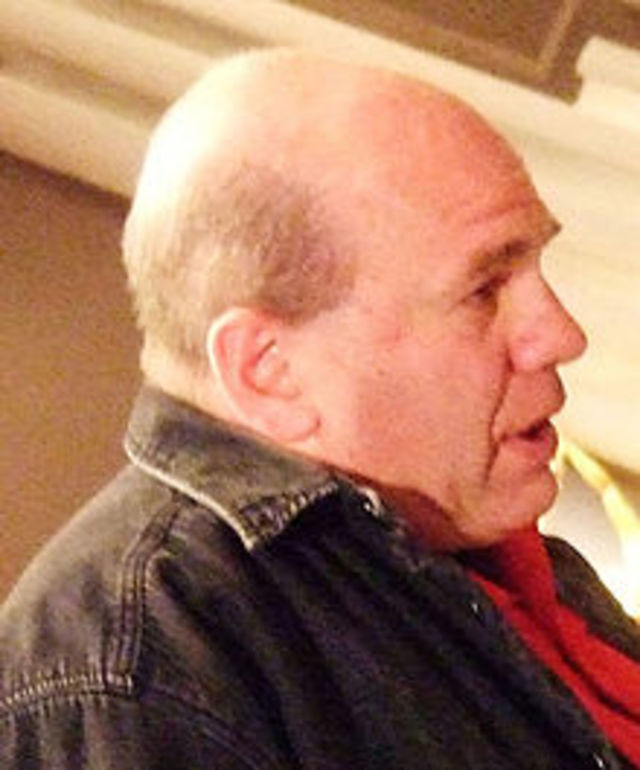
After calling into The Kojo Nnamdi Show yesterday to express his disappointment with the U.S. Attorney’s case against former D.C. Council Chairman Kwame Brown, The Wire creator David Simon expanded his argument on his personal website.
In a lengthy blog post, Simon called Brown’s resignation Wednesday night a “head shot,” borrowing a terminology he picked up from his years covering cops and courts for The Baltimore Sun. The phrase, Simon wrote, comes from federal prosecutors tasked investigating local officials but coming up with charges that don’t directly tie to those officials’ job performance—something he sees in the case against Brown. The former chairman was charged Wednesday with a felony count of bank fraud for exaggerating the value of his home by around $500,000 on a 2006 credit card application. A second charge, for a campaign finance misdemeanor tied to his 2008 campaign for an at-large Council seat, was filed Thursday.
And while lying on a financial document is bad news, Simon feels it is not an sufficient substitute charge for actual political corruption. Here’s how he described the “head shot” technique:
Federal prosecutors in Baltimore used to call this statute — and its overwhelming and intimidating penalty — the Head Shot. If the rest of your case was insubstantial, if you couldn’t make the case you wanted to make, but you were on the spot for investigating a high profile target, then check the loan documents on that sucker’s house first. See if he made a false claim. Even if he was paying off the loan, or had paid the loan, even if there was no actual monetary loss, check the loan documents. It’s amazing how many Americans put more than their best foot forward when they are trying to convince a bank to back their mortgage.
In Brown’s case, Simon wrote of parallels to a case he observed in Baltimore about a decade ago. When former Baltimore Police Commissioner Ed Norris was tapped to head up the Maryland State Police, an audit of the commissioner’s office’s discretionary fund revealed Norris had spent $2,000 on unofficial business. But Norris, while running the Baltimore Police Department, had made a political enemy in U.S. Attorney Thomas DiBiagio, who announced a federal investigation over the missing cash, even though Norris had offered to repay the sum. Simon continues:
Previous commissioners had used the account for myriad items. Defense attorneys were prepared to argue in court that Norris assumed the use of the fund was a perk of his post. They wanted a trial, and federal prosecutors did not want a trial; the case was a loser, an embarrassing, high-profile overreach into a very small matter and a very small amount of money.
What to do? Check the loan documents on Mr. Norris’ house! And lo and behold, he had borrowed money from his father and then claimed those assets as of his own origin in order to get his home loan. There had been no default on the loan. In terms of monetary loss, there was no victim. But Mr. Norris was exposed, for as much as 30 years: ”You go to trial,” a federal prosecutor told him, “you won’t see your kids grow up.”
So Norris took a plea deal that included six months in prison and effectively ended his law-enforcement career. (He since became a bit player on The Wire and is now a radio host in Baltimore.) Simon recreated Norris’ story on the fifth season of his great HBO series with a scene in which Det. Lester Freamon leverages an embarrassing loan taken out by State Sen. Clay Davis for more substantial information.
Whether Brown was effective as Council chairman is unimportant to Simon. Just as it’s always been in Simon’s work, it’s all about the game. “The point is not which politician we want to see get got,” he writes. “The point is process.”