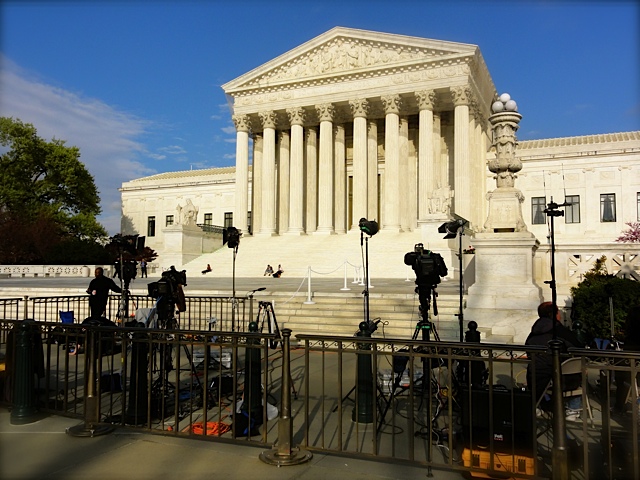
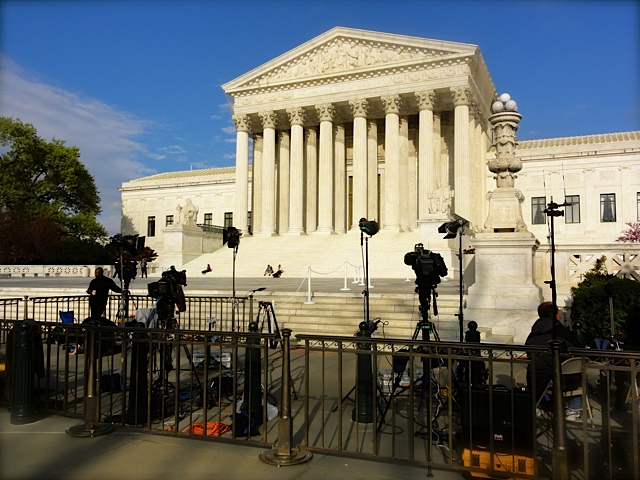
A religiously conservative legal group is cheesed off at the U.S. Supreme Court over the court’s decision not to take up a case stemming from a 2003 incident in which public schools in Plano, Texas allegedly prevented students from invoking Jesus Christ while giving each other Christmas gifts.
The so-called “Candy Cane case” is being pressed by the Liberty Institute, a Plano-based organization that claims the principals of the two schools trampled on the religious freedom of students who passed out pens and pencils engraved with Jesus’ name to their classmates.
After several rounds of litigation, Morgan v. Swanson—named for a student who gave his classmates candy cane-shaped pens embellished with the phrase “Jesus is the Reason for the Season” and the principal who reportedly did not allow them—reached the U.S. Court of Appeals for the Fifth Circuit last year. Judges there ruled that the principals—referred to in Liberty Institute’s press release as scary-sounding “government school officials”—did obstruct the students’ First Amendment rights, but also granted the principals immunity in the case.
That didn’t sit well with the Liberty Institute, which appealed to the Supreme Court, only to be turned away in what it considers its latest salvo against the alleged “war on Christmas.”
“We are disappointed,” the group’s director of litigation, Hiram Sasser, said in a press release. “No student should be subjected to religious discrimination by the government.”
On its website, the Liberty Institute describes itself as a defender of “religious liberty in accordance with the principles of our nation’s founders.”
Said founders, who were a bunch of deists who believed in reason and natural law irrespective of any organized religion, likely had no idea what a candy cane was. The first candy canes documented in U.S. history appeared in 1847 made by a German-Swedish immigrant living in Wooster, Ohio, long after all the framers of the Constitution died.