 Photo by Ryan Bloom
Uber, everyone’s favorite problem child of livery services, has a new trick planned for Friday, but this one seems wholly unobjectionable. At the very least, it’s out of reach of the D.C. Taxicab Commission. (Not that Uber has to worry about that agency for a while.)
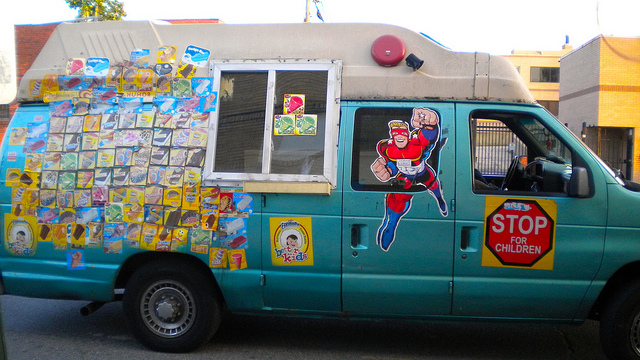
Customers who open up Uber’s smartphone app on Friday will discover a new product offering—ice cream deliveries. Instead of sending an upscale Lincoln Towncar, Uber will instead dispatch ice cream trucks to its fans. Not for rides, but for ice cream, and some merchandise.
As described on the company’s website, for $12, Uber customers can order up a bundle of ice cream products and a side of Uber-branded gear. The promotion is being offered in most of Uber’s cities, some of which are getting nice dairy treats than others. In New York, for instance, Uber is partnering with some high-end food trucks. In most other places, including D.C., it’ll be a more typical menu of Good Humor products and other classic ice-cream truck fare. But that’s fine. Klondike bars can be preferable to artisan gelato when the mood strikes.
Uber did not respond to our question if the company would be contracting with existing ice-cream trucks operating in D.C. or if it would be dispatching Uber-branded vehicles that just happen to be delivering summertime refreshment. Either way, the we wanted to make sure that the sometimes regulation-troubled company doesn’t cause itself any problems with this one-time special. After all, Uber gave enough of a headache to the D.C. Taxicab Commission; it’d be a shame if did the same with the agencies that oversee food trucks.
So, as a service to Uber, we looked up the requirements to run an ice cream truck. As it will be a more mobile operation than, say, a savory food truck that parks at a single location for a day, an Uber-affiliated food truck needs to worry less about parking regulations and more about the health code.
Per the Department of Regulatory and Consumer Affairs, mobile food vendors must have proper food protection certifications issued by the District Department of Health and make them visible at all times of operation. In order to obtain a certification, a vendor must pay a $35 fee—check or money order only—and complete a training class offered by one of three licensed providers. Next, the menu must be reviewed and approved by DOH.
From there, DOH also reviews a mobile food merchant’s vending application and depot location, which is required to be able to support a business’ electric, water, storage and sanitation needs. Then it’s time for the health inspection.
After that, it’s on to DCRA itself, which requires the completion and filing of a Basic Business License application form, a process which costs $200 for the general business license, $70 for the application fee, a $25 activity fee and a technology charge of 10 percent. All told, that adds up to $324.50.
Enjoy your ice cream.