Martin Austermuhle
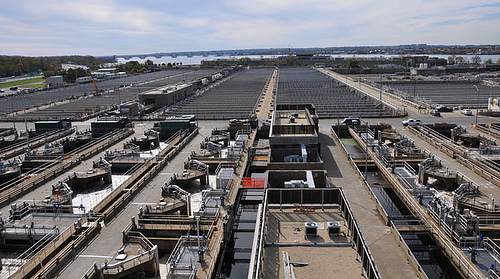 Photo by GlobalFloodSolutions
It isn’t often that city officials gather to mark the birthday of a piece of municipal infrastructure, but that’s exactly what D.C. Water is doing today to celebrate the 75 years that the Blue Plains Advanced Wastewater Treatment Plant in Southwest has been in operation.
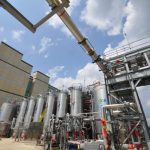
 So what’s the big deal about a water treatment plant? Well, it is the biggest of its kind in the world, processing over 300 million gallons of water a day that flow into the facility courtesy of some 1,800 miles worth of pipes, 24,000 catch basins, 22 flow metering stations, and 18 pumping stations. Everything from your household flushes to stormwater runoff flows into the 153-acre facility, where it is processed to avoid being dumped into the Potomac and Anacostia rivers as raw sewage. And it’s not just D.C. residents that are served by the plant—it processes wastewater from Virginia and Maryland, too.
Before the plant opened for limited operations in 1937 and full operations a year later, the city’s early sewage system, built in the 1880s, ran straight into the city’s two rivers, making them, well, really gross and polluted. And even after it started operating, Blue Plains only served as a primary treatment center—which meant that it mostly only filtered out physical objects in the water—and failed to keep pace with the region’s growing population.
In the intervening years, it has continued to face challenges. The three jurisdictions that are served by the plant have feuded over who should run it, and the Environmental Protection Agency has often intervened in the plant’s operations. It wasn’t until the mid-1990s that an independent board—now known as D.C. Water—was created to run the plant.
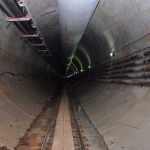
More recently, D.C. Water has kicked off a massive construction project that seeks to address one of the most pressing problems faced by Blue Plains—due to the city’s combined sewer system, heavy rains tend to overwhelm the system and flood the Potomac and Anacostia with raw sewage. Last year, D.C. Water started construction on a $2.6 billion tunnel under the Anacostia River that will serve to hold the sewage for treatment, sparing the rivers from having to deal with it. All told, D.C. Water is overseeing a 20-year capital improvement program worth $7.8 billion.
The region has pushed to clean up both the Potomac and Anacostia rivers over the years, and keeping raw sewage out of them is a significant part of that goal. In that, a well-functioning wastewater treatment plant is something to celebrate—so let’s raise our glasses and take a sip of water for Blue Plains.