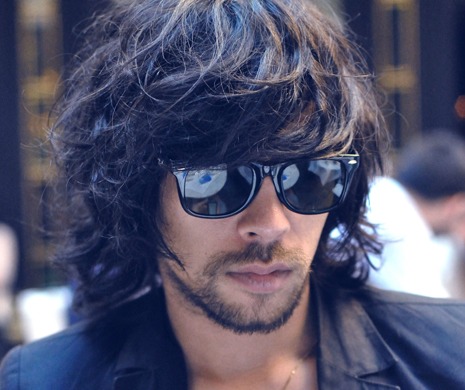
 Courtesy of Fool’s Gold Records
It’s not really a new phenomenon, but music producers have increasingly moved from studio obscurity to being stars in their own right without the assistance of a singer or rapper. Folks ranging from Dr. Dre to Calvin Harris have enough clout to make albums of their own tracks—and then have other artists clamor to get on the project.
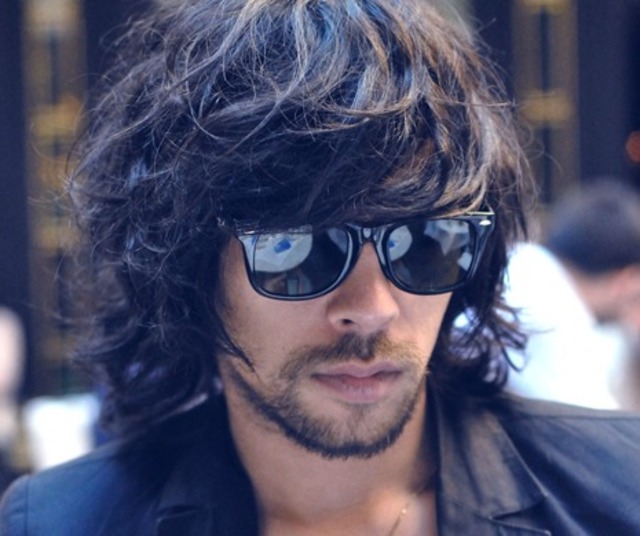
While not exactly a household name like the aforementioned beatmakers, Arnaud Bernard, better known by the pseudonym Onra, has definitely raised his production profile over the past few years on the electronic music scene. Based in Paris, Onra started releasing music in the mid-2000s. Around that same time, he visited his father’s ancestral home of Vietnam where he collected a number of Vietnamese and Chinese records from the 1960s and 1970s. The vinyl he brought back with him served as the basis for his Chinoiseries album, which garnered notoriety for its sampling from non-traditional musical sources (read: U.S. soul records from the latter 20th Century).
After attending the prestigious Red Bull Music Academy in 2008, Onra began expanding his sound beyond its hip-hop aesthetic by incorporating elements of 1980s synthesizer soul popularized by groups like Change and the B.B.& Q. Band. The result was the 2010 album Long Distance, which featured vocalists Olivier Daysoul and Reggie B, among others.
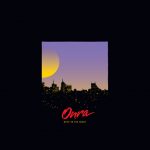
On his latest effort, the Deep in the Night EP, he’s teamed up with Fool’s Gold, a standout imprint on the indie electronic/dance scene operated, in part, by Duck Sauce’s DJ A-Trak. The result is a fun and accessible creation melding Onra’s hip-hop and R&B production sensibilities, as is apparent in yesterday’s DCist “Song of the Day.”
While on tour, Onra was good enough to answer some questions we posed to him in anticipation of his gig at the U Street Music Hall tonight. Here’s what he had to say:
In reading your Wikipedia page, it mentions you began playing music around the age of 10 and started making music at 19. What were you doing musically at the age of 10 and at what point did you decide that you wanted to make your living making music? What was it like working on that initial project?
I started listening to music at 10. From 10 to 19, I was just a music fan and that’s it. [I was] only listening to hip-hop and R&B from the ’90s. That’s my foundation. I never decided that I wanted to have a career in music; it just happened to be like that. I only started it for fun and passion.
How would you describe the music you create or what do you call it?
I’d still call it hip-hop even if it doesn’t sound like it, because it’s where I’m from. [Hip-hop is] what I’m trying to represent in a different way than all the clichés from the media or from the past.
As a producer, who are some of your influences and why?
My main influence is James Yancey, a.k.a. J Dilla. He is my favorite producer. He’s a real musical genius, there’s no words to describe how talented he was. He was just a real musical genius. Like Hendrix, Miles and all that team. He belongs with them.
Chinoiseries has one of the more unique stories I’ve heard about an album being created. Did you set out to collect records for a project while you were in Vietnam or was there some other way the idea for Chinoiseries came about?
I never had the idea before. I knew I was gonna look for records but I didn’t know if I was gonna be able to find some. It’s only when I came back to France, obviously still inspired from my trip, that I started making music with the material I found there. It all came very quick and naturally.
In some of the material you released early in your career, there was a definite hip-hop feel. Your more recent efforts harken back to 1980s’ R&B. What was the impetus for this shift?
I don’t know. I’m not trying to intellectualize my music too much; it’s the media’s job to do that. Me, I’m not asking myself that many questions about what I wanna do or how I wanna do it. I just do what I feel and do it as it comes, whatever the result. As I said, I grew up on ’90s’ hip-hop and R&B. So now, going back to all those genres that made that kind of music just makes sense. It’s all blues music in a different kind of way, anyway.
Based on the samples and sounds you used on the Long Distance album, it’s safe to assume you’re a fan of Jacques Fred Petrus and Mauro Malavasi, as well as Jimmy Jam and Terry Lewis. What is it about those producers’ sounds that you enjoy?
I like the sounds that they created and synthesizers they used. Their chords, harmonies and melodies just sound so good to me.
How did you approach working on your latest release, the Deep in the Night EP? Was there any goal or feeling you were trying to capture with it?
I was going to try to make a dance record, something you can play in clubs. But A-Trak asked me to do something more like my last album, Long Distance, which is more downtempo, funky hip-hop instrumental. So that’s what I delivered!
What led to you working with Fool’s Gold Records for Deep in the Night‘s release?
A-Trak approached me a couple years ago. He offered me an opportunity on Fool’s Gold and as soon as I had time, I started working on it.
If you encountered someone who was not familiar with your music and they asked you to recommend one or two of your own tracks as a way to familiarize themselves with your work, what would you recommend?
I would say the most popular ones, “The Anthem” and “High Hopes.” Both are very different.
What can the crowd expect from your show? Are you DJing or doing electronic improv?
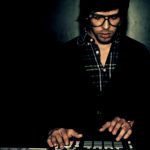
I’m expecting a very [diverse] crowd, both genders, all ages, all “colors.” I’m gonna play live with my equipment, not a DJ set.
Onra will be performing at U Street Music Hall tonight along with Party Supplies, Pursuit Grooves and Micah Vellian. $10. 9 p.m.