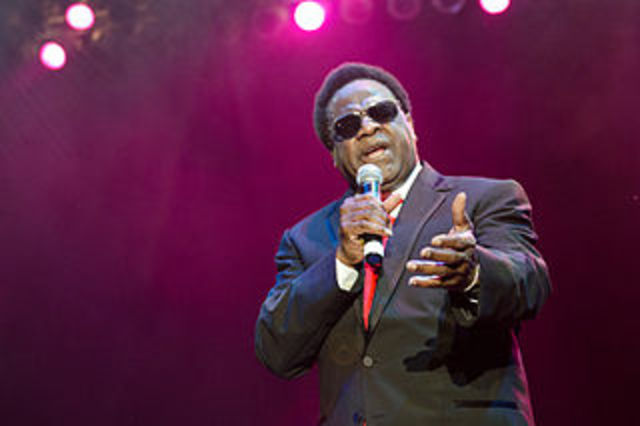
 Al Green (Mark Runyon/ConcertTour.org via Wikipedia)
At a Manhattan fundraiser in January, President Obama created a viral clip when he sang a few bars of Al Green’s R&B classic “Let’s Stay Together” to a theater full of rapturous donors. In the wake of the president’s brief musical performance, video of the moment was circulated rabidly and sales of Green’s song increased nearly fivefold.
On the flipside of that, though, Mitt Romney’s campaign sought to repurpose the moment as an act of presidential vanity in an ad that cast Obama’s rendition of the song as a love note to wealthy donors and powerful interest groups. It played in several battleground states all day Monday, but yesterday, it vanished. And so have most of the YouTube clips just depicting Obama’s singing.
The disappearance of the presidential crooning is the work of BMG, one of the three biggest record companies and the owner of Green’s discography. Over the past two days, Techdirt reports, BMG has gone on the warpath in scrubbing the Internet clean of videos of Obama covering Green. And it’s not just the repackaged clips posted by average YouTube users; the Associated Press’ raw video is gone, too.
It’s a dubious takedown, Techdirt argues, considering Obama only sang nine seconds of “Let’s Stay Together,” a span that writer Mike Masnick points out is well within the limits of fair use:
This confuses me. If you look at the original footage of Obama singing, it’s a grand total of 9 seconds long. If there ever were a clear-cut case of fair use—a very brief snippet, used in a political ad—this would be it.
But record companies are litigious creatures, and among the strongest backers of the currently shelved Stop Online Piracy Act, or SOPA, a piece of legislation that would have dramatically toughened enforcement against the unlicensed redistribution of intellectual property to the point that content providers such as YouTube were virulently opposed to it.
While SOPA has fallen to the wayside, it appears BMG is being no less prosecutorial about its copyrights, even if things fall within fair-use statues and have potentially far-reaching political impact.