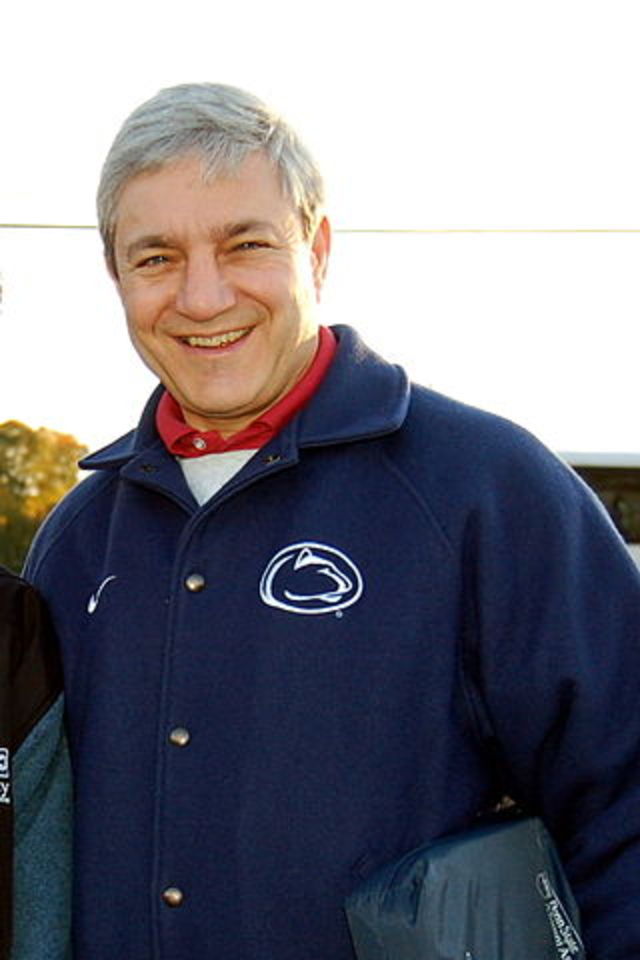
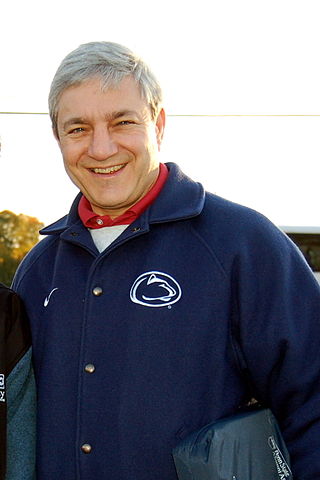
 Spanier (via Wikipedia)
Graham Spanier, who stepped down as president of the Pennsylvania State University last year after it was learned that former assistant football coach Jerry Sandusky had a history of sexually abusing young boys, may one day find himself the subject of prosecution for his role in covering up the scandal.
Until then, he’s got a new job. The details of his new profession are a total mystery, except for who’s paying his salary: We are.
Spanier, The Washington Post reports, is currently a part-time consultant on a government project related to national security that is so top-secret, not even his lawyers know the details, not even the name of the agency for which he is working:
“I have no idea,” said his attorney, Peter Vaira . “We know the work is in security and he’s prohibited from disclosing which agency or agencies he’s working for.”
In April, about six months after his ouster from Penn State, Spanier told The Patriot-News of Harrisburg, Pa., that he had found work on a “special project for the U.S. government relating [to] national security.”
The fallout over Sandusky was cause enough for a re-evaluation of Spanier’s top-secret clearance, the Post reports. That clearance is something of which Spanier is particularly proud. After former FBI Director Louis Freeh published his damning report on Penn State’s vast denial of Sandusky’s activities—findings that led to the NCAA handing down severe penalties against the football program—Spanier complained that his security clearance was not mentioned as a credit in his favor.
But Freeh’s report did contain lots of bad news about Spanier. Among other lapses in judgment, he denied to a 2001 grand jury investigating Sandusky his knowledge of a 1998 investigation, despite an email record to the contrary. Spanier also heavily backed granting Sandusky emeritus status along with the campus benefits that come with it, and approved a $168,000 lump-sum retirement package for the coach.
In the mean time, though, Spanier is up to some kind of government hijinks. He’s been peripherally involved in national security before. In 2005, he was appointed by FBI Director Robert S. Mueller to lead the National Security Higher Education Advisory Board. That panel, comprised of other university administrators, was assembled to coordinate between the United States’ top colleges and the intelligence community.