Martin Austermuhle
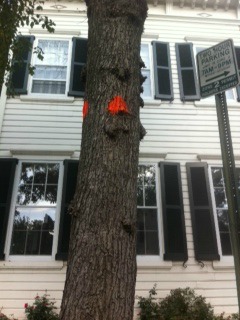 Marked for death.
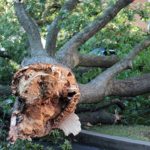
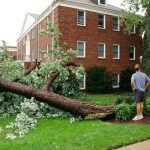
There’s little argument that D.C. has a wonderful tree canopy. But as the June 29 derecho storm proved, trees have downfalls—they fall down, taking power lines with them or landing on homes or cars.
After that storm, D.C. was left to clean up for 300 trees brought down by the winds, and Pepco reported that the overwhelming majority of power outages were caused by trees falling—60,305 of the over 70,000 D.C. customers that lost power could blame a tree or limb, in fact. And as the recent death of a man who was crushed by a 40-ton tree in Great Falls proves, this isn’t a concern to be brushed aside.
The D.C. Department of Transportation’s Urban Forestry Administration is responsible for trees on public land, and part of that responsibility extends to cutting them down. In recent weeks, orange dots have been spray-painted on trees that are slated for removal.
“Trees with an orange mark are slated for removal for a any variety of reasons such as advanced disease, hollowing out on the inside, canopy die-back, or creating a hazard. We try to find a balance for removal between maximizing the value of a street tree’s services and minimizing risk of damage to property or persons once the tree starts to decline,” said Monica Hernandez, a spokeswoman for DDOT.
While the number varies, Hernandez said that D.C. removes between 1,000 and 1,500 trees a year, but plants between 4,500 and 5,500. But as we’ve written before, trees on private property aren’t part of DDOT’s portfolio, and individual home owners have to decide when and how often to prune or cut down trees in their own backyards.