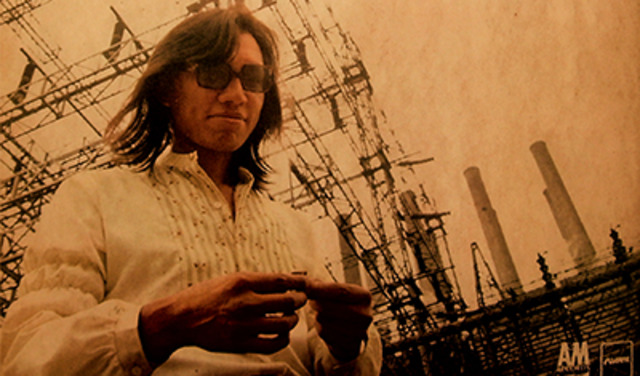
 (Hal Wilson/Sony Pictures Classics)
He poured lighter fluid on himself and burned to death on stage. He put a gun to his head in front of adoring fans. These are a couple of the myths surrounding the disappearance of the artist known as Rodriguez. A second-generation Mexican by way of Detroit, Sixto Rodriguez released a pair of folk-rock albums on Sussex, a subsidiary of A&M records, in the early 70s. Then he vanished. Or so the story goes. The music world is filled with mythological artists who rise and fall in epic tales—soul man Howard Tate made a classic album, fell out of sight for decades, then returned in the early aughts to a second career. But the story of Rodriguez is like no other. Director Malik Bendjelloul’s documentary Searching for Sugar Man sets up a fascinating mystery, and whether or not you know what finally happened to the film’s subject, the reality is as rewarding as the myth.
Bendjelloul tells the story of “Sugar Man” with evocative images, using not just his camera but pencil drawings and animated sequences. He gives us shots of Detroit decay, of an empty bar that recalls Edward Hopper’s Nighthawks, of steam rising up from mean streets a la Taxi Driver, with full moons and smoke-filled bars and a singer-songwriter who’s nothing more than a silhouette, playing with his back to the audience.
All this myth-making would be all smoke and mirrors if the music wasn’t any good. Studio guitarist Dennis Coffey, who had his own hit with the funky instrumental “Scorpio,“ called Rodriguez “the next Dylan,” a charge laid at dozens of singer-songwriters over the years. He isn’t exactly that. Rodriguez’ cadence recalls Dylan and Leonard Cohen, his gentle voice reminiscent of Nils Lofgren as well as Sussex labelmate Bill Withers (himself the subject of an excellent documentary, Still Bill), and his album’s production values—folk rock with strings—owes a debt to Love’s 1967 classic Forever Changes, which can be seen on the shelves in an interview with record store owner Stephen “Sugar Man” Segerman, one of Rodriguez’ champions in South Africa.
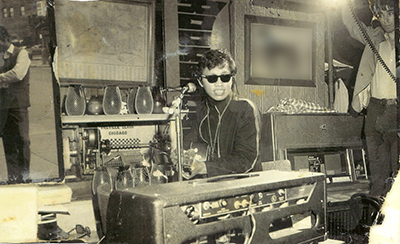 (Sony Pictures Classics)
Rodriguez’s music may not transcend its influences for everyone, but it ended up inspiring a nation — just not the United States. The unlikely story of Rodriguez’ success far from home drives the story. The movie’s first scenes shuttle between Cape Town and the Motor City, but the director builds the mystery by withholding key information. Rodriguez’s albums sank without a trace in the States, but he found a huge fanbase in South Africa, of all places. His signature track “Sugar man,” became an anthem among young Afrikaners during the emerging anti-Apartheid movement. The South African government of the time was so repressive that ambiguous drug references in the lyrics of “Sugar man” got it banned. Censors scratched deep gouges across that track on every copy of the album sent to South African DJ’s, insuring it would not be played on air. But as any marketer knows, banning something only makes it forbidden fruit — that much more desirable.
Rodriguez’ two albums ended up selling by the millions in South Africa, but where did the money go? The producer of a CD reissue of Coming from Reality wrote in his liner notes a call to any musicologists who might know how to find out what really happened to him. A website called The Great Rodriguez Hunt (don’t follow the link if you want to go into the movie cold) put the singer’s sunglassed visage on a milk carton, which makes this a story of how music connected in a far land before the internet, and how the internet solved the mystery.
‘Did it make any money?” a producer asks. The record was often bootlegged, but did the proceeds benefit Rodriguez or his kin? The movie mentions the four-letter word piracy in passing, a subject for further discussion, but the movie isn’t about the money. This is as much as I’m going to tell you about the movie, but if you don’t mind a spoiler, you might want to follow this link.
Searching for Sugar Man takes a fascinating story and tells it with great vigor and skill: in everyman interviews that sound like poetry, in simple sound effects, in a gentle crane shot timed just perfectly to descend on a Cape Town record shop. If Melody Records still existed I would have run from the screening to look for the albums, but it was not to be. Sugar Man opens a window on a musical past you never knew, and it’s sure to make you reflect on the musical past you know.
—
Searching for Sugar Man
Directed by Malik Bendjelloul.
Running time: 86 minutes
Rated PG-13 for brief strong language and some drug references
Opens today at Landmark E Street Cinema