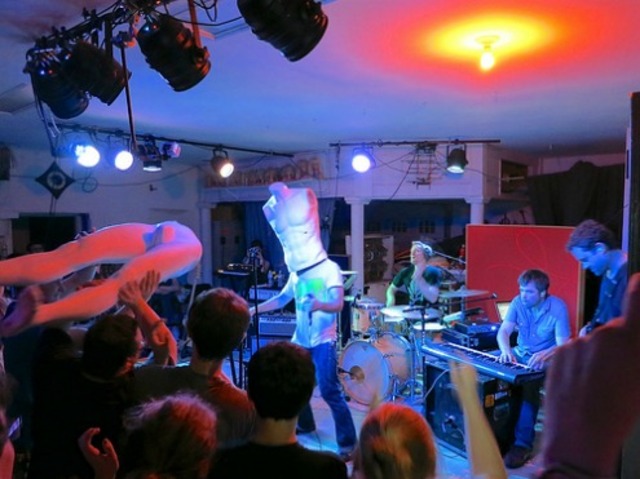
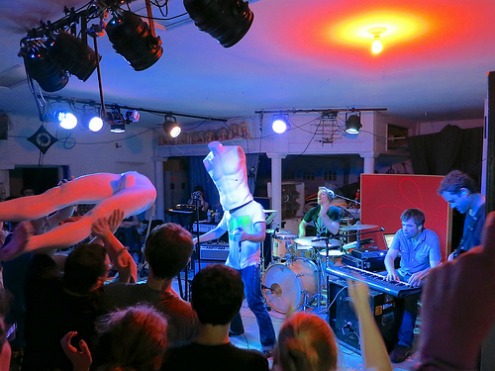
 Photo from the Fredericksburg show by flickr user babystew.
I mentioned earlier that The Dismemberment Plan debuted eight new songs last weekend—their first batch of new material since 2001’s Change. Unsurprisingly, as many audience members failed to recognize these new lyrics and chord progressions, they pulled out their smart phones en masse, grabbing low quality evidence of the Plan’s first new tracks in more than a decade. DCist photographer Nestor Diaz took some of the better videos via phone and I’ve got a few thoughts.
“White Collar, White Trash”
A noisy, dissonant poison pen letter that name checks almost every suburban Northern Virginia town south of the Beltway. Bassist Eric Axelson speak-sings the chorus “White Collar, White Trash” over jagged keyboard and guitar lines—which may be the only time that someone besides Travis Morrison has done the vocals. We don’t have a video for this one but bit made enough of an impression on us that we felt it worth mentioning.
“Daddy Was a Real Good Dancer”
Morrison referred to this one as his Ben Folds moment on Friday and as a Jukebox the Ghost tribute on Saturday. Which is to say, it’s a melodic piano song that’s poppier than we are used to from the Plan. However, the funky rhythm section continues to differentiate them from anyone else.
“Deadmau5” (It’s a working title)
My personal favorite of the new ones. It starts with clapping (always a plus) and moves into a frenetically paced synth-heavy stomper. Nobody was doing the standing still despite not knowing the words.
Untitled
With drum machine and jaunty keyboard riffs, this one was most reminiscent of how the Plan sounds when they cover pop songs. When Morrison joked about getting older, and therefore funkier, he was referring to this song. This is not a bad thing. It also sounds a little bit like a They MightnBe Giants song. Also not a bad thing.
Untitled
This is the love song and it’s sweet without being overly saccharine. To swirling cacophony created in part by Morrison’s twelve string guitar, he compares then love at the center of the song at one point to a painter and his muse saying, “Once he wanted to paint her naked/Now he just wants to paint her.”
These songs don’t spazz out with angsty urgency like Emergency & I tracks or despair like many of the standout songs on Change. That’s not where this band’s members are in their lives 11 years later. This snapshot shows them as more secure guys who still project a ton of energy and are even more willing to let their funk flag fly.