 Via Shutterstock
If you travel outside the District, you won’t get far before noticing something about our fellow Americans: On average, most of them are fatter than we are.
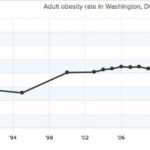
According to a new study by the Trust for America’s Health and the Robert Wood Johnson Foundation, D.C. ranks as the fourth skinniest among the 50 states plus the District of Columbia. The report found that 23.7 percent of District residents are obese; only Massachusetts, Hawaii and Colorado had lower rates of obesity, while New Jersey tied the D.C. rate.
But as a country, the United States remains as fat as ever, especially in the Midwest and South. Mississippi tipped the scales the most, leading all states with 34.9 percent obesity, followed closely by Louisiana, West Virginia, Alabama and Michigan.
The 12 states with the highest rates of obesity showed more than 30 percent of residents fitting the profile. The study was based on data released by the Centers for Disease Control, which defines obesity as having a body mass index of greater than 30 or higher.
The CDC says that its most recent data set differs in methodology so much from previous editions, that the current report isn’t comparative to previous analyses of the nation’s obesity problem. But the relatively good report card for D.C. is pleasing District health officials, The Washington Times reports:
The D.C. Department of Health said it continues to study social factors that cause obesity rates to rise while and promoting healthy eating and physical activity. Partnerships with initiatives like Capital Bikeshare and the D.C. Healthy Corner Store Program, which promotes access to fresh produce and low-fat foods in needy neighborhoods, also play a role in the city’s efforts, according to the agency.
“Obesity, the elimination of food desserts and collaborating with the Department of Parks and Recreation to give residents access to safe places to exercise remain a top priority for the Department of Health,” DOH spokeswoman Najma Roberts said.
But despite the good news locally, obesity still remains a health problem for which the costs of treatment only continue to balloon. The report by the Trust for America’s Health and the Robert Wood Johnson Foundation also includes projected obesity rates in 2030 and the expected cost of treatment.
“Obesity has contributed to a stunning rise in chronic disease rates and health care costs,” Jeffrey Levi, the trusts executive director, said in a news release accompanying the study. “The good news is that we have a growing body of evidence and approaches that we know can help reduce obesity, improve nutrition and increase physical activity based on making healthier choices easier for Americans. The bad news is we’re not investing anywhere near what we need to in order to bend the obesity curve and see the returns in terms of health and savings.”