 Photo by Paul Lowry
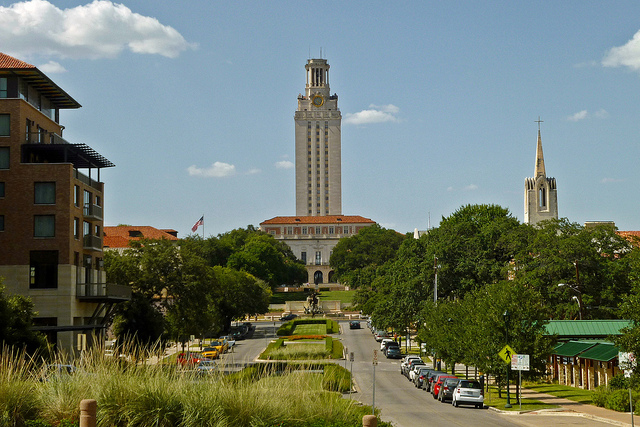
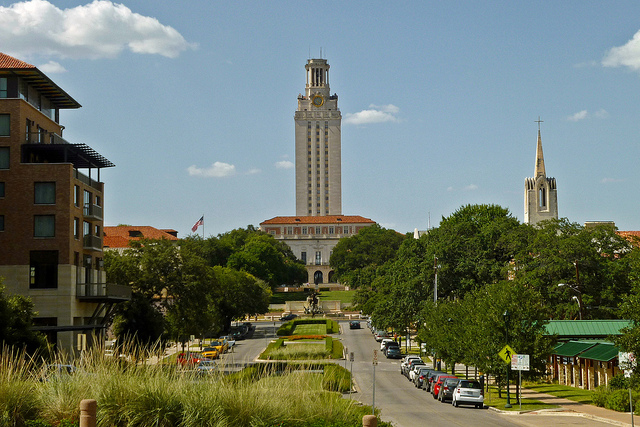
The District joined New York and 13 other states in filing a brief in support of the University of Texas at Austin in a U.S. Supreme Court case that is testing the constitutionality of the school’s admissions policy, D.C. Attorney General Irv Nathan’s office announced today in a news release.
The brief places D.C. and the states on the side of a University of Texas policy that considers some prospective students’ race during the application process. The school automatically accepts the top 10 percent of each graduating high-school class across the entirety of Texas; after that, it considers a wide range of applicants’ characteristics—academic rigor, extracurricular activities and race.
The case, Fisher v. University of Texas, was first filed in U.S. District Court in 2008 by Abigail Fisher, who was rejected by the Texas admissions office after failing to meet the 10 percent threshold. A judge ruled against Fisher, who appealed to the Fifth Circuit Court of Appeals, which upheld the first verdict. Last September, Fisher’s lawyers brought the case to the Supreme Court, arguing that Texas’ affirmative-action approach toward some of its applicants is unconstitutional.
A vast majority of Texas undergraduates are enrolled under the policy that admits the top 10 percent of high school clases—81 percent of freshmen in the year that Fisher applied. (She wound up attending Louisiana State University.) But her attorneys argue that Texas’ policy, which was signed into law in 1997 by then-Gov. George W. Bush, is inconsistent with the Supreme Court’s ruling in a 2003 case that upheld the affirmative-action policies at the University of Michigan.
Texas and the governments backing the admissions polices argue that while the Top 10 Percent Rule was issued with diversity in mind, it does not achieve an ethnically diverse student body on its own, New York Attorney General Eric Schneiderman’s office said in a press release accompanying the brief:
The coalition also urges the Supreme Court to reject the petitioner’s argument that UT’s compelling interest in promoting the educational benefits of diversity is fully exhausted by the Top Ten Percent Law, which, while race-neutral on its face, is motivated by the aim to increase diversity. Although automatic admission of applicants with high class rank may sometimes help to achieve the educational benefits of diversity, it may not always be effective, and it may have significant other drawbacks and limitations, depending on a public university’s size, applicant pool, and other factors. Consequently, public institutions should not be forced to use a mechanical admissions policy based on high school class rank alone, and, if they do decide to employ such a policy, institutions should not be precluded from complementing the policy with a holistic, individualized approach that takes race and ethnicity into consideration, along with numerous other factors.
As Texas’ automatic-entry system is far from perfect, the brief argues, it is still valid for the school to consider race as an admissions factor.
“We have urged the Supreme Court to uphold efforts by the University of Texas to diversify its student body,” Nathan said in the release announcing the District’s participation in the brief. Such a decision would encourage states to continue experimenting with constitutional practices that maximize educational opportunities for all.”
The amicus brief was due yesterday, and the Supreme Court will hear arguments in Fisher v. University of Texas in October.