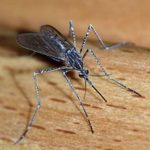
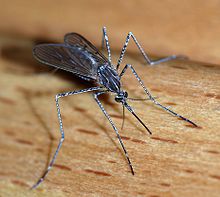
 Photo: Alvesgaspar (CC 3.0)
A Northeast D.C. resident became the city’s first fatality from West Nile virus, the District announced yesterday. The disease, which is carried by certain types of mosquitoes, has been more widespread this summer than in recent years.
The Post reports that through Tuesday, the U.S. Centers for Disease Control recorded 1,993 cases of West Nile virus this year, 87 of which resulted in the victim’s death. That’s a 25 percent increase in the number of reported illnesses over last week’s figures, and a 32 percent spike in the number of fatalities.
One of the main reasons the United States is seeing hotter outbreaks of West Nile and other viruses is because the world is as fluid as ever, the Post reports:
Asked about recent disease outbreaks, including the hantavirus outbreak traced to Yosemite National Park, Lyle Petersen, director of the CDC division of vector-borne infectious diseases, said pathogens are spreading faster because people and goods are moving around the planet at record rates. “The world is a smaller place right now,” he said.
U.S. health officials have notified 39 countries that their citizens might be at risk from the rodent-borne hantavirus after traveling recently to Yosemite. Six hantavirus cases, two of which were fatal, have been linked to the park. The CDC said that as many as 10,000 people were at risk after staying in Yosemite’s “signature tent cabins” between June 10 and Aug. 24.
Maryland experienced its first West Nile-related death last week. The highest concentration of the disease, though, has been in Texas, Oklahoma, South Dakota, Mississippi, Louisiana and Michigan.
But even though West Nile is on the uptick this year—possibly aided by a summer of oppressive heat waves—2012’s records are far lower than when West Nile virus peaked in the U.S. in 2002. That year, there were 9,862 recorded cases and 264 deaths.
More than 30,000 people have been infected since West Nile was first reported in the United States in 1999, according to the CDC. Milder symptoms—which affect 20 percent of people infected with the virus—include fever, headache, and body aches, nausea, vomiting.
About one in every 150 infected people, however, display more severe effect, including high fever, headaches, stiffness, stupor, disorientation, convulsions, muscle weakness, vision loss, numbness and even paralysis.
But prevention is fairly routine. A strong insect repellant should do the trick. Wearing long sleeves or pants is also useful, especially during dawn and dusk when mosquitoes are most active. DCist contributing editor Heather Goss is planning as much:
D.C. has its first West Nile virus death. :((((Group pants-buying trip meet outside the Gap after work tonight.
— Heather Goss (@heathermg) September 6, 2012