Martin Austermuhle
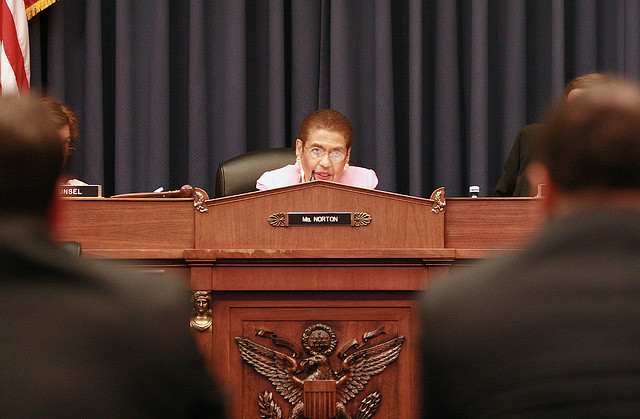 Photo by lightboxdc
D.C. Council Chair Phil Mendelson today introduced legislation that would authorize a referendum on budget autonomy, effectively giving residents the chance to vote on allowing officials to more freely spend the city’s money without the usual congressional strings attached.
The approach is certainly new—and it is controversial. As the Post reported yesterday, a legal memorandum produced for D.C. Attorney General Irv Nathan says that the referendum is of questionable legality. (Nathan’s office said it would not be making the opinion public for now.) Additionally, some D.C. voting rights advocates worry that it might interfere with delicate negotiations taking place on Capitol Hill on a bill that would grant the city that same budget autonomy.
Today D.C. Del. Eleanor Holmes Norton offered her take on the proposal, and while she didn’t say she was against it, she certainly didn’t seem enthused with the idea:
“Along with D.C. residents, I share the D.C. Council’s frustration at sending the city’s local budget to a Congress that has no part in raising the city’s local revenue. The denial of budget autonomy not only violates a basic tenant of self-government, it also imposes substantial operational and financial costs on the city. After being informed of the proposed Charter amendment and investigating it, we briefed the Mayor and Council Chairman on the legal and institutional issues and risks of a referendum that would allow the city to give itself budget autonomy. In light of these issues and increasing Republican and Democratic support for budget autonomy, we will continue to work with our allies in the House and Senate to pass a budget autonomy bill.”
Norton’s statement comes the same day the entire D.C. Council jumped to Mendelson’s side as he introduced the bill. According to Mendelson and advocates for the plan, the referendum would be legal—it was only two years ago that the council authorized a vote on amending the charter to allow D.C. residents to elect their attorney general, after all. Additionally, they say, it would give the proposal significantly more political weight and allow D.C. to gain budget autonomy without the usual social riders attached.
Depending on when the council passes the legislation and what lawyers eventually decide, a referendum could happen as early as the first few months of 2013, when a special election is expected to fill the At-Large seat that Mendelson will likely vacate this November.