Martin Austermuhle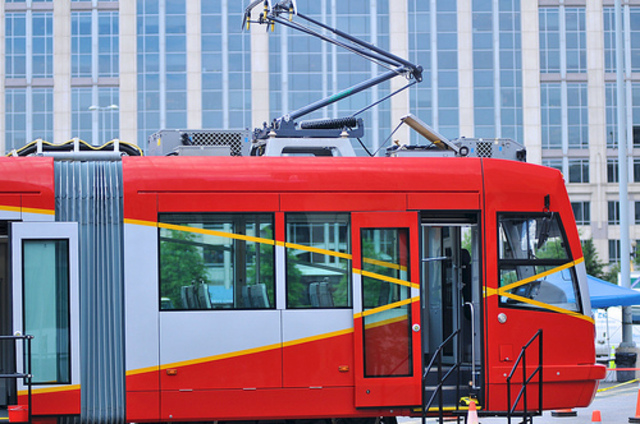
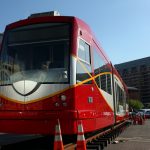
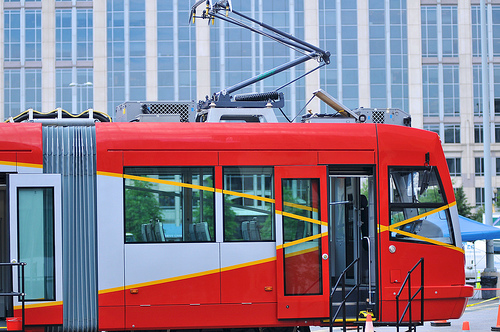 D.C. leaders have long promised that the city’s first streetcar line in over 50 years would be rolling by late 2013, but a senior city official admitted today that it could be delayed into 2014.
Speaking at a hearing before the D.C. Council’s Committee on Environment, Public Works and Transportation this afternoon, D.C. Department of Transportation Director Terry Bellamy said that the possible historic designation of a site that the city wants to use for a maintenance and training facility could add up to 90 days to the design and construction of the facility, potentially pushing the entire 2.5.-mile H Street line’s rollout into 2014.
“That process could add up to 90 days, even more,” Bellamy told Councilmember Mary Cheh (D-Ward 3). “That is a key hurdle that we have to get across.”
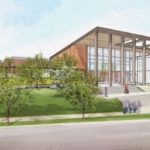
Despite community opposition, D.C. officials have pressed ahead with using part of the Spingarn Senior High School campus on Benning Road NE as the site for the 15,000-square-foot car barn, where streetcars would be maintained and operators trained. (There could be up to eight car barns for the entire 37-mile system.)
But a late-September application to the Historic Preservation Office by the Kingman Park Civic Association requesting that the school and campus be designated “historic” would add procedural delays to the car barn’s construction. Frazer Walton, the association’s president, said that while he and his neighbors oppose putting a car barn on the school’s campus, the timing of the application was merely coincidental and that the association’s members had discussed it for three years.
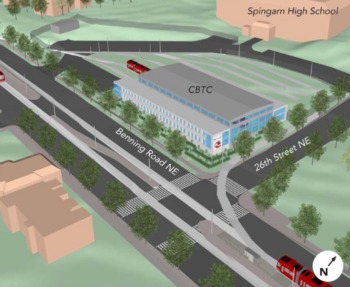 A rendering of the proposed car barn at Spingarn High School.
Walton said that he hoped to create an entire historic district encompassing the school and nearby Langston Terrace Dwellings and the Langston Golf Course, both of which are currently on the National Register of Historic Places.
“We have some of the greatest African Americans of this country that attended Spingarn. We want this history known,” he said. Walton added that the school was named after a Jewish educator and literary critic, and that it represented the best of what a diverse D.C. could be. “It shows a long legacy of people working together for the betterment of D.C.”
A number of community groups and Councilmember Kenyan McDuffie (D-Ward 5) have said they oppose using Spingarn for the car barn, and would rather that the city use one of nine possible alternative sites. (Walton says he’d prefer a site behind the old Pepco power plant.) Mayor Vince Gray said in August that the alternative sites are either to expensive, would delay the streetcar even further or are not properly zoned for a car barn. (Greater Greater Washington says that D.C. pushed planning on the car barn off, much to the detriment of planning and community input.) As a means to mitigate concerns over the impact the streetcar could have on historic areas, DDOT has proposed using historic streetcars and building a historic-looking car barn.
The Historic Preservation Review Board will hear the case for whether or not to designate Spingarn historic on November 29, and could decide the matter on that day. Should the designation be granted, city officials would have to provide the review board with plans for any changes to the site, which could be rejected. The board will also do a preliminary review of the car barn plans on November 1, said Tanya Washington-Stern, the D.C. Office of Planning’s chief of staff.
In the grand scheme of how long we’ve been waiting for the streetcar, another three months really isn’t much, of course. And considering that anything beyond the H Street line will be another few years off, waiting is something that streetcar lovers better get used to.