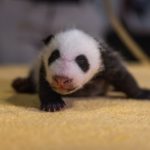
The National Zoo’s giant panda cub that died September 22, just six days after it was born, suffered from damage to its lungs and liver, a team of veterinary pathologists found. The cub, which was born September 16 to great surprise, was female, and weighed about four ounces when she died.
Zoo officials said at a press conference today that the cub’s poorly developed lungs did not permit it to have a normal flow of oxygen, a symptom consistent with the liver failure. Female pandas born in captivity have a mortality rate of 20 percent in their first year.
The cub’s mother, Mei Xiang, has nearly returned to normal activity, said Dr. Suzan Murray, the zoo’s chief veterinarian. Mei Xiang’s appetite is about 80 to 85 percent of normal. Dr. Donald Moore, the zoo’s associate director of animal care sciences, said that while Mei Xiang exhibited mothering behavior for several days after the cub’s death, that activity has receded, too.
But the cub’s death could upend the future of the zoo’s panda program. Under an agreement signed last year with the Chinese government, Mei Xiang and the male giant panda, Tian Tian, are at the National Zoo through December 2015.
However, one stipulation of that deal is that if either panda is found to be unsuitable for breeding, the National Zoo and its counterpart in China could begin discussing the possibility of exchanging one or both of the pandas for different specimens. That conversation has not started, though, said zoo spokeswoman Pamela Baker-Masson.
“The discussions have to take into account the welfare of the bears,” she said. “You don’t want to ship [animals] in the middle of breeding season.” Giant pandas are fertile once a year; for Mei Xiang, that tends to be in the early springtime.
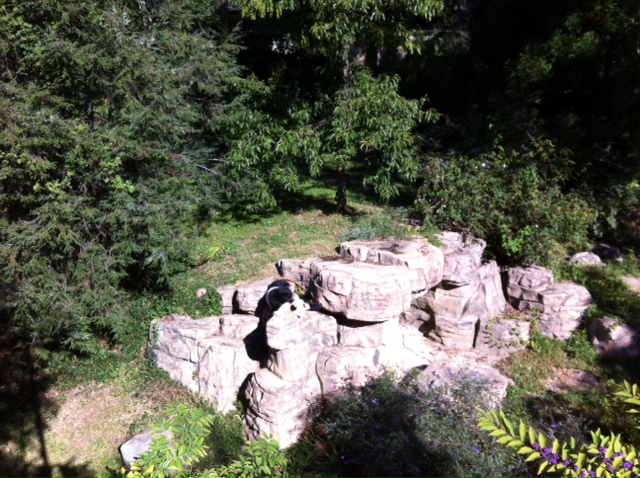
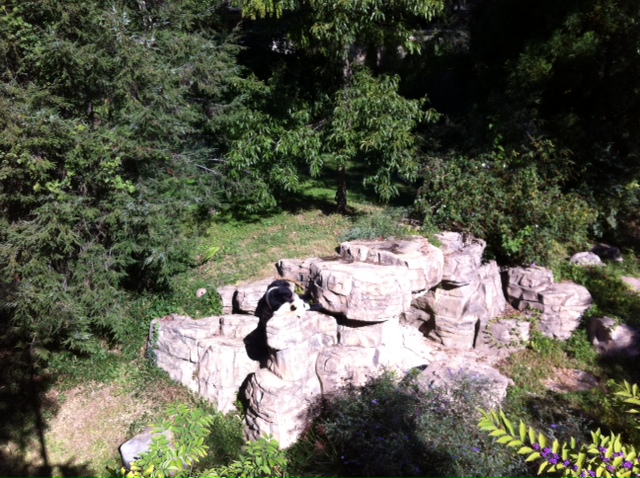
Mei Xiang and Tian Tian were on display in the panda den behind the zoo officials’ press conference, with the female laying on a rock formation and looking a bit skinnier than usual. Because pandas tend not to eat in the first few days after giving birth, Mei Xiang lost a considerable amount of weight, down to about 220 pounds from her usual size of 240 pounds, Moore said.
Whether or not a panda swap occurs, Moore said the zoo intends to keep at its efforts to breed the species. If Tian Tian remains in the United States, though, the zoo will absolutely use artificial insemination as it did earlier this year.
“He’s not real competent,” Moore said. “He’s had his chance.”
But one catch is that after using a sperm sample collected from Tian Tian in 2005 to breed both the cub known as Tai Shan as well as the one that just died, the zoo’s supply of potentially viable sperm is somewhat depleted.
“We’ll be looking for semen in future years,” Moore said.
As for the female cub that died, very little of the carcass remains after the necropsy, Baker-Masson said. The zoo will consult with Chinese panda researchers about whether the remains will be returned to China or kept at the zoo for research purposes.