Martin Austermuhle
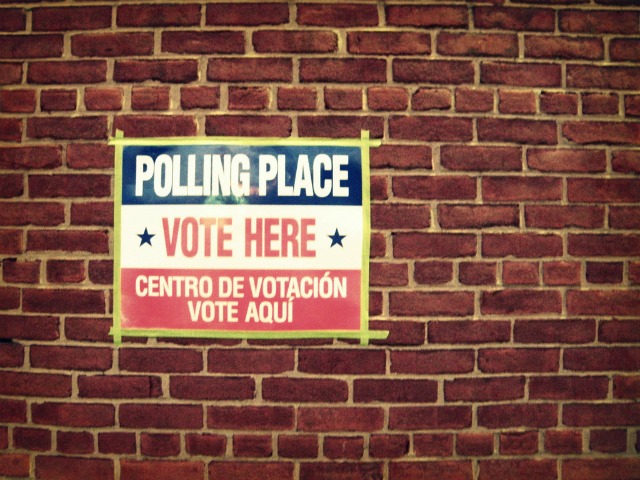 Photo by jagosaurus
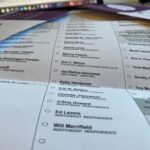
A local Republican has filed suit against the D.C. Board of Elections, claiming that the board’s practice of allowing non-partisan candidates to run for the D.C. Council violates the provision of the Home Rule Charter that requires councilmembers to be elected on a partisan basis. The suit, filed by one-time Ward 3 candidate Eric Rojo, asks that the board remove four At-Large independents from the ballot: incumbent Councilmember Michael A. Brown and challengers David Grosso, A.J. Cooper and Leon Swain.
Under the Home Rule Charter, two At-Large seats on the D.C. Council are reserved for candidates from the non-majority party; in D.C., the Democratic Party is the majority. The suit claims that a D.C. law allowing non-partisan candidates—independents, in this case—to run, though, violates the provision of the charter requiring that they be elected on a partisan basis.
In D.C., there are three “major” political parties—Democrats, Republicans and Statehood Greens—and a number of “minor” parties. (The legal definition of each hinges on how many votes they receive during an election cycle.) In essence, the suit asks that the Board of Elections disqualify all but two candidates running for Brown’s seat: Republican Mary Brooks Beatty and Statehood Green Ann Wilcox.
“There is current evidence of this end run around the provision for minority party representation,” claims the suit. “Current at-large council member and candidate, Michael A. Brown, was a prominent Democrat. In order to gain a seat on the council, he renounced party affiliation and self-nominated under § 1-1001.08(j)(1). This process effectively allows another Democrat – the clear majority party – on the council which directly contravenes the letter of the Home Rule law, D.C. Code provisions, and congressional intent to set aside two minority party seats to maintain a two-party system in District elections.”
The suit also mentions that Grosso changed party affiliation from Democrat to independent in July 2011. In an August interview with the City Paper, Grosso admitted that he changed parties to be more competitive: “It’s D.C. This is our process,” he said. (At a recent debate, Grosso said he was a Statehood Green when he first got to D.C.)
Late last month, Beatty criticized Grosso for switching parties for the race. “What I believe is wrong is when candidates—like Councilmember Michael Brown and David Grosso—change their voter registration simply to game the system. Using the non-majority seat as an election ‘loophole’ perpetuates one-party rule, which throughout history has led to corruption no matter which party is in power,” she said in a statement. (At-Large Councilmember David Catania is also an independent, having renounced the Republican label in the mid-2000s over its stance on same-sex marriage.)
In an interview this morning, Rojo said that he had been considering such a suit since Brown became an independent four years ago, and that despite its goal, the suit isn’t a partisan undertaking. “In my view, whether it’s 100 percent Democratic or 100 percent Republican, it always spells corruption and complacency when there is no loyal opposition,” he said.
“This is not a Republican issue. It’s a citizen’s issue where if you decide to organize a party and you call it the Block Party and you register and you have followers, then that entitles you under the law to run in the primaries and then be placed on the ballot. Rather than say, ‘Oh well, I can’t run here or there but I’ll call myself an independent and get myself on the ballot,'” he added.
Rojo’s lawsuit somewhat parallels a discussion that many have been having in D.C.: do partisan elections in D.C. even make sense? As of the end of July, there were 81,000 D.C. voters that had not selected a political party, making these erstwhile independent voters the second-largest voting bloc in the city. In 2010, Mayor Adrian Fenty tried to convince the elections board to allow independents to vote in the Democratic primary, but he was rebuffed. And do specific set-asides for non-majority parties make sense? The national Republican Party seems to think so.
The board will hold a preliminary hearing next Wednesday. The suit asks for an expedited decision, as the election is only weeks away. Still, it’s unclear whether the board could even act in time—ballots have already been printed, and early voting begins on October 22.