Martin Austermuhle
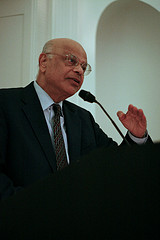 D.C. CFO Natwar Gandhi. Photo by DCCA.
He’s loved by Wall Street, and he was recently reappointed to a second five-year term. But the bad news keeps piling on for D.C. Chief Financial Officer Natwar Gandhi.
Yesterday the Post reported that Securities and Exchange Commission has launched an investigation into audits in Gandhi’s office, requesting internal documents dating back to 2010. The investigation follows reports that internal audits were kept in draft form to prevent them from being made public; earlier this month, the CFO’s internal affairs chief resigned over the practice, which he said violated the public’s right to scrutinize Gandhi and his management of the city’s finances.
Additionally, yesterday the City Paper reported that an employee in the Office of Tax and Revenue—overseen by Gandhi—was charged with helping file 282 fraudulent tax returns that resulted in $300,000 in tax refunds. It was also revealed that the employee kept a part-time second job at a tax preparation company, a violation of rules of the office.
In August, it was revealed that Gandhi’s office had knocked $2.6 billion off the taxable value of commercial properties throughout the city, losing D.C. some $48 million in potential revenue. In the wake of the news, the city’s chief appraiser resigned earlier this month.
All of this comes on top of the case of Harriette Walters, the mid-level tax employee who in 2009 was sentenced to 17 years in prison for two decades worth of embezzlement that netted her over $48 million. And earlier this year a tax examiner was sentenced to prison time for embezzling $400,000 from the office.
The repeated scandals seem to be taking their toll: even Gandhi’s staunchest supporters on the D.C. Council are beginning to worry that the consistent bad news is undermining faith in his ability to manage the city’s finances. Gandhi is also facing pressure from lawmakers who say that his revenue projections are often off, making it harder for them to budget and plan for upcoming fiscal years.