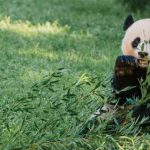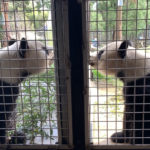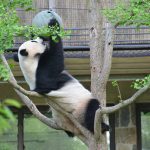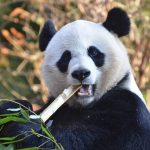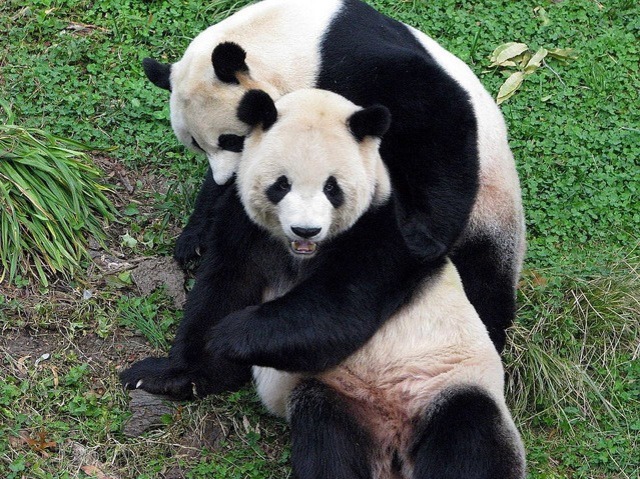
 Tian Tian and Mei Xiang. (Photo by RoxandaBear)
When the National Zoo divulged what caused the death of a giant panda cub that was born last month but died six days later, one of the potential consequences was the possibility that the zoo might be trading pandas. The zoo’s pandas, female Mei Xiang and male Tian Tian, have been in D.C. since 2000, but it could be time for a change.
Mei Xiang and Tian Tian are on loan from China, which owns the world’s population of giant pandas and loans them out to animal conservation facilities around the world for the purpose of making more pandas. Part of the agreement between the National Zoo and Chinese authorities is that if either panda is found unsuitable for breeding, an exchange could be in order. The pair’s first cub, Tai Shan, was born in 2005 and now lives at the Chengdu Panda Base in China. But between Tai Shan’s birth and last month’s cub, Mei Xiang went through several failed impregnation attempts and pseudopregnancies.
The discussions about whether the zoo will be swapping out one or both pandas haven’t even started, but already some fans of the bamboo chompers are suffering from separation anxiety. A petition called “Keep Mei Xiang and Tian Tian” sprouted up this week, and has so far collected 463 signatures. Rather than refocus on its panda-breeding efforts, the petition asserts, the National Zoo should allow Mei Xiang and Tian Tian to remain where they have lived for more than a decade:
They are beloved members of the Washington community, the national community, and a community of panda lovers from all over the world. They should be allowed to live out their lives at the National Zoo, whether they produce a cub or not. It is not in their best interest to tear them away from the only home they have known for their entire adult lives so that the National Zoo can breed another panda cub.
If the petition reaches 1,000 signatures, its founder, Laura Lebow, will press Smithsonian Secretary G. Wayne Clough to back away from trading one of the pandas for more a more viable breeder.
But the global panda exchange isn’t conducted just so zoo-goers around the world can gawk at rolypoly, monochrome bears. It’s also an attempt to repopulate a species of which there are only an estimated 1,600 specimens alive. And with Mei Xiang and Tian Tian—a “clueless breeder,” in the words of one National Zoo panda researcher—having failed several times to produce another cub, a casting change might not be the worst thing for conservation and reproduction efforts.
Still, people love those pandas, so here’s the petition, if you’re so inclined to keep a couple of aging bears instead of trying something new.
UPDATE, 2:15 p.m.: Although a spokeswoman for the National Zoo says the Smithsonian Institution appreciates the sentiment toward Mei Xiang and Tian Tian, the research and species preservation come first.
“We know that panda supporters around the country have grown attached to Mei Xiang and Tian Tian, as have we,” Pamela Baker-Masson, the zoo’s associate communications director, says. “However, our mission is to carry out conservation and science research. We have a larger obligation to all of the giant pandas in human care and in the wild. The decision about Mei Xiang and Tian Tian’s future will be made based on what is best for each individual bear, the species and ultimately by our Chinese colleagues.”