 Kether Donohue (Roadside Attractions)
“Maryland is for Crabs.” It’s a motto that suggests both delicious meat from the Chesapeake Bay and a communicable parasite. But what if both meanings came together? The Bay takes on this question in the form of that staple of contemporary anxiety, the found-footage movie. What makes this found footage movie different from co-producer Steven Schnieder’s Paranormal Activity franchise is the Oscar-winning director at the helm of this low-budget eco-horror ship: Baltimore native Barry Levinson.
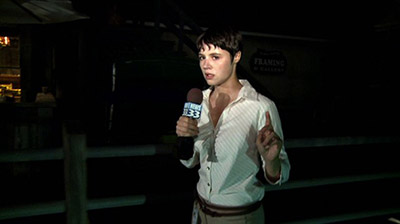
The fictional found footage comes from Donna (Kether Donahue), an American University journalism student working for the local news station on what seems an easy assignment: the July 4th celebration in Claridge, MD, a fictional Eastern Shore town famous for crabs. American independence is celebrated in competitions of crab eating and beauty, the latter of which taking the form of Miss Crustacean, whose fate is no less doomed for her sparkling gown and commemorative sash.
But by the time we see these locally grown images of Americana, we know the sad fate that befalls them. Donna tells her story in flashback, Skyping to an unknown audience whom she hopes will get her message: don’t trust authority. The cautionary tale begins with the demise of a pair of scientists who wash ashore with horrific wounds that are at first attributed to sharks. This is juxtaposed with the Mayor of Claridge (Frank Deal), proudly drinking filtered bay water and dismissing fears that the bay is dying. But when the people of Claridge begin to develop what look like severe cases of shingles, what is the real culprit?
 Jane McNeill (Roadside Attractions)
Director Barry Levinson (Diner, Rain Man) was asked to make a documentary about the crisis of Maryland’s signature body of water, 40% of which is an ecological dead zone. Levinson scrapped that project for this $2 million horror movie that sometimes plays like a documentary. Many of the film’s details come from actual news reports of the bay’s struggles. Fish kills and depleted shellfish population have been news since the 1970s, and as the movie suggests, the blame can be placed at the hands of chicken farmers who let waste run off into the bay. What’s curious is that the filmmakers don’t point fingers at the community singled out in some reports: the Amish. A powerful bearded lobby they must be to strike fear into their carefully counselled hearts.
A mix of Skype, security cams, news crew footage, and home made video are all part of an effective found footage strategy. But at times it works too well, as shot coverage seems unusually thorough for a town in crisis. Does everybody really have their webcams on at work? Perhaps this suggests that the ubiquity of cameras makes it possible for an efficient and propulsive shot rhythm to be made from the cameras around us all the time. BUT DID THESE CAMERAS STOP THE BAY FROM KILLING? ALL THEY COULD DO WAS WATCH! The Bay will not go down in the annals of horror movie history, and as much of a film purist as I am, I don’t think a small screen presentation would make it any less effective. But it’s a watchable gross-out fest, sure to make you think twice the next time you go fishing, or even drink water.
—
Directed by Barry Levinson
Written by Michael Wallach
With Kether Donohue, Kristen Connolly, Jane McNeill, Christopher Denham, Frank Deal
Rated R for disturbing violent content, bloody images and language, and scabs.
Opens today at West End Cinema and the AFI