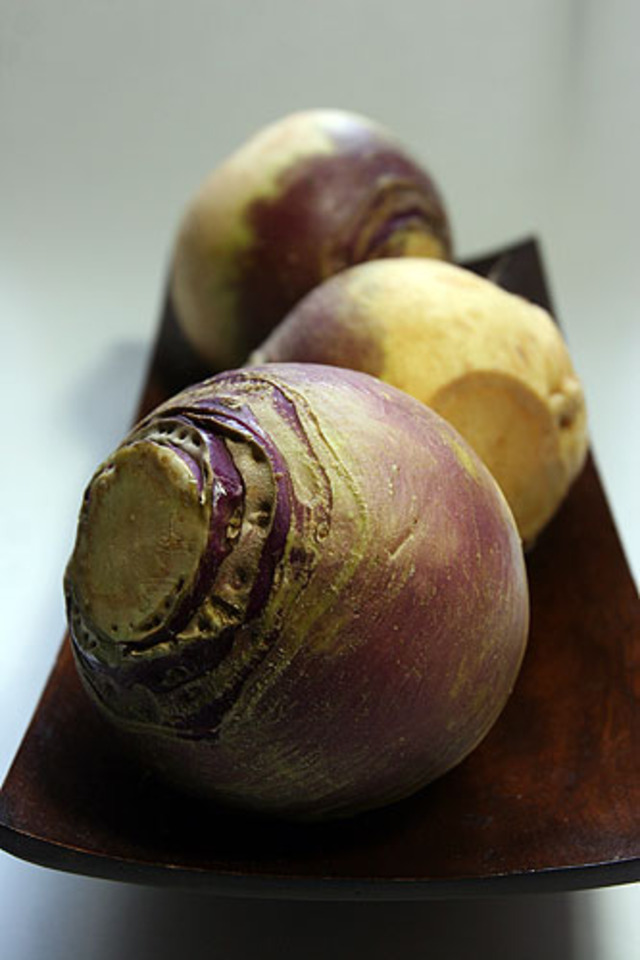
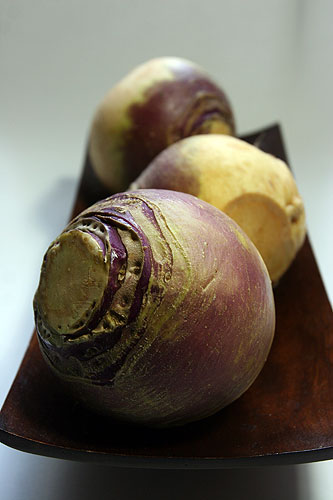
 Photo courtesy of TheKitchn.com
I bought a rutabaga the other day, my first in a long while. They intimidate me: mine looked like a moon of Jupiter, otherworldly in its gnarled heft, its seemingly impenetrable exterior awash with multihued stripes plunging into shadow, Even their name sounds like a cross between Strega Nona and a toboggan. In other words, a disaster.
In fact, a rutabaga is one of those soft-hearted vegetables, more brass than brawn. They peel easily, and take less might to cut through than a squash. They are easily boiled, roasted, braised, steamed, or mashed into submission, much like a potato. Their taste is gently sweet but not overpowering, creamy but not heavy. Like most root vegetables, they can be tossed into soups and stews, roasted with butter under a crust of breadcrumbs and grated Parmesan, or baked in a quiche. Like most anything, they go well with bacon.
You can use almost any root vegetables in the recipe below, including potatoes, yams, parsnips, or carrots, and winter squash or pumpkin would also work well. Serve the finished product over roasted winter greens like kale, collards, or chard as a side dish; toss it with beans, lentils, or grains and add a dollop of yogurt, a drizzle of olive oil, and a handful of fresh herbs for a hearty main course; or put it in a scramble with eggs and chunks of thick-cut bacon for breakfast.
Glazed Rutabaga and Turnips with Rosemary, Thyme, and Honey
4 Tbsp. butter or olive oil (or a mix)
1 large rutabaga, peeled and chopped into 1-inch cubes
4 medium turnips, peeled and chopped into 1-inch chunks
1 clove garlic, minced
1 cup chicken or vegetable stock
1 Tbsp. honey
2 tsp. Dijon mustard
1 tsp. dried rosemary, crushed between your fingertips
1 tsp. dried thyme, crushed between your fingertips
1 tsp. kosher salt
¼ tsp. ground black pepper
1. Heat the butter and/or oil in large skillet over medium heat. When it runs easily in the pan, add the rutabaga, turnip, garlic, stock, stirring well to combine. Cover and let simmer about 20 minutes, stirring occasionally, until vegetables are softened but still a bit tough in the middle.
2. Add the honey, mustard, dried rosemary and thyme, salt, and pepper. Continue to cook, uncovered, until there is almost no liquid left in the pan, another 10 minutes or so. Taste and adjust seasonings as desired.