Martin Austermuhle
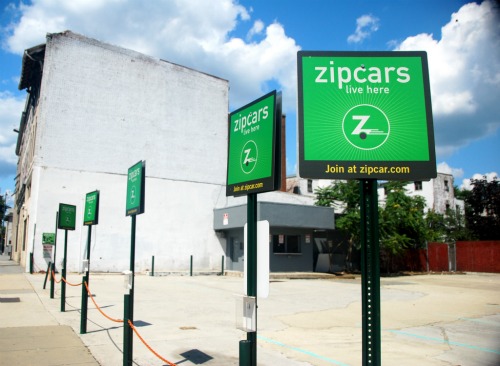 Photo by cstein96.
Big news in the world of car-sharing today: Avis announced that it was buying Zipcar for $491 million, bringing the rental car giant into an increasingly competitive car-sharing market.
What does that mean for the roughly 60,000 local Zipcar members? According to the company, not much.
“Simply put, this is a major win for Zipsters around the world. With the global footprint, backing, and talented leadership of Avis, we’re going to step on the gas. We believe that you’ll see more Zipcars in more locations (especially during times of peak demand!); that you’ll see new service offerings that make Zipcar more flexible and fun for you; and that you’ll continue to experience the most advanced and sophisticated technology to keep you zipping along your merry way,” wrote Zipcar in an email to members today.
Avis officials say that the company’s size will allow Zipcar to purchase cars more cheaply, passing the savings on to customers. Sounds good, right? Not to the Post’s Steve Pearlstein, who was quick to write that Avis’ old business model will ruin the more nimble young upstart, likely leaving members with fewer driving options in the long-run:
The only way for Avis to realize its over-promised cost savings will be to force Zipcar to consolidate the two operations and become more like Avis in everything it does. Eventually, all the old Zipcar executives will be fired or will migrate somewhere else. Auto purchasing will be centralized, as will the pickup points. The Zipcar Web site and computer system will be merged into the Avis Web site and computer system. Avis will want to do package deals with airlines and hotel chains and drag Zipcar customers into its loyalty program. They’ll even try to upsell Zipcar customers every time they reserve a car: Wouldn’t you like something bigger for only $2 more? Wouldn’t you like extra insurance?
Oh, sure, Avis executives will say how they respect Zipcar — its culture and its way of doing business — and promise to preserve it. But a year down the road when it comes to some decision in which they will have to forgo some cost savings or some revenue increase in order to maintain those differences, the decision will be to do it the “Avis” way. And that will be it: Zipcar as we know it will be history.
Avis’ move was a natural one: Hertz recently launched it’s by-the-hour car-sharing service, Hertz on Demand, after all. But it’ll be interesting to see if the new Zipcar can adapt locally to a car-sharing market that has changed with the arrival of car2go, which late last year said D.C. was among its fastest-growing markets in the world. There have been rumors that Zipcar will jump into the point-to-point car-sharing that car2go offers; the company’s email today seems to hint that it may just do so.
D.C. could be an interesting test for Avis, too; we were the second city to get Zipcar (in September 2001, after Boston), and the city boasts healthy car-sharing rates. If people turn from the new Zipcar here, it might spell trouble in other cities.