Martin Austermuhle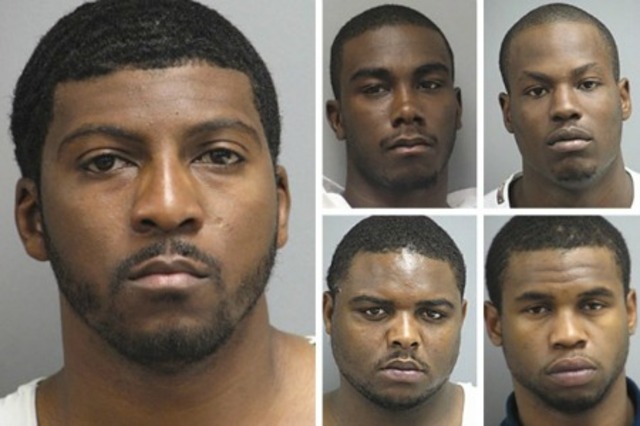
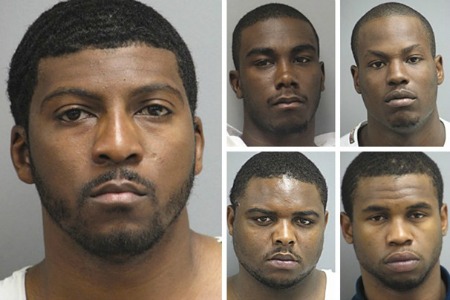 The five men found guilty of participating in the 2010 South Capitol Street shooting. Their mug shots were only released to the media after they were convicted last year.
D.C. Councilmember Mary Cheh (D-Ward 3) today introduced a bill that would allow the press and public to request mugshots of anyone arrested in the city.
While many surrounding jurisdictions make mugshots easily available, for decades D.C. police and prosecutors have only offered them to the media if a suspect is at large or has already been convicted. Why? We explored the subject in a September post:
In 1967, a report commissioned by the D.C. Board of Commissioners—the precursor to our elected mayor and D.C. Council—found that arrest records, including mugshots, were widely disseminated. In an era of civil disobedience, this was bad news: a single arrest for protesting the government could land an otherwise honest citizen’s mugshot in a local paper, endangering their job and livelihood. It could also mean that the FBI could get a hold of the information, starting a file on that person.
In 1970, the Department of Justice approved a policy that limited the information that should be made available on those arrested; the policy stressed that certain types of information “generally [tend] to create dangers of prejudice without serving a significant law enforcement function,” and those should be kept from public view. Mugshots were included.
Cheh’s bill would make mugshots public; anyone could merely ask and pay a nominal fee for a copy of the photo to get it. Juveniles would still be protected under existing law, which keeps their names and identifying information out of the public eye unless certain conditions related to past convictions are met.