Martin Austermuhle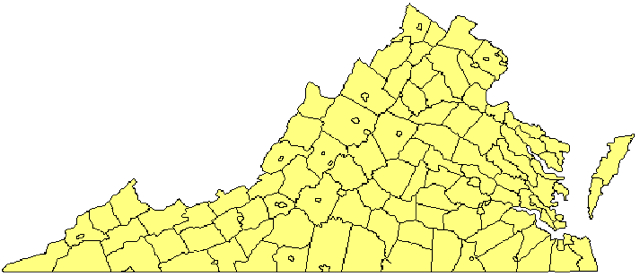
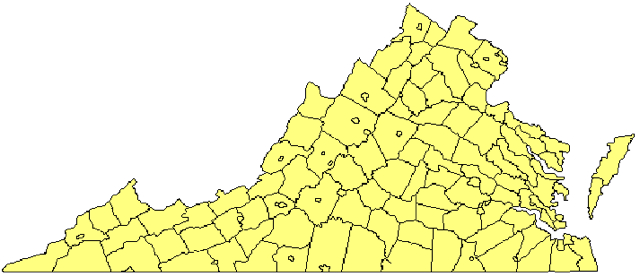
While much of the country’s attention was focused on yesterday inaugural festivities, Virginia Republicans pulled a fast one on the state’s electoral map. According to the Post, Republicans took advantage of the absence of one Democrat to narrowly pass a rare mid-decade redistricting of Senate boundaries, possibly putting five Democratic districts at risk.
The move was a dramatic change from standard practice, when electoral maps are redrawn only during the first year ending in one that falls after the decennial census. How dramatic? Not only have Democrats said they oppose it, but so too has Gov. Bob McDonnell and Lt. Gov. Bill Bolling. Given Bolling’s ability to cast tie-breaking votes, Republicans waited until they knew that one Democrat in the narrowly divided chamber would be absent—he was at the inauguration—thus forestalling the need for Bolling’s vote.
The measure’s Republican sponsor defended the new map in a quote published by the Richmond Times-Dispatch, saying that it would allow Virginia to comport with federal civil rights law. “It will clean up the lines, protect us against the threat of litigation and provide an excellent opportunity to allow the demographics of this Senate to more closely align with those of the commonwealth at large,” said Sen. John Watkins (R-Powhatan).
Still, even if the new map passes the Republican-leaning House, McDonnell will have to sign off on it, as will a federal judge or the Department of Justice. And even if none of that happens, Democrats have said that the sneaky moved has poisoned the atmosphere in the Senate, likely imperiling a number of McDonnell’s priorities in his final year of office.
Should the map pass, it’ll make the second state in the region to redraw their electoral maps for partisan gain. Last November voters in Maryland approved a new congressional map that critics said was painfully gerrymandered to benefit Democrats.