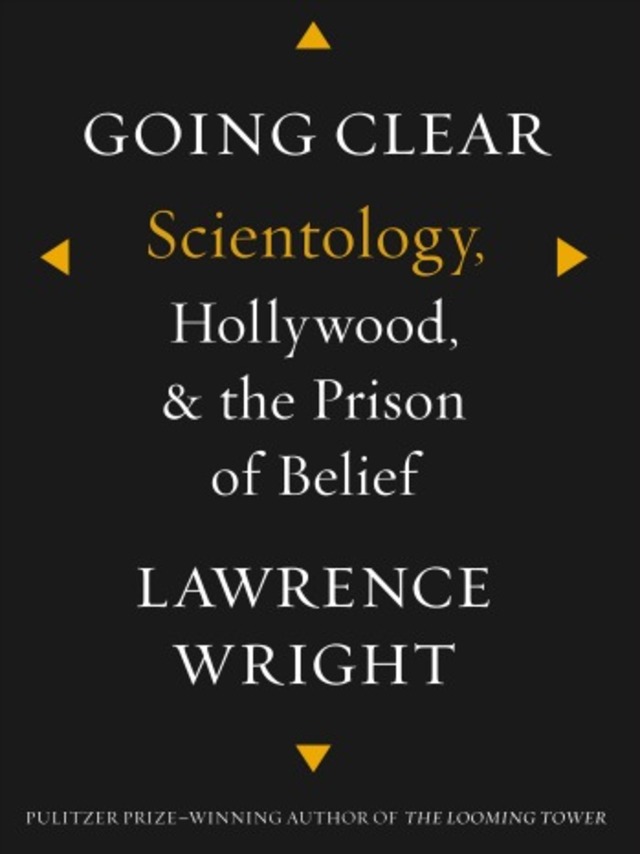
 Those who have meandered by the local Church of Scientology, or been quickly handed a vague slip of paper on a downtown street corner, may have found themselves wondering about the religion — or at least what exactly is inside that big brick building near Dupont Circle. On Thursday, January 24, at 7 p.m. you can learn more without taking the plunge at Lawrence Wright’s talk on Going Clear: Scientology, Hollywood, and the Prison of Belief (Knopf; $29) at Politics and Prose.
Wright is known as a thorough and careful investigative journalist, who currently writes for The New Yorker and won a Pulitzer for his 2006 book, The Looming Tower, about Al Qaeda’s 9/11 plot. This makes him an impressively credible voice on a controversial topic in Going Clear, the culmination of years of research, over 250 interviews, and extensive fact-checking with editors and Scientology clergy.
His findings began emerging in early 2011 with his New Yorker article on Crash director/Million Dollar Baby screenwriter Paul Haggis’ break with Scientology. Wright discovered evidence that Scientology’s founder, sci-fi novelist L. Ron Hubbard, may have lied about his war record and injuries to help sell his healing doctrines in Dianetics, which became the basis for Scientology. Lies in Dianetics meant a faulty premise for the religion. But, the author writes, “to label [Hubbard] a pure fraud is to ignore the complex, charming, delusional, and visionary features of his character that made him so compelling to the many thousands who followed him and the millions who read his work.”
Further discussions with Scientologists past and present opened up a can of worms that the church has been anxious about since news of Wright’s book broke. It released a statement on January 11 calling Going Clear “ludicrous” tabloid material. They also made headlines last week by publishing an advertisement in The Atlantic to coincide with the book’s release, which was soon pulled for looking too much like editorial content.
This new account of Scientology is not flattering. But it was first approached with the same curiosity many have about Hollywood’s hottest faith: “I’ve always been intrigued by why people believe one thing over another,” Wright said. In the U.S., “you can choose to believe anything. And why people would be drawn to something that has so many negative connotations around it, I thought there must be something that this religion offers them, and that’s what I wanted to find out.”
Going Clear examines the man who started Scientology, the man who now heads the church (David Miscavige), and the psychology, philosophy, and allure that perpetuate it. The story would captivate anyone interested in how these aspects of a religion, or business organization, may lead to what we see as a cult-like environment where loyalty is all but required.
Wright is also a fellow at the Center for Law and Security at the New York University School of Law. He will be taking questions and signing books at Thursday’s event.