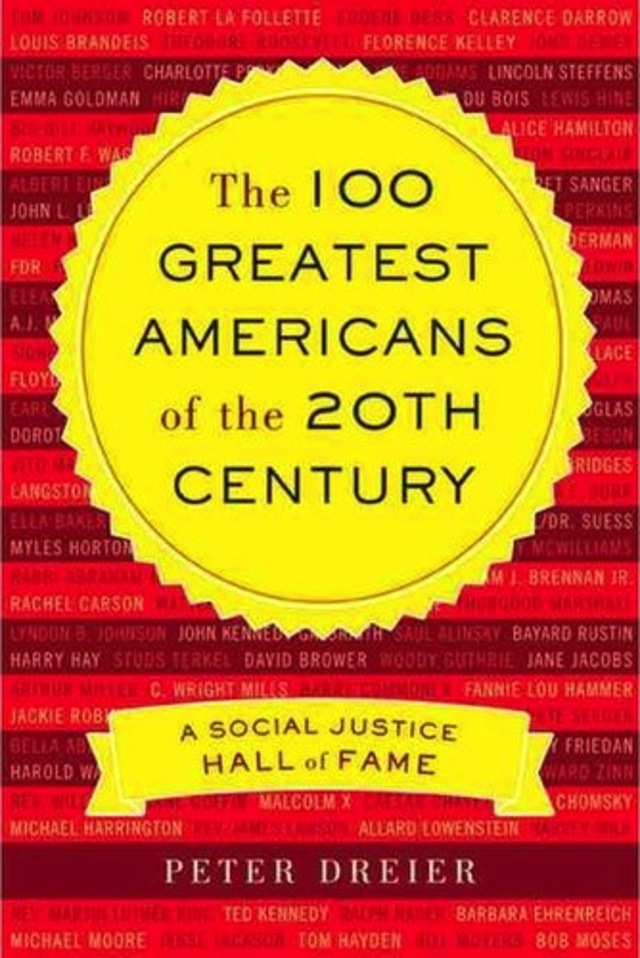
 The 1900s were so radical — politically speaking. While technology and all that also had a pretty awesome century, the rising and accomplishments of civil rights reformers during this time cannot be exaggerated. Today at 6:30 p.m., Peter Dreier will be talking about these prodigious people and deeds as documented his recent book, The 100 Greatest Americans of the 20th Century: A Social Justice Hall of Fame (Nation Books, June 2012), at Busboys and Poets’ 14th and V Street location.
In the introduction, Dreier explains that his Hall of Famers required a “moral force” behind their work toward lasting social change. This somewhat subjective characteristic shaped Dreier’s list, and is why some bigger names, like Bill Gates and Ronald Reagan, were left off in exchange for lesser-known ones like Pete Seeger and Margaret Sanger.
But Dreier points out that many in the top 100 weren’t saints either, especially by 2013 standards. Some reformers held racist views, or even dabbled in eugenics, like Sanger. The intro reminds readers that these beliefs should be put into the context of the era. He writes, “although these 100 individuals were pioneers in most aspects of their thinking, they could not entirely transcend the political realities and social prejudices of their times.” This might seem like a convenient disclaimer, but perhaps the heroic qualities of flawed people are still worthy of appreciative recognition.
The format of the book, divided chronologically into “snappy” thumbnail biographies, makes for a breezy and informative read that serves as a reference guide for those interested in progressive history. Person by person, we see the evolution of social norms over a hundred-year stretch, into what’s considered natural human decency today. For example, laws for 40-hour weeks and 2-day weekends, racial integration, and women’s voting rights were all fought for by a dedicated few. Dreier describes the personal and professional risks taken by long-term visionaries, in hopes of improving the future for minority or disadvantaged groups.
As for the recipe for making such a mark? The author argues that social change only occurs with the efforts of both “outsiders” and “insiders.” Passionate organizers of social movements need counterparts like public officials to legitimize the cause and lead from the top. These collaborations are still necessary in order to turn the radical into the common sensical.
Dreier lives in Los Angeles and writes for the Nation, American Prospect, Huffington Post, Talking Points Memo, and the Los Angeles Times. He is a Professor of Politics and Director of the Urban and Environmental Policy Program at Occidental College.
The event will include a discussion of The 100 Greatest Americans of the 20th Century followed by a signing.