Martin Austermuhle
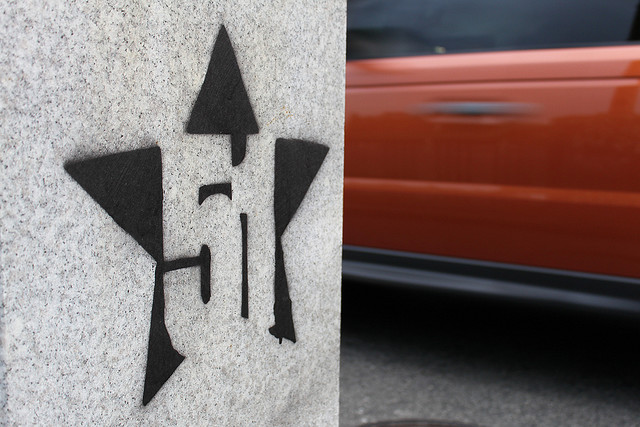 Photo by cmoaknd
Even as D.C. officials push Congress to approve a bill that would grant the city additional flexibility in spending its own money, Mayor Vince Gray wants to continue promoting a more ambitious cause: statehood.
As part of a bill reforming the city’s many boards and commissions, Gray has proposed that a new 51st Statehood Commission be created to more actively advocate for D.C. statehood. The 15-person commission—it members would be unpaid—would “educate, advocate for, promote, and advance the proposition of, statehood for the District of Columbia to District residents and citizens of the 50 states,” and would be given a paid executive director and staff, along with the ability to raise funds for itself, to do so. (There’s no set number on how much funding it would receive yet.)
The commission is being proposed just over a year after a somewhat disastrous trip by Gray and a number of councilmembers to New Hampshire, where they hoped to get Granite State legislators to approve a bill supporting the city’s demand for statehood. After a somewhat contentious debate, though, the bill was voted down. A later attempt to get the Democratic National Convention to include pro-statehood language in the party platform also failed.
Still, statehood advocates have argued that they need to build a following in the states, which could then be used to pressure members of Congress. Just last month statehood bills were introduced in both the House and the Senate that would grant D.C. statehood. Some activists have also proposed attaching the city’s fight to that of Puerto Rico, which last December voted to support moving towards full statehood.
This isn’t the first time such a commission would come into existence. In 2010, the D.C. Council created the 51st State Commission, though its mission was more limited—it was charged only with studying the ways by which D.C. could become a state. In 2004, the council created the Statehood Delegation Fund Commission, which was responsible for overseeing the money given by residents through their tax forms to the three-person statehood delegation, which includes two shadow senators and a shadow representative. (Through the second quarter of fiscal 2012, it had taken in over $145,000.) That delegation is charged with lobbying Congress on statehood.
Josh Burch, a Ward 5 resident who has advocated for statehood and met with congressional staffers to pitch the idea, said that promoting statehood to D.C. residents is a vital part of actually gaining it.
“I love that they want to focus on community outreach, as it’s desperately needed,” he said in an email. “Our vision has always been to get all 130+ neighborhoods organized with people working for statehood, because this really isn’t the Mayor or the Council’s fight, its our fight and its our struggle. Part of the problem of with the movement is that everyday citizens are still on the sidelines. We need to all find our inner Rosa Parks and John Lewis’ and stand up for ourselves and tell Congress and the world that we deserve to be treated equally,” he said.
Still, he worries that a commission could be redundant and merely do what the statehood delegation already does: “I like the idea of investing full time staff, money, and resources by the District to the statehood cause. It’s long over due. But there are positions in place that are supposed to do it, and they are unfunded,” he said.
Calls and emails to Gray officials for more details were not returned, but Gray has been a steady proponent of statehood.