Martin Austermuhle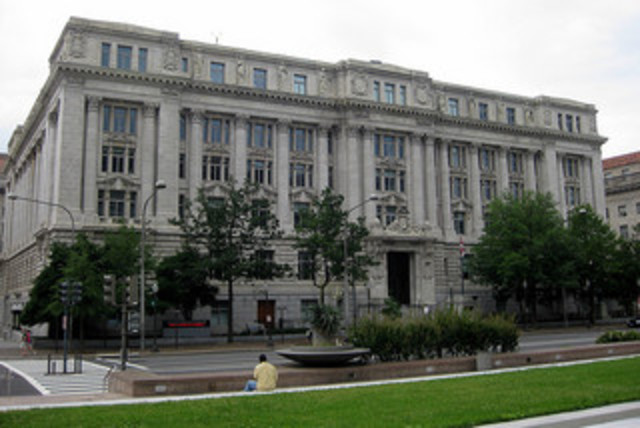
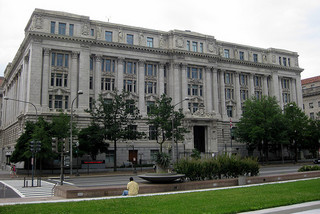 Photo by wallyg
 As it does every month, yesterday the D.C. Council gathered for its legislative session. And as usual, there was a bevy of bills introduced. To spare you the sheer pleasure pain of watching the sausagemaking take place, below are some of the legislative highlights.
>> Got a car alarm? It better go quiet after five minutes—or else.
>> Want to get married but don’t much believe in organized religion? It might soon get easier for you to find an officiant.
>> D.C. legislators don’t want to just give up the FBI HQ to some suburban campus.
>> D.C. Council Chair Phil Mendelson wants more nurses at D.C. hospitals, while Councilmember Mary Cheh (D-Ward 3) introduced a competing bill that would allow hospitals more flexibility in filling staffing needs.
>> There were a few new bills dealing with the city’s schools. Councilmember Jack Evans (D-Ward 2) introduced a resolution that would mandate that all public schools have a full-time librarian, art teacher, music teacher and PE teacher. This year, 58 school opened without them. Councilmember Marion Barry (D-Ward 8) proposed a bill that would require any future school closures to be approved by the council, while Councilmember David Catania (I-At Large) offered up legislation that would mandate that schools take certain steps to prevent cheating on standardized tests.
>> There were a few ethics-related bills, as per the usual. Councilmember Vincent Orange (D-At Large) wants those colleagues that have outside jobs to detail how many hours they spend on them and how much extra money they make by doing them. Councilmembers David Grosso (D-At Large) and Kenyan McDuffie (D-Ward 5) proposed a bill that would allow for the public financing of candidates for office that raise money primarily in small amounts; the grants for their campaigns would be funded by a fee placed on all D.C. contracts worth over $1 million.
>> Though Mayor Vince Gray has said that a recently announced $417 million surplus will go straight into the city’s reserves, Barry wants to get his hands on at least $100 million of it for social services. Barry is relying on a quirk in D.C. law that would allow him to appropriate some of that surplus even while the rest has to be set aside, but it remains to be seen if his colleagues will side with him.
>> Councilmember Tommy Wells (D-Ward 6) wants to ban the use of coal in power plants within city limits. Why is this relevant to him? Because the Capitol Power Plant sits right in the midst of a residential neighborhood in Capitol Hill, spewing out noxious fumes day and night. A plan to retrofit the plant to use mostly natural gas isn’t enough for him—he wants all coal use stopped.
>> Speaking of pollution, Orange introduced a bill that would prohibit the parking of buses at the Crummell School in Ivy City. Gray has wanted to use the parking lot of the abandoned yet historic school for tour bus parking, but residents complained that they would be affected by the pollution. Instead, the bill would have all the bus parking moved to 1880 V Street SW, which they say can hold up to 200 buses.
>> There sure have been a lot of special elections in recent years, huh? Three in last year-and-a-half, 11 since 1994. The problem with these unforeseen contests is that they usually aren’t budgeted for, something Councilmember Muriel Bowser (D-Ward 4) wants to change by creating a special fund that could be used to pay for them when they come up. Speaking of, there’s a citywide special election on April 23.
>> Currently, visitors to the D.C. Jail only get to see inmates via video-conference; in-person visits were discontinued last year. Like many critics of the program, Bowser wants the jail to allow in-person visits again, saying that they are important for inmates who need support while incarcerated and after they get out.
>> Metro recently unveiled an ambitious $26 billion expansion plan/wish list that includes a new tunnel under the Potomac. Evans thinks it’s a great idea—a “very bold plan,” he commented—and he introduced a sense of the council resolution saying as much.
>> Do you have a fur coat made from an endangered animal that you brought in from outside the country? Yeah, well, don’t try and sell it. A bill introduced by Councilmember Jim Graham (D-Ward 1) would ban the sale of “hides, skins, or any other parts of an animal protected under the Endangered Species Act of 1973.”