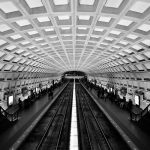
You might love its hardline policies against eating and drinking while on board, or you might hate its dim lighting, but whatever your feelings are about public transit, one cannot separate Metro from the experience of living in or around D.C. Opened in 1976, Metro is far newer than the intracity train systems that course through places like New York, Boston, and London. It was built in an era of architectural standardization, with arching, corrugated-concrete ceilings that can sometimes make it difficult for a passenger gazing out a window to tell what station they are rolling into.
Still, every Metro station has its quirks, whether by dint of geographic location or interior decoration. True, you won’t find any buskers peddling their arts in our subterranean train routes—that’s prohibited by the Washington Metropolitan Area Transit Agency—but there are still plenty of Metro stations to enjoy. Or, at least, not hate on. You know, assuming the escalators are in order.
 Photo by Joe Flood
DUPONT CIRCLE (NORTH ENTRANCE): While people exiting Dupont Circle’s south entrance step into a busy traffic circle dominated by the fumes of Krispy Kreme doughnuts and Panera Bread, the granite wall abutting the north entrance is engraved with a lovely passage from Walt Whitman’s “The Wound Dresser”:
Thus in silence in dreams’ projections,
Returning, resuming, I thread my way through the hospitals;
The hurt and wounded I pacify with soothing hand,
I sit by the restless all the dark night – some are so young;
Some suffer so much – I recall the experience sweet and sad…
But I was an English major, so it figures. —Elisabeth Grant
Dupont Circle is served by the Red Line.
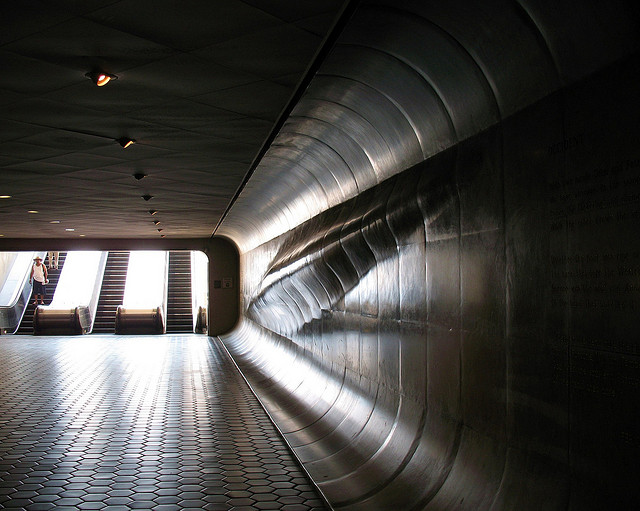 Photo by Mr. T in D.C.
ARCHIVES-NAVY MEMORIAL-PENN QUARTER: There’s the nice, curving sculpture on the wall as you leave, and as soon as you get outside there’s the impressive National Archives building, the U.S. Navy Memorial, the cool, red-brick building on the corner of Indiana Avenue NW, and the Temperance monument, which seems very random in a neighborhood full of bars and restaurants. —Andrew Wiseman
Archives-Navy Memorial-Penn Quarter is served by the Yellow and Green lines.
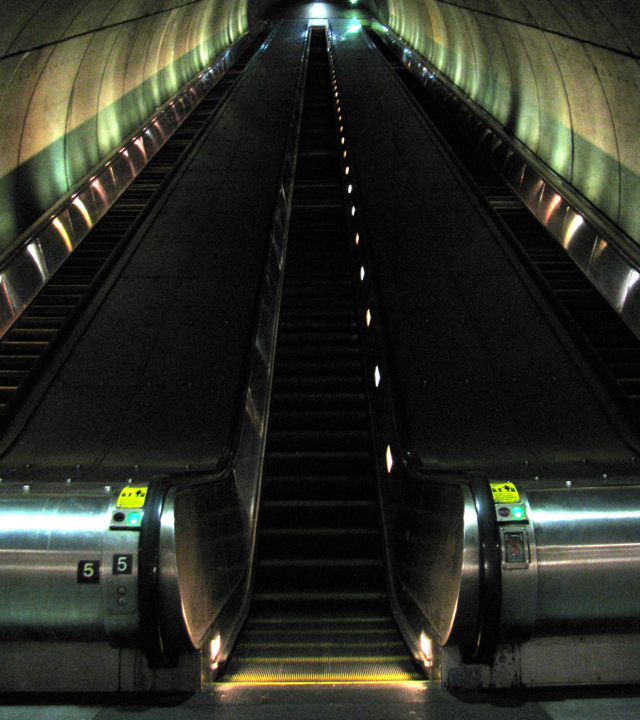 Photo by Daniel Reidel
WHEATON: At 230 feet, the escalators here constitute the longest single-span set of escalators in the Western Hemisphere. When the escalators are working, it takes two minutes and 45 seconds to get to the top. It’s a fun ride, and lot cheaper and closer than Kings Dominion! —James Calder
Wheaton is served by the Red Line.
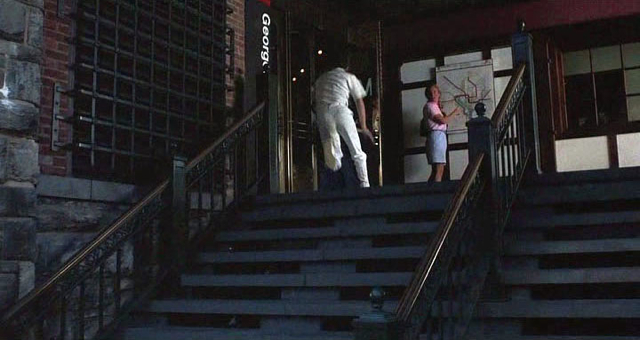
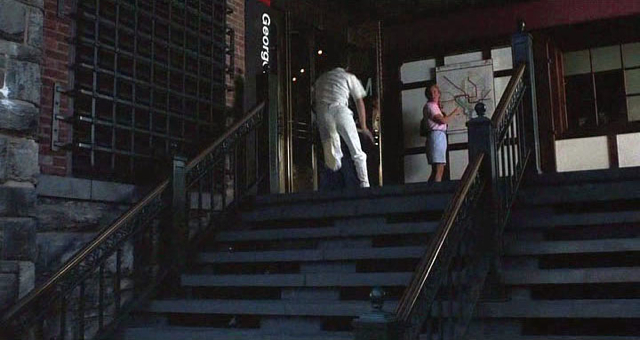
GEORGETOWN: When the bureaucrats and brass are breathing down your neck, and you’re racing against time to stop an international blackmail plot, all paths lead to the high society and secretive salons of Georgetown. But in D.C., traffic on M Street NW can be the greatest impediment, especially for a lone wolf naval officer who can’t trust anybody in his quest for the truth. Luckily, the Georgetown Metro station offers a quick exit into the unwelcoming confines of D.C.’s power elite, where socialites and policy makers trade state secrets like kids trade baseball cards. Come dashing up the steps on the canal side of the Shops at Georgetown Park and set out on your quest for justice. You might even hear suspenseful string music as you bound into the night. —Benjamin R. Freed
Georgetown isn’t served by any Metro line, because it’s not real. But Kevin Costner was real good in No Way Out.
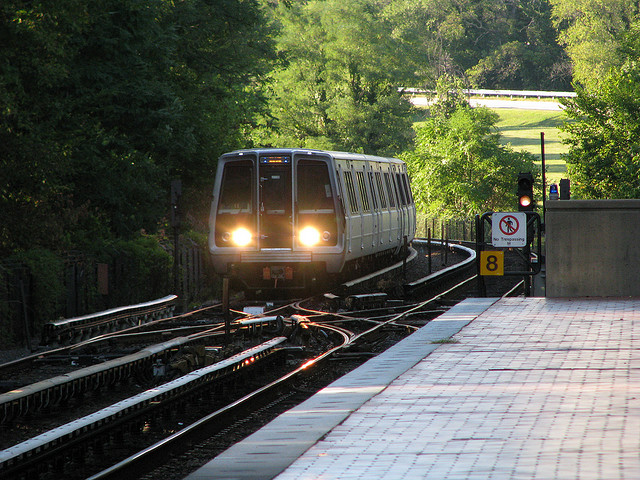 Photo by Dan Macy
ARLINGTON CEMETERY: It is the single most beautiful station on the line, with all of the foliage surrounding the platforms. If you’re looking for the underground station with the best commissioned artwork Georgia Avenue-Petworth is probably it. As for the best uncommisioned artwork, well, Brookland-CUA has the best graffiti. —Valerie Paschall
Arlington Cemetery is served by the Blue Line.
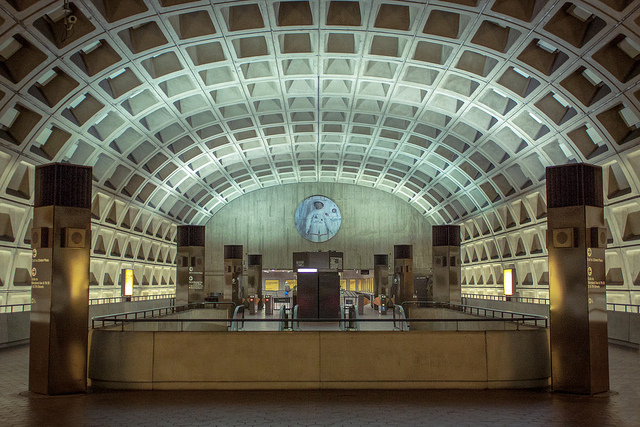 Photo by Eric Purcell
METRO SPOKESMAN CAN’T DECIDE: Who can pick just one? I like stations that are unique—Forest Glen (served only by elevators, no escalators) and Wheaton for their “double barrel shotgun” design; Pentagon and Rosslyn, the system’s two bi-level stations; Huntington with its special “incline elevator;” and of course L’Enfant Plaza for the dogonauts! —Dan Stessel
Dan Stessel is a WMATA spokesman.
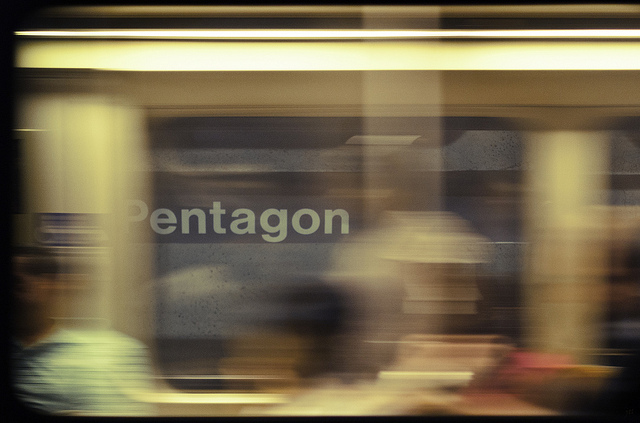 Photo by Jason OX4
PENTAGON AND CAPITOL SOUTH: OK, there’s nothing particularly exciting about either of these stations—except for the people. More than any other stations in the system, both the Pentagon and Capitol South cater to your prototypical Washington worker: the military types toiling away in the Department of Defense and the congressional staffers that makes their lives on Capitol Hill, both of which are distinctly uniformed in their own way. It’s also easy to tell when you’ve arrived at either station, beyond just the people—defense contractors regularly plaster them both in ads in hopes of convincing military officials to buy more weapons systems and members of Congress to pay for them. —Martin Austermuhle
Pentagon is served by the Blue and Yellow lines; and Capitol South is served by the Blue and Orange lines.