Martin Austermuhle
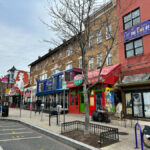
 Photo by dracisk
If you need somewhere to go on a weekend night, U Street NW is generally a safe bet—bars and restaurants and plentiful, bringing vibrancy to a neighborhood that only years ago was marked by shuttered storefronts. But how much alcohol-fueled nighttime vibrancy can the neighborhood really handle?
That was a question that over 100 residents from the surrounding area addressed last night at a community meeting meant to take input on a proposed five-year moratorium on the issuance of liquor licenses in and around U Street. The moratorium, proposed by members of the Shaw Dupont Citizens Alliance, would freeze the number of liquor licenses in an 1,800-foot radius around 1211 U Street NW; the moratorium zone would extend from Clifton Street down to R Street and from 15th Street eastward to Georgia Avenue.
Joan Sterling, the alliance’s president, spoke on behalf of the moratorium, saying that the 107 liquor license holders in the proposed area had crowded out businesses that could attract daytime traffic and increased problems ranging from crime, trash and lack of residential parking on weekend nights. (See the full moratorium proposal in .PDF here.) She said that the area was teetering on the edge of becoming another Adams Morgan, and that many residents she spoke to wanted anchor tenants like an Apple store or Urban Outfitters instead of “strips of taverns and taverns.”
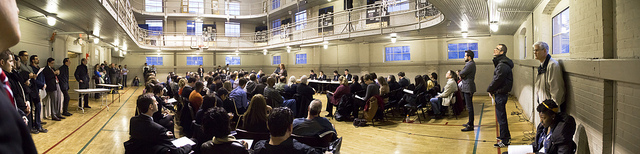 The crowd at yesterday’s moratorium town hall. Photo by thisisbossi
Not many people seemed to agree with the idea. Resident after resident came up to the microphone to decry the moratorium, calling it a blunt instrument that would stifle the neighborhood’s development while not fully addressing the challenges that other businesses have in locating and succeeding in the neighborhood. They spoke of how the crowds of people only made them feel safer at night, and that the churn of new bars and restaurants gave the neighborhood and edge that Georgetown, Dupont Circle and Adams Morgan—all neighborhoods with existing moratoria in place—could only be jealous of. (Borderstan dutifully recorded many of the statements in opposition.)
The debate wasn’t evenly split—not even close. Close to 50 people spoke out against the moratorium, while fewer than 10 spoke of its merits. Opponents have gathered closed to 1,200 signatures on a petition against the clampdown, and the debate even motivated one resident to create an anti-NIMBY organization that he called IMBY—In My Backyard.
That’s not to say that Sterling and her cohorts don’t have a point—there are a lot of bars and restaurants in a relatively small area around U Street, and that such nightlife can have spillover effects in residential neighborhoods. A report published earlier this year by the Urban Institute found that with increasing density of bars comes a higher chance of fights. D.C. Police Chief Cathy Lanier said much the same last year, writing in a letter to D.C. Council Chair Phil Mendelson that “city blocks with 10 or more ABRA establishments require four times the additional manpower than blocks with one to nine bars.”
Additionally, they’ve addressed a point that has affected other neighborhoods—while bars and restaurants are more than happy to set up shop in up-and-coming areas, other more traditional daytime businesses don’t often follow suit. “I’d like revitalization during the daytime,” said the mother of a four-year-old who backs the moratorium, noting that Georgetown enjoys regular daytime traffic that U Street can’t match.
Still, a moratorium is as blunt an instrument as you can get, and it’s loaded with unintended consequences. First, as many opponents noted, it creates artificial scarcity—the cost of liquor licenses for those lucky enough to have them sky-rockets; the cost of a license on the secondary market in Georgetown has exceeded $75,000. Also, moratoria don’t seem to go away easily—few neighborhoods that imposed them have gotten rid of them.
Second, it treats every bar and restaurant the same, no matter the history. “A blanket prohibition penalizes good actors too,” said Skip Coburn, director of the D.C. Nightlife Association. Additionally, worried a man who identified as a co-owner of DC9, it would dissuade bad actors from getting any better; why would a corner store do anything to improve when it knew that it wouldn’t face any new competition?
Finally, it doesn’t do much to address the root problem of why other businesses don’t set up shop in the area. In fact, said one representative from JBG, which is developing a property on 14th and U Streets that will include a Trader Joe’s, the mere presence of that many bars and restaurants can serve as an assurance for otherwise skittish business owners that the neighborhood is a safe bet. If the area wants more businesses, said many residents, then they should work with ANCs and the council on more incentives and less red tape for them.
Despite the opposition on display yesterday, ABRA is set to announce today that the moratorium will get a formal hearing on May 22. Ahead of that, a number of affected ANCs will hold votes on whether to support or reject the moratorium—ANC 2F on April 3, ANC 1B on April 4 and ANC 2B on May 8.