Martin Austermuhle
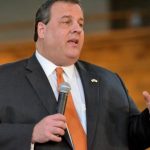
 Mara, in a 2011 campaign photo.
They say you’re only as good as the friends you keep. Well, some local Republicans must be feeling mighty awkward with the people they’re being surrounded by.
On Friday former House speaker and presidential contender Newt Gingrich tweeted out the Post’s endorsement of Republican Pat Mara for the At-Large seat on the D.C. Council, calling Mara’s run a “great opportunity” for the GOP in urban areas. Gingrich’s support certainly isn’t to be minimized: the man has close to 1.5 million supporters on Twitter, few of which probably even knew that D.C. had a Republican Party.
Interim Councilmember Anita Bonds, who chairs the D.C. Democratic State Committee and is fighting to keep the seat she gained in January, was quick to lambast Gingrich’s Twitter endorsement. “Patrick Mara says that he’s the change the District needs, but do we want the type of change that’s drawing praise from people like Newt Gingrich?”, her campaign wrote in an email to supporters.
This isn’t the first time that Mara’s conservative supporters have been used as campaign fodder by his opponents. Earlier this month, Bonds criticized Mara for supporting Mitt Romney during last year’s presidential contest. Also, fellow At-Large contender Elissa Silverman called Mara out for accepting a $1,000 donation from Freedom’s Defense Fund, a group that had supported candidates such as Missouri senatorial contender Todd Aiken (he of “legitimate rape” fame) and even said it opposed D.C. statehood. Mara was quick to return the contribution.
These dust-ups may be campaign tactics, but they do underlie a tough reality that local Republicans like Mara face in getting elected: a national brand that’s grossly unpopular in many urban areas, especially D.C. Posting on the Cleveland Park listserv over the weekend, D.C. resident Mike Sappol said that the mere association would make it impossible for him to vote for Mara.
“The present-day Republican Party is not just ‘a tarnished brand’ but a terribly destructive force, for the nation and especially for the District of Columbia. What do Republicans stand for? Not fiscal probity: they were content to squander the surplus Bill Clinton left them when a Republican was in office, and their one-note emphasis on lower taxes is socially ruinous. Not the democratic process: they are resolutely against DC statehood and even home rule (and on a national level try to suppress the vote and gerrymander ruthlessly). Human rights: anti-gay, anti-abortion, anti-health care, anti anti anti. If Patrick Mara is trying to do good, why is he with them?”, he asked.
I put the question to Robert Turner II, the new executive director of the D.C. GOP (and former leader of the D.C. Log Cabin Republicans). For him, the broad principles align from the national party down to the local franchise, but on many of the basic details there are obvious differences.
“We agree with the national party on broad themes like lower taxes and less governmental regulations. But we also have serious disagreements on other topics, such as marriage equality and D.C. budget autonomy. It is then incumbent on us to communicate when we agree and when we disagree on these differences in our platform and our messaging,” he said. (Last year the D.C. GOP included D.C. voting rights and marriage equality in its official platform.)
Mara certainly fits that narrative: he testified in support of D.C. marriage equality, sits on the board of D.C. Vote and won a seat to the State Board of Education as Ward 1’s representatives. Missy Reilly Smith he is not. (Someone has set up a website with the sole purpose of informing voters that Mara is in fact a Republican.)
Turner also says that a win for Mara would work within the national Republican Party’s new direction, which includes reaching out to new voters and making headway in urban areas.
“I think a Pat Mara victory will have a large impact on the narrative,” said Turner. “Many in the media have been chiseling the tombstone of the Republican Party, saying that we are dead electorally. But what can they say when a jurisdiction that just voted over 90 percent for Barack Obama turned around and five months later elects a Republican to the city council? You can’t explain that away in a 30-second sound bite.”
Obviously, the relationship is still complicated—and likely to be risky. Councilmember David Catania (I-At Large), for one, left the Republican Party in 2004 over its stance on same-sex marriage. Additionally, for every time that a national Republican chimes in on local issues, local Republicans must cringe. As for Gingrich, well, he’s certainly been a mixed bag for D.C., but Turner said he was chiming in because of Mara’s work on education. “Speaker Gingrich has likely taken an interest in Pat’s work on the School Board and his advocacy for vouchers and charter schools,” he said.
Still, party loyalty and identification are somewhat meaningless in D.C.: former Councilmember Carol Schwartz, herself a Republican, was beaten by Mara in a 2008 primary because she had sided with a bill granting restaurant workers paid sick leave. On the Democratic side, there are otherwise liberal legislators that opposed marriage equality in D.C. when it became law in 2010.
The accusations leveled against Mara can also cut the other way: while most D.C. residents supported Obama, the local Democratic Party is in insular club that has repeatedly sunk into controversy. Mara might have the weight of the national Republican brand on his shoulders, but the five At-Large contenders running as Democrats could certainly be tarnished by the local party’s reputation.
As for Mara, he told us earlier this month that he doesn’t shy away from the association and that many of his voters in past races have been disaffected Democrats or local independents.
Great opportunity for #GOP victory in urban area- @washingtonpost endorses @patmara for DC City Council. washingtonpost.com/opinions/patri…
— Newt Gingrich (@newtgingrich) March 22, 2013