Martin Austermuhle
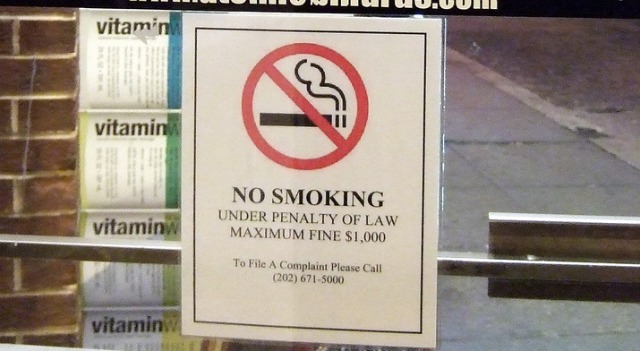 Photo by billadler
When the Civil Cigar Lounge opened in Friendship Heights earlier this year, the sleek and modern bar offered something that few places in D.C. can: a place to legally light up. Or so it thought.
Smokefree D.C., the advocacy group behind the passage of the 2007 law banning smoking in bars and restaurants, wrote a letter Mayor Vince Gray and the D.C. Council this week alleging that Civil and a number of other establishments in the city—primarily hookah bars—were violating the letter of the law.
According to the group, none of the establishments has been properly granted an exemption to the provisions of the law, despite possibly being eligible for one. As such, for every time someone takes in a breath of smoke at any of the offending establishments, the owner or smoker could be fined between $100 and $1,000 for a first offense.
Other than Civil, the establishments identified by the group are: Rendezvous, Bistro 18, Tangier Lounge and Hookah in Adams Morgan; Queens Café in Shaw; and Zenobia and Prince of the Harbor in Georgetown.
When the law was written, smokers were able to carve out a small number of narrowly defined exemptions: retail outlets where at least 75 percent of annual sales revenue come from tobacco, tobacco bars where 10 percent of revenue is generated from the sale of tobacco products (think a hookah bar or cigar lounge), outdoor areas, hotel rooms, medical research facilities, and theatrical productions. (The law also allows the mayor to grant a waiver based on a claim of economic hardship.)
But qualifying for an exemption isn’t simply a matter of saying you fall into one of those categories—rules governing the law’s implementation mandate that retailers and restaurants submit an application to the Department of Health formally requesting the exemption. Since 2007, only nine places have successfully done so: six bars and restaurants, two cigar stores and the Georgetown University Medical Center.
According to Smokefree D.C.’s Angela Bradbery, though, neither Civil nor the eight other locations she visited from the end of February to the end of March had applied for an exemption—and all of them currently allow smoking. Whether they mean to or not, she said, they’re all breaking the law.
“If illegal behavior goes unchecked, the city is sending a message that it’s okay to blatantly violate a key health and safety law, and we likely will see more hookah and cigar establishments open without the city ensuring that they meet the requirements established by the Council,” she wrote.
People with knowledge of the situation that we spoke to say that in some cases, it’s willful ignorance of the law. In others, though, there’s an honest misunderstanding that exemptions need to be signed off on by the Department of Health and that entire classes of establishments—like hookah bars—aren’t simply given a pass. There’s also the issue of the Department of Health itself, which hasn’t been particularly aggressive in enforcing a law that has become broadly accepted.
As for Civil, a manager we spoke to said that the new cigar lounge makes between 18 and 20 percent of its revenue on the sale of tobacco, so it would qualify for an exemption. But when asked whether the establishment would have to formally request such an exemption, the manager said that the law did not say so. In a sense, he’s right—the law doesn’t say it, but the rules implementing it do. (Attempts to speak to Civil’s owner today weren’t successful, though we’ll update if we hear from him.)
A managed at Soussi, a hookah bar in Adams Morgan that does have an exemption to the smoking ban, said that other hookah bars that had popped up in the neighborhood weren’t similarly exempted, some because they thought they wouldn’t get caught, some because they thought that the law didn’t apply to hookah bars. (During the debate over the smoking back, Ward 1 Councilmember Jim Graham fought for the hookah bar exemption.)
For his part, DOH Director Dr. Saul Levin said in a statement that he was looking into the issue and that the department would continue to ensure that the 2007 law was enforced.
“As the District continues to see economic growth and development, we have seen an increase in bars and restaurants alike. The Department of Health is redoubling our educational efforts to ensure that bars/restaurants are aware of the District’s Smoke-Free Workplace law and advising of exemption requirements. Additionally, a collaborative interagency task force, is underway to ensure the District’s smoke free law is enforced, the health and wellness of residents and visitors remains a top priority and that the wealth of amenities in our city continues to grow,” he said.