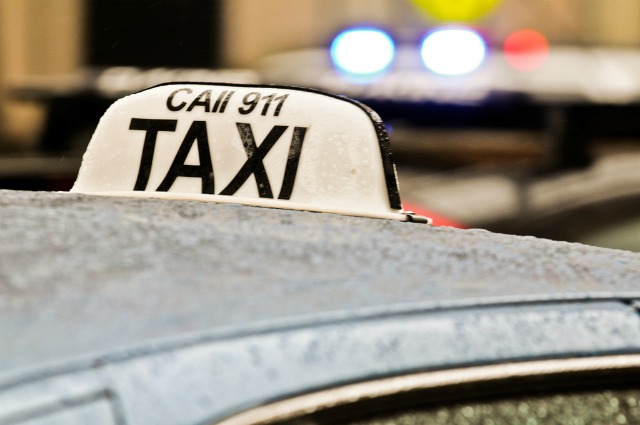
 Photo by Chris Reif
With the D.C. Taxicab Commission and the livery-by-smartphone company Uber squaring off yet again—this time over the District’s new regulations concerning credit card payments in taxicabs—the Federal Trade Commission is joining the fray, and it’s siding with Uber. In comments submitted last week to the DCTC, the FTC’s staff wrote that, as written, the new regulations could impede companies like Uber from being competitive in the city’s taxi market.
“These software applications,” the June 7 letter reads, “are an innovative form of competition that may enable consumers to more easily arrange and pay for commercial passenger motor vehicle transportation services, as compared to traditional methods such as street hails or prearrangement by telephone through traditional service dispatchers.”
Under the new regulations, which went into effect June 1, the District’s 7,300 taxis have to begin installing new “smart meters” that accept credit card payments. The regulations allow cab operators to choose from devices from 10 approved manufacturers. (All cabs are required to have the devices by Aug. 31.)
However, Uber, which is trying to grow its taxi dispatching business to complement its flagship black car service, is equipped with its own credit card payment system, as are many of the San Francisco-based company’s competitors in the digital dispatch market. Uber briefly threatened to yank its taxi service from the D.C. market when the regulations came into effect. That threat went unfulfilled, partly because DCTC Chairman Ron Linton said the regulations would be modified to “grandfather in” programs like Uber that hail taxis through smartphone applications.
But the digital dispatchers are concerned other parts of the new regulations, such as requirements that they share their trip data with the commission and submit their applications to the commission whenever changes are made to the software, and only make “substantial” changes once every 24 months.
In an interview last week, Linton told DCist that the new regulations are designed to combat fraud. “The whole thing has been postured as ‘get Uber’,” he said at his office in Anacostia. “Uber opens the door to operations who don’t have their level of integrity.”
Linton said that while Uber appears to treat its customers’ personal information with a great amount of care, he wants to prevent the entry of similar companies that take a lazy approach toward customer privacy and security. And while he said that most of Uber’s competitors are on board with the new regulations, Uber and its loquacious chief executive, Travis Kalanick, aren’t the only ones worried about the new regulations. MyTaxi, a German company that entered the D.C. market last September, said May 31 that it will likely remove its credit card payment system from its app here and shrink down to only hailing cabs, but not facilitating transactions.
But the FTC staff counters that a rule governing the pace at which Uber and similar companies can tweak their software goes against the nature of smartphone technology. “By their nature, applications are very likely to seek to update and upgrade their software on a periodic or sometimes more frequent basis, as, for example, by adding additional features and services, improving data security, or otherwise improving the software,” the FTC letter reads. It also asks the DCTC to be flexible about monitoring changes to smartphone software, and to give a definition as to what kind of programming fix constitutes a “substantial change.” The regulations, as written, are vague in those respects.
The FTC also takes issue with new sedan regulations, specifically a list of vehicles approved by the commission to be used in black-car services. New regulations prohibit vehicles weighing less than 3,200 pounds, which Uber has charged constitutes a prohibition on hybrids and other fuel-efficient cars. Linton said in the interview last week that the weight limit only excludes the smaller Toyota Prius, but allows for models such as the larger Prius, the hybrid versions of Toyota and Honda sedans, and even the Tesla Model S electric car.