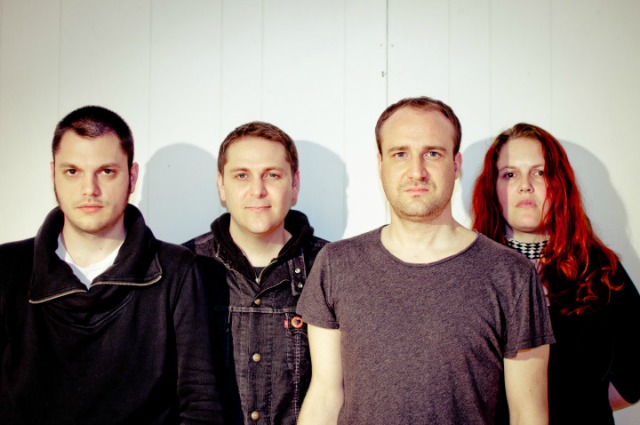
 Photo by Nathan Jurgenson
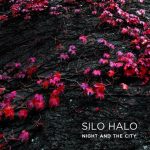
Silo Halo first came across DCist’s radar when we interviewed singer and guitarist Christopher Goett about his record label Etxe Records. He talked excitedly about the genesis of his own band, which was called Night and the City at the time. After losing a series of drummers, they ditched that name, letting it live on as their first album title when they morphed into Silo Halo.
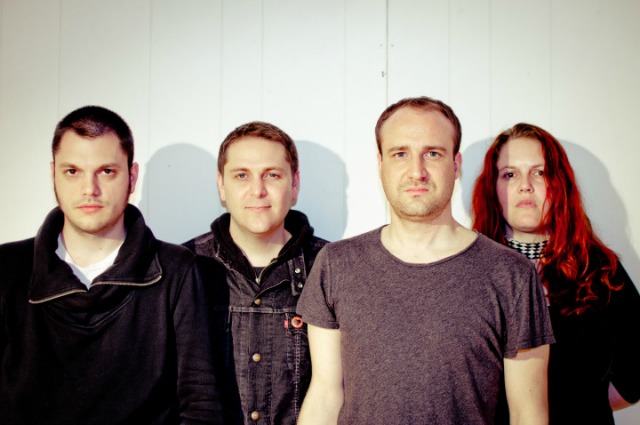
As Silo Halo, Goett, Greg Svitil (guitar) and Christin Durham (bass) have become one of the most unique sounding bands in D.C. Their loud feedback-drenched guitar solos are comparable to those of Screen Vinyl Image and Lorelei but they bring a higher sense of drama and owe a little more to new wave. We were impressed and asked them to do our first set of tour diaries since 2007. With the addition of drummer Nathan Jurgenson, their gothic surrealism has become all the more potent. We talked to Goett, Svitil and Durham (while Jurgenson added a drum soundtrack in the background) about their home studio, the change in their band name and their philosophy on playing live.
Find them online: On Facebook and on their Etxe Records page.
See them next: Tonight at the Pinch with Screen Vinyl Image, Ars Phoenix and No Paris. Donations requested, 9:00 p.m.
Why did you change the name from Night and the City to Silo Halo?
Greg: I regard Night and the City as an idea very much attached to that body of songs whereas speaking only for myself, the name Silo Halo felt as if it allowed more growth and could be attached to present as well as future whereas Night and the City is attached to a particular time period when we were first playing that I celebrate but Silo Halo I think is more continuous.
Chris: We were at a point where we’d gone through a lot as Night and the City. It was mostly great stuff but with turnover in personnel there’s a lot of restarting. You hit a stride and then you restart. So, we decided to say, “The three of us are all on the same page so let’s try to figure it out with a drum machine and we’ll play with drums and friends who want to drum as it makes sense but we’ll keep moving forward creating songs.”
Who came up with the name?
Greg: We were doing word associations.
Chris: Words that had good subjective connotations to all of us individually. We had a group of them together and we were thinking about different combinations and this one worked. It wasn’t specific enough where it would steer people to thinking about what the music was but interesting enough so that people might wonder what’s going on but just let the music be.
Greg: One thing that I really like about the name Silo Halo is that I think it’s more interesting for me to not speak literally about what it conjures up for me personally. It’s ambiguous but clear.
The words that that stick with me from my last interview with you about running Etxe Records were that the process was “deliberate” and “intentional.” Is that the case with the songwriting as well?
Chris: I’ve been fortunate to be in two bands with multiple songwriters which is fun for me. It’s really a fun process. You test your ideas and your ideas get enriched and there’s editing that happens and there’s decisions that may get made. I like that creative process a lot. I’d say we’re very intentional as a band. We have our own sense of a filter of what passes our standard, I guess. It’s a total internal thing: what makes sense to us. That sort of intentionality is true and being at our pace or rhythm is true.
Greg: Every song exists for a reason. We have never written a note of music for the same of filling time or filling space or thinking that we need something in this particular spot. Everything’s been for a reason and that’s why some things happen very quickly and some things take a lot of time.
I seem to remember that one or both of you has a recording studio.
Greg: We have a modest recording setup downstairs. That is the room where we rehearse and where we record and where often we write and make arrangements. It’s a very musical place. Nathan and I have been here four years and that spring ’09 period was the time when all of us began to play together. There were still stacks of boxes and things that hadn’t been unpacked on the first evening that Christin appeared and we sat on chairs in the basement and began to play songs in a little corner of the room that was not overcome by boxes. All four of us have in one way or another been a part of the building up of that space as a space to be musical and creative and we’ve all put a lot of time and thought into making the recording and playing setup as conducive to being creative as we can.
Chris: We recorded Fangs Out here. Girl Loves Distortion played with them and met them in Toledo, loved them and we asked, “Do you want to come to D.C. and record in our studio?” We recorded Night and the City here. Greg’s recorded Teething Veils here.
Christin: I think Locrian recorded here.
Chris: Greg and I mastered a tape of them that was recorded here. It’s definitely tied to Etxe a bunch in terms of the space. It’s as mystical and magical as Greg says and I love that it’s in my neighborhood and in my community. We pool resources and we’ve pooled our different mics and instruments together and it’s just been really a part of the process. It’s a really important space. It’s a musical asylum, I’d say.
So, Nathan has been living here for four years but didn’t he recently start playing with you? How did that transition happen?
Christin: I think it’s all been timing. Nathan was still playing with Screen Vinyl Image when we were initially looking for a drummer. Then we had a drummer and then he left Screen Vinyl Image and started playing with Phonic Riot, I believe. Then we lost our first drummer and were on the search for our second drummer. I kind of continued on that way until finally he wasn’t in a band and we were looking for a drummer. So, that’s how it started happening.
Chris: There was no other person on the planet that had heard our songs as much as Nathan had. And, in this house! He’s heard our rehearsals two or three times a week for four-plus years.
Greg: And he’s heard me write songs in the embryonic stages through the thin walls.
Chris: So we’ve been recording with him since December. All the drums are pretty much tracked and most bass parts are tracked.
It sounded like with the first album like you felt like it was okay without the live drums but you also sounded excited to have live drums. Had you always wanted live drums?
Greg: I personally have always wanted to have live drums to some degree or other. On the other hand, it’s ultimately about the songs and songs can be presented in many different ways with a variety of instrumentation and arrangements. I personally think that our songs are malleable in that way. So, for me it was very interesting using the mechanical drums as a pulse or component of the arrangements but I am very excited to have Nathan playing the drums now.
Christin: I don’t think we ever really wanted to play without live drums but we did what we had to do.
Greg: There were moments where if we refused to play with mechanical drums that it would mean not playing at all and we would rather play than not play.
Christin: And we definitely would not record without live drums.
Chris: So Davis [White] was on the first record. I would always want to record with live drums—at least with these songs.
What can we expect from the next album?
Chris: I feel like these songs have maybe lived in the live realm a little bit more than the earlier songs. That’s just a product of being a band longer. From my standpoint, I feel like they’ve gotten their sea legs in various concerts. We took a lot of these on the road. We played them with a machine. We played them without a machine and they’re pretty honed so I’m pretty excited to capture them on tape. I don’t know that it makes them better or worse, but it makes them clearer like, “Alright, let’s attack this.” We can record in a shorter period of time and there’s a greater idea about something because we’ve been trying them on for size in different ways. There are some things with organs, some parts with guitars. That’s one thing that’s different from last time. Last time recording was a longer process because we were still kind of getting comfortable with the songs and how we wanted to articulate them.
What’s your view on playing live shows in D.C. right now?
Christin: Booking can be frustrating but generally D.C. is a good place to be playing music and I agree with Greg, who isn’t saying it, that making music is its own reward. We’re not a pop band. It’s only frustrating when I’m trying to book a show for another band.
Chris: That frustration goes back to a lot of the DIY roots we all share. When someone needs a show, we take it seriously because when we need a show, they understand how dire it can be for getting gas money or stitching together 16 hours with a show in between. I think Christin’s shows at SOVA were awesome I think that responsibility and that karma of taking an out of town band that needs a show seriously and trying to help them out is something we understand having been to other markets and cities. Playing shows for me is much more about being a part of that — it’s not a scene — but when I can I go out and see friends because it’s such an inspiration for me and giving back and being a part of that and playing bills with friends is such a source of pure joy and expression. It’s just so fun. It’s what all the toiling is worth. For friends who dig it and get enjoyment out of it, that’s fun.
Greg: That’s where my headspace has grown into since the days when I had no interest in playing in public. It’s so obvious and right in front of me that I didn’t see it for a long time: seeing my friends and people who play music that means something to me is so fulfilling and such an important part of life, that it struck me that there is a possibility that bands that I’m in could potentially be a benefit to someone else in the same way. It’s an ongoing dialogue that continues indefinitely among all people that make things.