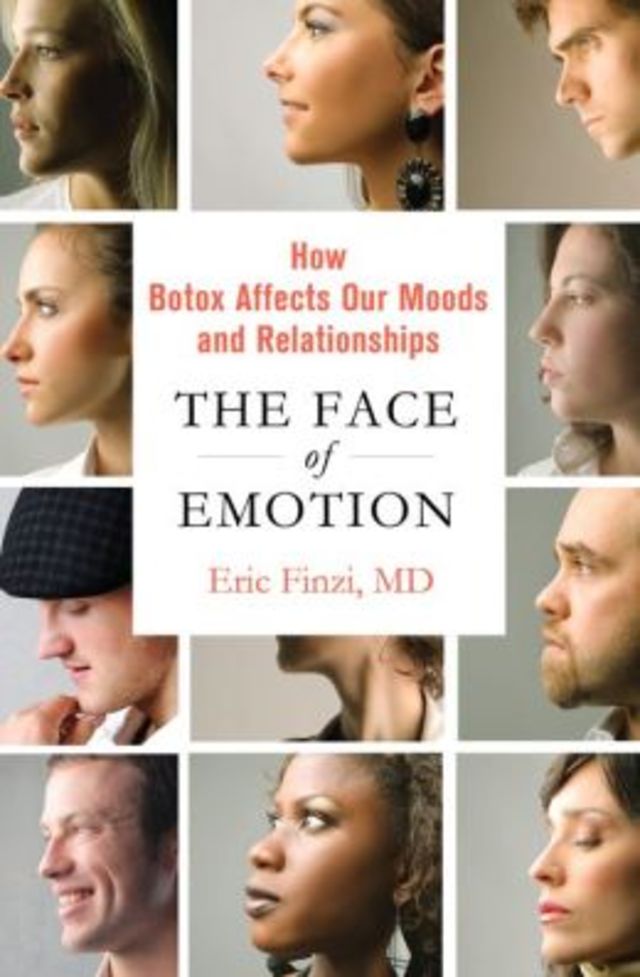
 Social psychologist Amy Cuddy says that widespread “power posing” can up testosterone levels and increase confidence. Neurobiologist Antonio Damasio says a rapid heart rate can lead to the sensation of anger. And as dermatological surgeon Eric Finzi is the latest to suggest, facial expressions can trigger one’s own happiness or sadness. He will speak about his recent book, The Face of Emotion: How Botox Affects Our Moods and Relationships (Palgrave Macmillan, $27), at Barnes & Noble in Bethesda on Wednesday at 7 p.m.
You have probably heard before that smiling can instantly make you happier, but Finzi goes much further in his investigation of how facial muscles influence emotion and, perhaps more importantly, how Botox could effectively treat depression. He explains how although we generally assume that “our facial expressions reflect rather than direct our emotions of the moment” it is more of a feedback loop: “Feelings are not just abstract constructs floating around in an ether called our minds. Rather, our brains use all the literal tools accumulated over millions of years of evolution … you need your smile to help you ‘feel’ emotion.”
The power of Botox sounds compelling, as Finzi describes the way it smooths wrinkles, eases bodily pains, reduces sweating, and according to his studies, also improves mood. His two clinical trials involved participants with major depression who received Botox injections into a muscle between their eyebrows. Finzi writes that with the muscle’s stifled ability to furrow into a frown, most of the treated groups reported practically no symptoms of depression after a couple of months (Nine out of 10 in the first study and 27 percent of 84 participants in the second study, compared to seven percent who got placebo). Not all participants had “frown lines” to begin with, so the author says the result could not just be attributed to higher satisfaction with appearance.
Finzi addresses concerns about Botox by essentially saying there shouldn’t be any. Despite the undoubtedly interesting science and study findings, the book reads not entirely unlike a Botox advertisement for, among other things, “treating aging.” A quick search on ProPublica’s Dollars For Docs project finds that Finzi has received meals from Botox maker Allergan. He is the medical director and president of two dermatology practices in Maryland.
The Face of Emotion raises worthwhile ideas about mind-body connections. Issues remain, such as problems with not being able to show a full range of emotion. But if Finzi is correct, he might have helped uncover an alternative to more invasive depression drugs, and maybe a potential cure for “Bitchy Resting Face.”
A signing will follow the discussion, which is free to the public.