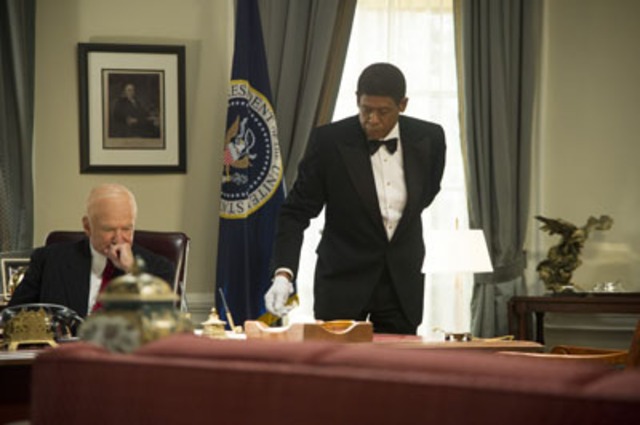
 Robin WIlliams and Forest Whitaker (The Weinstein Company)
One of the poster images for Lee Daniels’ The Butler features a distinguished servant in silhouetted profile, his shape decked with the Stars and Stripes as an all-star cast runs along the length of his body. The first image of the American flag in the film is juxtaposed against a lynching. It’s a sensationalist image from a director known for sensationalism, but most of The Butler is too proper and deferential.
The movie states its theme early. African Americans show two faces to the world: the deferential face they show to The Man and their real faces. Based on the true story of Eugene Allen, who served as a White House butler for 34 years, the Hollywood version stars Forest Whitaker as Cecil Gaines, a man who makes a living from his deferential face while his eldest son Louis (David Oleyowo) grows to become a civil rights activist.
Daniels’ well-meaning but ultimately tepid film asks what could be provocative questions, but the film is more interesting to think about than to watch. For instance, what’s with the horrible stunt casting of white actors? None of them acquits themselves particularly well. Minus the bulk of his untamed hair, Robin Williams turns out to have an egg-shaped head suitable to pass off as President Eisenhower’s. While I’m glad Williams was not allowed to ham it up for this historical drama, his restrained performance is just one example of how The Butler is restrained to a fault, ironic given its central conflict.
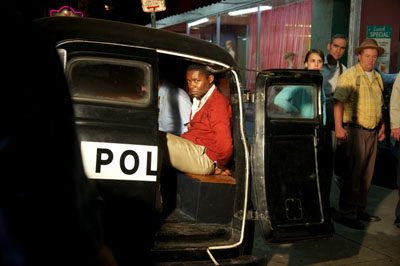 David Oyelowo (Anne Marie Fox/The Weinstein Company)
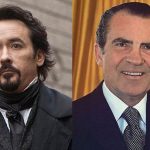
Lee Daniels’ previous features have not been examples of restraint. From the overheated Precious to the hothouse absurdities of The Paperboy, the director likes to push at the extremes of taste and propriety. The cast assembled for this Oscar-baiting drama is ripe for bad taste, and not just from Robin Williams: John Cusack as Nixon? Jane Fonda as Nancy Reagan? Vanessa Redgrave as the kind matriarch of an oppressive plantation?
I wish I could say the movie delivered on its tacky potential, but it’s too tasteful, despite brief scenes like Liev Schreiber’s LBJ arguing with staff members from the toilet, his pants around his ankles and beagles lying at his feet. The film reaches a tepid low point when Alan Rickman, whose make-up artist at least tried to give him a Reagan-esque color, doesn’t even try to do an impersonation of the President. He tilts his head, but the voice that comes out of his mouth sounds like a sleepier version of his villainous role in Die Hard.
If you removed the movie’s attention-getting presidential casting, you would have a predictable but dignified look at the history of the Civil Rights movement. The different administrations under which Cecil serves frame this history, but the caricatures of that history bring down the scenes that do work.
Forest Whitaker sleepwalks through his role, which suits a character who remains mostly complacent in the face of a changing civil tights landscape. Oleyowo is more magnetic as his son, but his is role is more magnetic and more developed by design. The butler is, after all, a steady presence, whose profession requires him to be invisible as the world goes on around him. From the actors playing the presidents to the film’s central figure, we see people holding themselves back in the name of propriety. It’s a course correction for the over-the-top Daniels, but history and The Butler may have been better served by the passion of his extreme tendencies.
—
Lee Daniels’ The Butler
Directed by Lee Daniels
Written by David Strong
With Forest Whitaker, Oprah Winfrey, David Oyelowo
Rated PG-13 for some violence and disturbing images, language, sexual material, thematic elements and smoking
Opens today at a multiplex near you