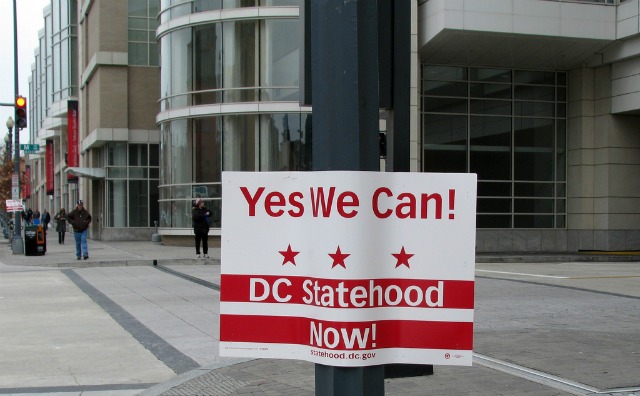
 Photo by Bullneck
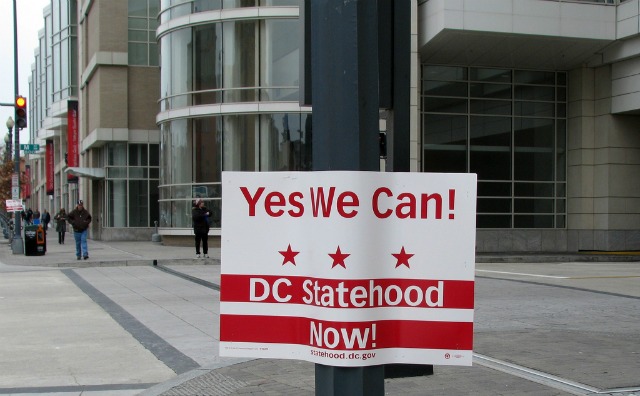
With an impending federal government shutdown that the D.C. Council doesn’t want to adhere to, the struggle for D.C. statehood is still looking as grim as ever, according to a new poll.
In a poll conducted by Rasmussen Reports, only 25 percent of Americans support D.C. becoming the 51st state. In fact, the survey found that only “12 percent of American adults think it would be good for the United States to add more states,” and that 44 percent believe it would be “bad for the country,” while 24 percent don’t think it would have an impact.
According to the report, Rasmussen surveyed 1,000 Adults between September 23 and 24, and the margin of sampling error is about “+/- 3 percentage points with a 95% level of confidence.”
Rasmussen asked participants in the survey the following questions:
1. Generally speaking, do most politicians want the government to have more power and money than it does today or less power and money than it does today?
2. Do most Americans want the government to have more power and money than it does today or less power and money than it does today
3. Do individual states have the right to leave the United States and form an independent country?
4. Do sections of individual states have the right to secede and form a new state?
5. If you could vote on the issue, would you vote for your state to remain as is or for your section of the state to secede and form a new state?
6. Over the next 25 years or so, how likely is it that some states will break up into more than one state?
7. Would it be good or bad for the United States to add more states, or would it have no impact?
8. The U.S. Constitution designates the nation’s capital, Washington, D.C., as a federal district and not a state. Should Washington, D.C. be a state?
9. Should Puerto Rico be a state?
According to the report, more Americans believe Puerto Rico should be state than D.C.
But Kimberly Perry, executive director of DC Vote—an educational and advocacy organization seeking to end taxation without representation—isn’t surprised to hear about the low support for D.C. statehood. As part of a longer interview with DCist, Perry said that “this isn’t the first time a poll like that has been released,” and that when you ask most people about the fine details regarding D.C. statehood, they generally agree.
“I find it interesting that if you also ask individuals the question ‘Do you think Congress should interfere with D.C.’s budget?'” Perry says, “People say ‘No, that’s not fair. D.C. should be able to control its own budget. When you ask people ‘Do you think Congress should interfere and overturn D.C.’s laws?’ People say ‘Absolutely not, D.C. should be able to pass their own laws without Congress coming back and repealing laws.’ And when you say ‘Do you believe D.C. residents deserve representation in the House and the Senate?’ People say ‘Absolutely, every other American has that, D.C. residents should too.”
The problem, according to Perry, is that the term “statehood” scares people. “Somehow the term ‘statehood’ for people is hard to digest,” she says. According to Perry, “a lot of it is marketing, and a lot of it is communication.” But she’s confident that there’s consensus and agreement that D.C. should have the same rights as the other states.
“Somehow when you present just the word ‘statehood,’ people have a hard time understanding what that is and what that means,” Perry says. “So polls like this have typically been low because we believe the questions are asked vague and unfairly.”