 Photo by Eric Purcell
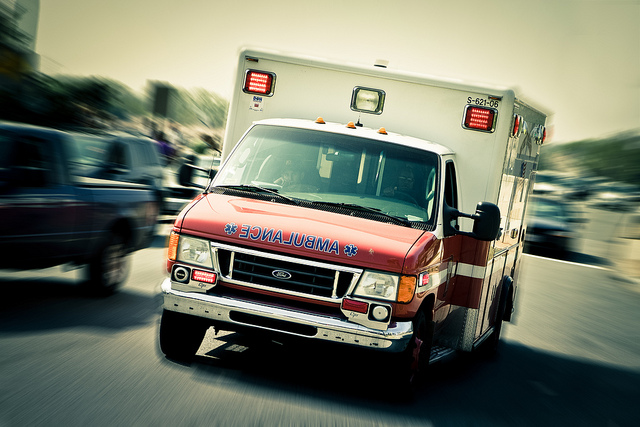
A Metropolitan Police Department report commissioned by Paul Quander, D.C.’s deputy mayor for public safety, has found that none of the ambulance fires that occurred earlier this year were intentionally set.
Here’s a breakdown of what happened and what the report determined.
The first incident occurred on the night of Aug. 2 in an ambulance parked outside Washington Hospital Center on Irving Street NW. It was determined that an electrical malfunction might have started the fire.
The second incident took place on the morning of Aug. 13 as an ambulance was parked on Benning Road SE while its crew tended to a patient inside a building. Fuel or another ignitable fluid leaking onto a hot manifold possibly started the fire, the investigation found.
Later on Aug. 13, at 6:19 p.m., smoke began coming out of an ambulance parked outside Washington Hospital Center. The investigation determined there was smoke, but no actual fire, and there was no evidence that anyone did anything intentionally to cause the incident.
“I said when I ordered the investigation that we were going to find out what the facts were in these incidents; and that we would be guided by the facts and not speculation,” Quander said in a release. “Now we know that these were a series of unrelated, unfortunate events that arose within a relatively short period of time of one another. No further review or action is warranted.”
After Quander announced the investigation in August, telling reporters MPD would see if anything “untoward” happened, the D.C. Firefighters Association released a statement saying, “The only thing ‘untoward’ behind these ambulance fires is the complete neglect by those in charge to make sure our fleet is properly maintained.”
Update: President of the D.C. firefighters Local 36, Edward Smith, issued the following statement to DCist:
We believe an apology is in order from the Mayor. It was irresponsible for his Deputy Member to insinuate that the were possible “untoward” acts prior to the investigation being completed. Also we still continue to have the same safety concerns in regards to the state of the fleet. A comprehensive plan needs to be issued about replacement and inspection the current fleet.