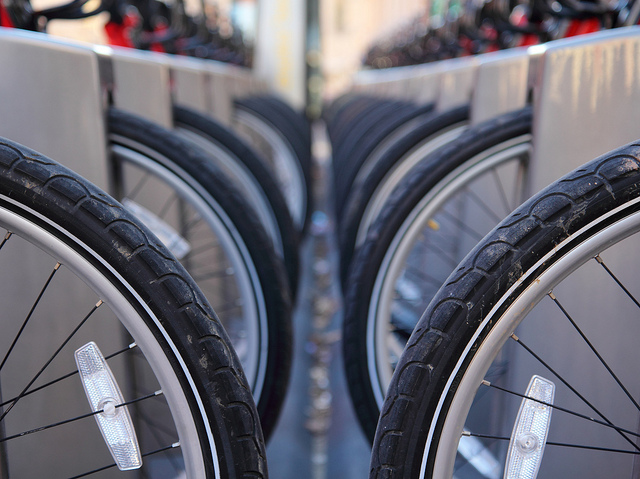
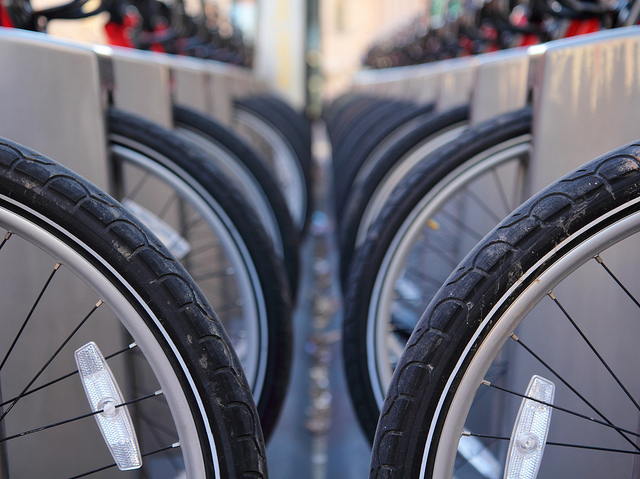
 Photo by Mr. T in DC
Walk or bikeshare? Bikeshare or bus? These are two of the questions that plague the time-conscience D.C. commuter.
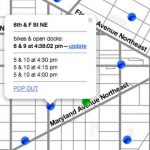
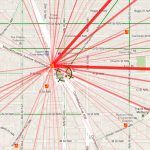
Enter a new tool created by Fierce Government editor Zach Rausnitz, which shows the average time it takes to travel between two Capital Bikeshare stations. For example, of the 1,529 member trips taken from the station at 11th and F Streets NE to Union Station, the trek lasted on average 5 minutes and 49 seconds. (That’s faster than the around 15 minutes it would take to get to Union Station on foot and nine minutes, plus waiting, via X8 bus.) This number comes from data collected during the first six months of this year.
A note from Rausnitz: “The average excludes any trip that was more than four times as long as the fastest trip recorded for this combination of stations. 17 trips were excluded from the average for the stations you chose. Doing this helps weed out recreational or indirect rides—which often last several hours (or, in a few cases, several days) and would heavily distort the average if left in.”
Rausnitz has also used Bikeshare data to figure of which stations would benefit the most from an expansion and if taking a Bikeshare bike to Nationals Park is worth it. Check out his blog here.
So are you faster than the average Bikeshare user? Slower? Play around with the tool and let us know.
Update: Rausnitz told DCist via email why he made the tool.
There’s a few reasons I do this. One is that I love using Capital Bikeshare, and when I found out they release trip history data, I had all these ideas about things I could figure out that I had been curious about.
One Bikeshare trip inspired the whole investigation of Bikeshare use before/after Nats games. At the time, I was living near Eastern Market, about 1.5 miles from the stadium, and I took Bikeshare to a game (which I had done a number of times before) only to find that all the nearby stations were totally full. I ended up biking most of the way back to my house to find an open dock, then walking to the game, which I would have done in the first place if I knew all the docks would be full. I was annoyed and decided to look into how early the stations usually fill up. Obviously, you can check the Spotcycle app before you leave, but the stations fill up fast in the time before the game.
My other motivation is that I wanted to learn to code and analyze data, and it’s much easier to teach yourself those things when you have a real project to work on. When I started out many months ago, I didn’t know anything about code. I barely even knew anything about Excel (which I do the data processing in) beyond the basics. I was pretty clueless at the beginning and ended up writing a simple but very bad program: It could produce the average trip time for any two stations, but it took 10 minutes to produce each average, nearly crashing my computer every time, and I had no idea how to put it onto the Internet. I started over, figured out what coding languages I actually needed to learn, and gradually put the pieces together.