This post is a sponsored collaboration between Virginia Tech and Gothamist staff.
The thing about science is this: there’s so much going on around the world, day in and day out, the average person can never know what they’re missing. And behind it all are still more people who will never be known to us: professors, students, Ph.D. candidates and assistants working together on government grants, studio classes, pet projects. Everything is in the name of innovation, and nothing should be left out.
Virginia Tech has asked us to be part of their Impact campaign, focused on sharing the university’s contributions to the area. Since VT is renowned for research, their work in the field is a natural starting place. Of course, we’re admittedly only scratching the surface of the science world. But after finally narrowing it down, here they are: eight awesome studies at Virginia Tech right now, in your backyard.

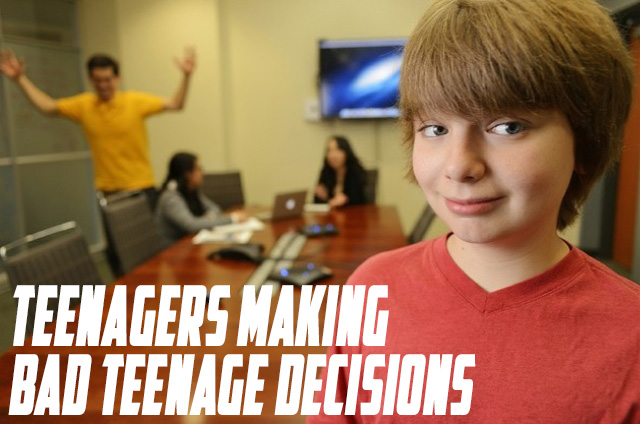
Anthony, 13, participates in a VT study on risky teenage behavior.
Why, why do teenagers do what they do? It’s such a universal phenomenon that Brooks King-Casas and Jungmeen Kim-Spoon, two psychology professors at Virginia Tech, thought there must be an explanation. The pair recently received a $3.5 million grant from the National Institutes of Health to look into the issue, specifically to determine predictors of substance abuse and risky sexual behavior in adolescents.
“The years between 13 and 17 are critical in a young person’s brain development,” King-Casas says. “During that span, adolescents tend to become more sensitive to high-reward stimuli: sex, drugs, rock ‘n’ roll.” That’s common sense for anyone over 17, but complicating matters are the teens’ still-developing prefrontal regions, not yet trained in inhibiting impulsive behaviors. It’s the combination that causes the trouble; what if adulthood means learning to repress your basic urges?

Can you print fabric? If you can, shouldn’t it be both flexible and rigid? Dr. Christopher Williams of the School of Engineering’s DREAMS Lab, along with Negar Kalanatar and Alireza Borhani of the School of Architecture + Design, have been working on just that question. With each prototype, the team moves closer to achieving printed fabric for potential applications in the medical, textile and fashion industries.
For their efforts, the group was invited to New York’s 3D Printshow, a prestigious event bringing together the most creative uses for 3D printing technology. For a look at the products they presented and to learn more about their design methodology, you can check out this video—it’s cool stuff.
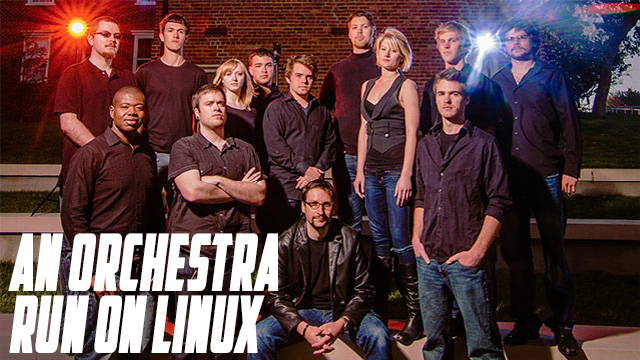
In the ’70s, Stevie Wonder ushered in a new era on a Moog; now, there are engineers in a L2Ork (Linux Laptop Orchestra). Set up some laptops with an open-source, real-time graphical programming environment, add some speakers, trackpads and webcams, put it all on a network, and you have an experiment in the way music is conceptualized, composed, and performed.
When the L2Ork members program music through their machines, they’re creating what is essentially a networked, musical sandbox for anyone who cares to learn how to use it. L2Ork was founded in 2009 as part of the Digital Interactive Sound & Intermedia Studio by Dr. Ivica Ico Bukvic, who hopes the program will help level the musical playing field, bridge STEM and the Arts, and change our perception of what electronic music can be.

CG has come a long way, but can we animate faces with true emotion using speech itself? Yong Cao, a Computer Science student at the College of Engineering, is looking into it. Using a database of facial motions tied to speech data, Cao creates a model that combines emotion with accurate lip-synching. The result is a striking representation of human expression.
To see the result, check out this video, a 1-minute narrative from the (CG) man above about the agony of middle school.
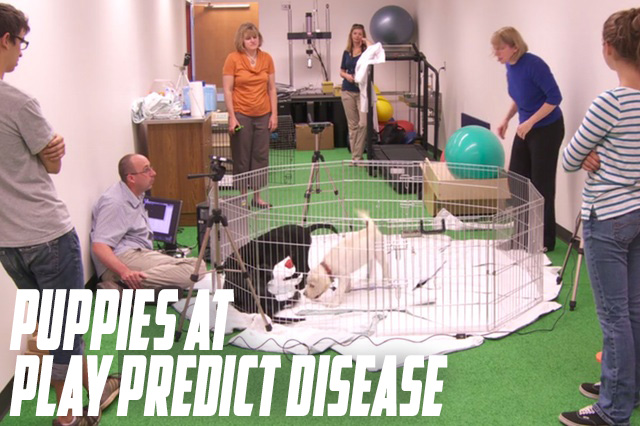
As dogs become more and more part of our families, we hope canine health care will follow. Thomas Tucker, Bess J. Pierce, Jeryl C. Jones, and Matthew Swarts, all from different programs and universities, are bringing us one step closer to that goal.
Combining motion capture, 3D modeling and veterinary knowledge, the team observes and records puppies at play. Modeling this behavior is a noninvasive way to map the dogs’ bones, joints, and the (uninhibited) repeated stresses on their bodies. Someday, the team hopes, this will help predict and prevent the onset of problems later in the pup’s life.
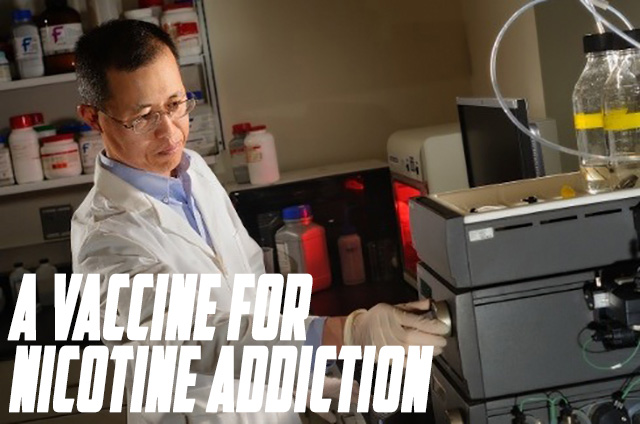
Working in the field of stimulant addiction is another National Institutes of Health grant winner, Mike Zhang. Zhang, a professor at the College of Agriculture and Life Sciences, recently received $2.4 million from the NIH to develop a vaccine that would negate the addiction to nicotine.
By blocking the pleasure response to the drug, the vaccine will help recipients avoid the main reason for picking up smoking in the first place, as well as make it easier to quit once started. Zhang, who has many family members who were smokers, some even succumbing to the habit, hopes his work will help an estimated 1 billion nicotine addicts worldwide kick the habit “once they decide they are ready.”
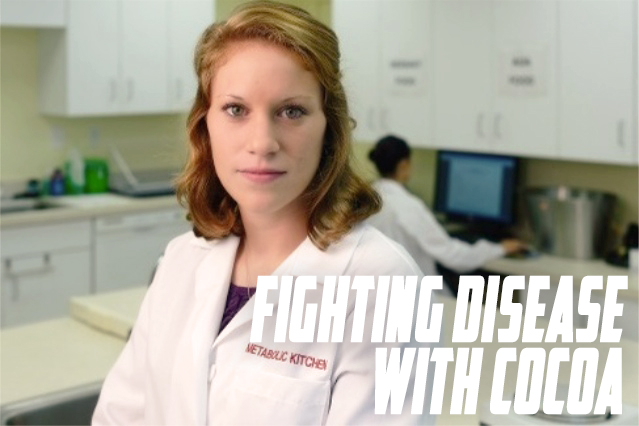
Karen Strat, a doctoral student in the Department of Human Nutrition, Foods, and Exercise is working with Andrew Neilson, an assistant professor of food science and technology, to study cocoa’s potential health benefits.
Early findings show a particular antioxidant in cocoa can dramatically increase the body’s ability to fight modern-day ailments like obesity, type 2 diabetes, and heart disease. Strat and Neilson both warn this isn’t an invitation to gorge on chocolate, of course, but that findings may significantly increase our understanding of diseases related to diet, metabolism, and blood sugar.
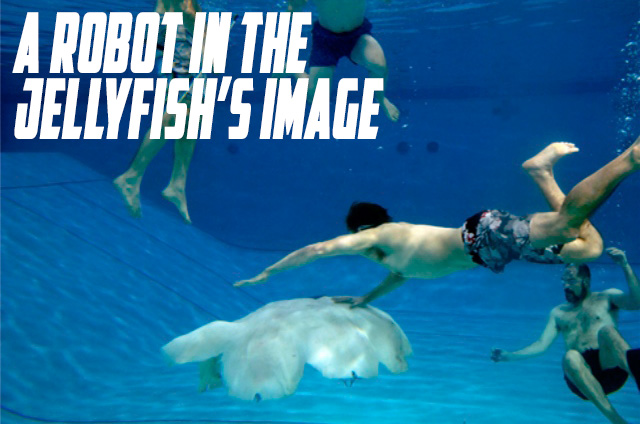
On Earth, the ocean is the final frontier. We’ve only explored 5% of what’s out there, and in 2012, a professor of mechanical engineering received funding to see what could be done about seeing the rest.
To combat not only the ocean’s vastness but its unforgiving nature, Shashank Priya and his team took a cue from a remarkably dynamic organism: the jellyfish. Jellies can withstand vast temperature changes, descend to huge depths and survive in fresh and salt water, all while using less metabolic energy than other marine life. With that in mind, Priya and his team have designed two predecessors—big Cyro and petite RoboJelly—to what will someday patrol the ocean, map its floor, and track its currents.
Dedicated to its motto, “Ut Prosim” (“That I May Serve”), Virginia Tech prepares scholars to be leaders in their fields and communities. The university offers 225 degree programs to over 31,000 students, and by fulfilling its land-grant mission of turning knowledge into practice, VT and its students fuel economic growth locally, regionally, and across Virginia.