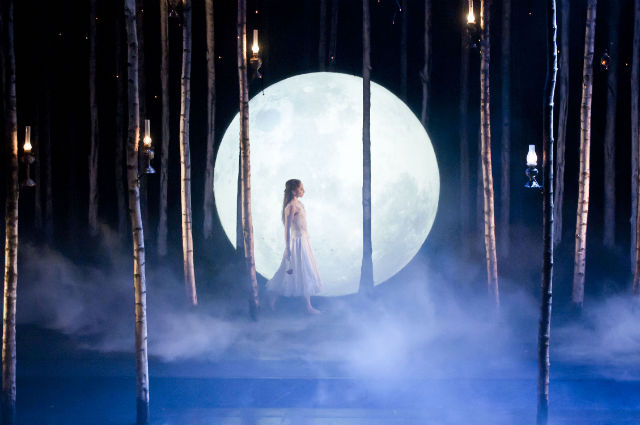
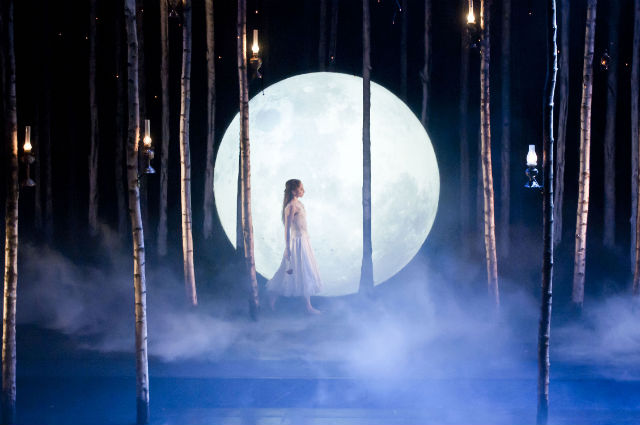
 Photo by Mikah Smillie.
In the second act of the luscious Matthew Bourne’s Sleeping Beauty, the royal Aurora dances with her friends and family at her 21st birthday celebration as Tchaikovsky’s famed “Garland Waltz” plays. The scene is set in 1911, with romantic Edwardian costumes and dance moves from the era to match. But the mood is soon darkened by the entrance of an evil presence with plans to punish Aurora for the sins of her parents. The wicked Caradoc entrances Aurora into accepting a black rose in a captivating dance duet. The sequence exemplifies everything that a fairy tale ballet should have: wonderful dancing, gorgeous costumes, enchanting sets and engaging supernatural elements like vampires. Yes, that’s right: Vampires.
This take on Sleeping Beauty, subtitled A Gothic Romance in Four Acts, is directed and choreographed by the British dance master Matthew Bourne. It opened last December in London and has been touring since.
During a recent phone interview, Bourne says his first introduction to Sleeping Beauty as a story was through the 1959 Disney film. He first saw the ballet when he was about 19-years-old at the Royal Ballet in London. While he can’t remember his exact reaction (“That was a long time ago,” he said with a laugh), he did watch that production again while doing research for his Sleeping Beauty. “When I saw it again, I sort of fell in love with it,” he explained. “It was fast moving, the pacing, and witty and characterful and had a drive to it.” Now, he explains, some modern productions have become “very heavy, dirge-like almost.”
The exact opposite can be said of his production. In Bourne’s Sleeping Beauty, the ballet begins in 1890, when the original production was first performed. Playful elements, like a puppet baby Aurora, elicited audible delight from the Kennedy Center audience on opening night Tuesday. The element of Bourne’s version that is perhaps getting the most attention is the addition of fairy vampires.
When asked where the idea to ramp up the supernatural element in the ballet came from, Bourne replied, “It literally came from the piece itself.”
“This is already a story where you’re asked to accept that fairies exist, that fairies are part of the world. … They’re accepted by the human world. So you’re already in a very supernatural, gothic setting,” he said. “So reading around the literature of that era I just expanded that to include vampires.”
“I like my ideas to come naturally through the piece, rather than imposing them on it,” he continued. And about those vampires, which seem to be getting all the attention? “It’s certainly not the most important part of the piece,” Bourne said. “If you’re coming expecting a vampire story, that’s not what it is.”
As Bourne explained, it’s a plot point that explains how Aurora’s love (Leo, a poor gardener who she, thankfully, falls in love with during the second act before she’s stricken by slumber) is able to stick around for 100 years to kiss her awake.
“For me, the most important thing about it is it’s got a great love story,” he said. “It’s good versus evil.” But he added that he doesn’t mind that people are focusing on the vampire element: “If it brings some young people in, teenagers who are possibly into Twilight or things like that, great. They will enjoy because it’s still set in that world.”
Matthew Bourne’s Sleeping Beauty is playing now at the Kennedy Center through November 17. Purchase tickets here.