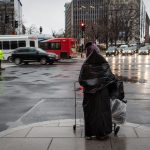
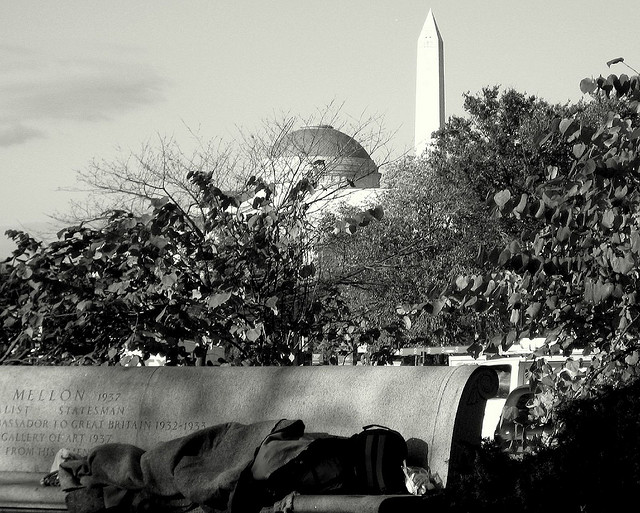
 Photo by rjs1322.
By DCist contributor Jonathan Neeley
When the temperature in D.C. drops below freezing, all adults in the district have a right to shelter. A course of action for providing it— mostly through homeless shelters, but sometimes with District-funded hotel rooms— is laid out in the Winter Plan, which is written by the Department of Human Services and approved by the Interagency Council on Homelessness by September 1 of every year.
Last Wednesday, the ICH approved an addendum to the Winter Plan that, for the first time in the document’s history, addresses unaccompanied youth. Included is $500,000 from the mayor’s office to establish six new crisis beds for minors (there are currently five) as well as a detailed outline of the procedure for screening kids for abuse or neglect and either returning them to their families or getting them into child protective services.
Not included in the Winter Plan, however, is language guaranteeing minors a right to shelter. While the city says that all its bases are covered, homeless advocates disagree.
“We respect and value the authority and responsibility of families to take care of their own children,” said DHS director Dave Berns. “Unless there’s reason to believe they’ve been abused or neglected, their families will be called and there will be a legal obligation for parents to come and take them home.”
“If kids are abused or neglected,” continued Berns, “there are 100s if not 1,000s of available options in child welfare and foster care programs.” City officials said that once a child enters into the welfare or foster care system, efforts to reunify them with their families continue, but the approach shifts to one that is more long-term.
Shelter providers around the city say that the administration is turning a blind eye to kids who cannot or will not go home by denying them a legal right to shelter. “The hidden nature of youth homelessness makes it difficult for people to understand that we have a significant problem here,” said Deborah Shore, executive director of Sasha Bruce Youthwork.
According to Maggie Riden of the DC Alliance of Youth Advocates, common homeless youth cases include LGBTQ teens whose parents have kicked them out, kids whose mental health issues are neglected, and children whose foster parents cannot care for them. Some kids bounce from couch to couch within their friend and family network, while others turn to more dangerous means of survival.
“There are lots of kids that report to us that they stay with somebody in exchange for sex or some other illegal activity,” Shore said. “Often, they’re staying at someone’s house where the parent might not really know they’re homeless.”
“It’d be nice if every youth had a stable and functional family to return to,” said Eddy Ameen, a psychiatrist who is director of training for the StandUp For Kids DC and chair of the Youth Working Group for the DC Center. “That goal is a good one to have, but for that to be your driving policy is naïve and short-sighted.”
Riden said a 2011 DCAYA study found that on a given day in the District, 3,000 kids experience homelessness; she added that national estimates put the figure closer to 7,000. According to Shore, 75 percent of the unaccompanied minors that pass through Sasha Bruce return to their families of origin, and another eight to ten percent move in with a relative. “The number is low,” she said, “but it’s about those that are falling through the cracks. It is not enough for a city of our size to have five beds. Most [cities] of our size have 35.”
Berns said that Riden’s numbers were inflated, noting that between 600 and 800 of the homeless children counted are parts of families that live in shelters. “Kids who are couch surfing, by definition for the Winter Plan, are not homeless because they are staying with somebody.”
“They are [homeless],” said Shore. “There are so many people who are in our city and who are caring policy makers but who really don’t have an appreciation for the scope and scale of the problems that these young people have.”
“There are unconfirmed reports of kids with nowhere to go, but as far as we know, there aren’t any kids on the street,” said Child and Family Services Agency director Brenda Donald. “I’ve heard that, but we don’t have any way of really knowing for sure.”
Donald did acknowledge that for a child who chooses to leave home, a solution is not always as black and white as simply returning, even if the conflict is not deemed abusive or neglectful. “That’s the purpose of this emergency shelter. Sometimes you need a cooling off period to make sure youth is stable and off the street. But the reality is the vast majority of the cases of runaway youth are likely not to rise to the level of abuse or neglect.”
“The right-to-shelter concept is complicated,” ICH member Chapman Todd said. “The intent is to make certain that no one is out in the cold, but what is the government’s required response if an assessment indicates that there’s a safe housing option besides a shelter bed? That’s what the group is struggling with.”
“It’s not just a matter of filling up a cot and putting unaccompanied children in a gym,” Berns said. “It’s not a safety issue. It’s a family dynamic issue. The kid needs a place to stay and the family has to provide it. I don’t think there’s going to be a time on a hypothermic night where a kid doesn’t have shelter.”
Scott McNeilly, a lawyer at the Washington Legal Clinic for the Homeless, said that examples go beyond youth who do not feel safe in their homes. He gave examples of kids who might have safe homes in far away states that they can’t afford to travel to, as well as those who simply cannot find their parents. At Wednesday’s ICH meeting, McNeilly moved to amend the Winter Plan by adding the phrasing “if for some reason the resources outlined in this protocol do not meet the need for this population, then the District will respond accordingly to ensure that no homeless youth is in danger of hypothermia this winter season.”
“This provides the District with an opportunity to reassert commitment to making sure no child freezes,” said McNeilly. “No more, no less.”
ICH chairman and city administrator Allen Lew disagreed, saying that the amendment “would open the door to unsustainable right to shelter for minors.”
McNeilly’s amendment was rejected soundly, with most ICH members agreeing that it was time to move forward—this was the addendum’s third draft this fall—and that the unaccompanied youth language was satisfactory. “We know kids aren’t just going back home,” said Cheryl Barnes, a homeless ICH member. “They’re hitting the streets. But for me, this is a start and a solution for now. We’re still a work in progress, but today I say ‘thank you.’ I’m supporting this.”
Berns called this year’s Winter Plan the clearest yet, and praised its clear language as a move away from the ad hoc nature of previous plans. “It really is the first time that there’s even been an articulation for what should be done with unaccompanied minors,” he said. “Does it cover every situation possible? Probably not. We’re going to have to figure that out.”
Riden agreed, noting that the approved addendum is easy for anyone dealing with a child in crisis to consult. Still, she would like to see right to shelter given to youth in next year’s Winter Plan. “We’re thrilled,” Riden said. “But we’re still concerned.”