 Photo by mediaslave
A bill that would require “affordable housing” be set aside in public-to-private residential land deals will be introduced to the Council tomorrow.
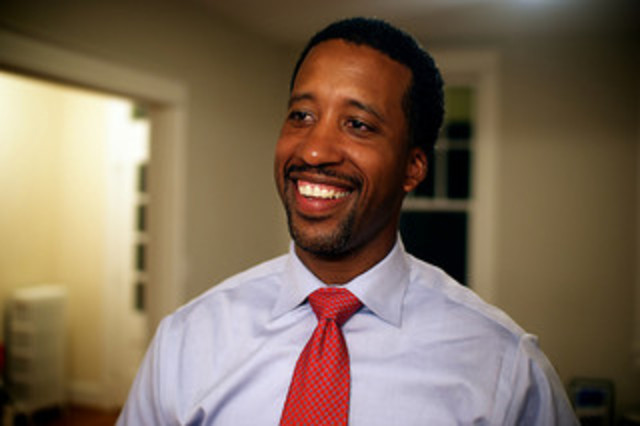
Under Councilmember Kenyan McDuffie’s (D-Ward 5) bill, public land sold or leased for a private development of 10 or more units must have at least 30 percent of units set aside for “affordable housing” if it’s within a half-mile of a Metro station, quarter-mile of a bus route or streetcar line, and 20 percent if it’s not.
In rental properties, 25 percent of these set-aside units have to accommodate very low-income households (30 percent or less of the area median income), and 75 percent would accommodate low-income households (between 30 and 50 percent). In ownership units, 50 percent would go to low-income households and 50 percent would go to moderate-income households (between 50 and 80 percent). These households would pay no more than 30 percent of their income for housing costs.
The mayor would be able to sell or lease the land for less than its appraised value under the bill. Here’s the caveat:
If a development cannot meet the affordable housing requirements, the District’s Chief Financial Officer must certify that the developer’s alternative plan maximizes affordable housing for the site, taking into account all available subsidies. That certification would be sent to the Council, which has the final say in disposing of District-owned land.
According to the Census Bureau, the area’s AMI was $88,233 in 2012. The Department of Housing and Urban Development estimates the Washington Metro Area’s median family income at $100,921.
“This legislation furthers the District’s commitment to affordable housing and could not come at a more critical time,” McDuffie said in a statement. “We can help the private sector meet the affordability requirements of the legislation by discounting the value of public land when it is sold or leased. The savings can be reinvested in the creation of affordable units.”
The bill was designed with help from the Coalition for Smarter Growth, the DC Appleseed Center for Law and Justice and the DC Fiscal Policy Institute. At least Councilmember Muriel Bowser (D-Ward 4) will co-introduce the legislation.