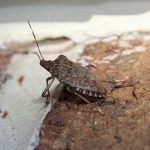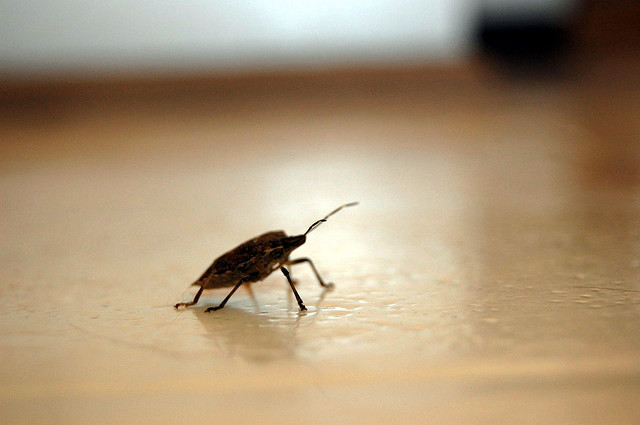
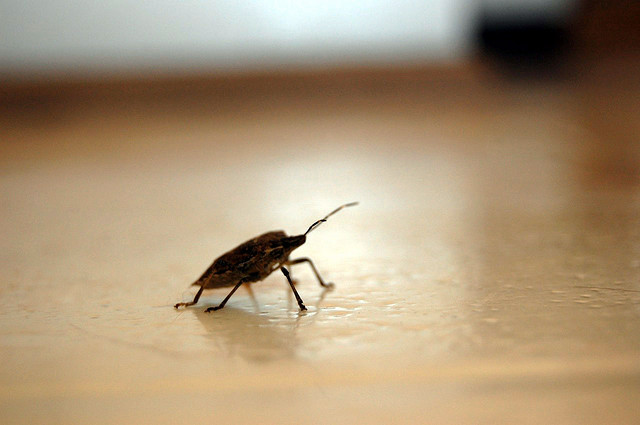
 Photo by hthrd
While we all may be pining for warmer weather, one thing we’re certainly not looking forward to is a certain type of smelly insect that comes with it: the stink bug.
But a new study conducted by Virginia Tech entomology professor Thomas Kuhar suggests that we may see fewer stink bugs than normal this season, thanks to the polar vortex. In Kuhar and his team’s latest findings, the Post reports, most stink bugs in their experiment could not survive the frigid temperatures brought upon by unusually chilly blasts of arctic air known as the “polar vortex” we’ve been experiencing lately.
In Kuhar’s experiments, him and his team collect stink bugs around the Virginia Tech campus each fall, put them into large, insulated buckets—fashioned to have similar conditions to underneath shingles, attics, and walls of houses, where stink bugs like to stake out for the winter—and stores them outside under a shelter for the winter season. What he found is that, this winter, 95 percent of the bugs had froze to death because of the colder-than-normal temps this season.
While stink bugs are designed to withstand cold temperature to a point—they “change their physiology by increasing their cryoprotectants (antifreeze proteins) to prevent their body fluids from crystallizing.” But prolonged cold snap this year (Blacksburg, Va.’s temperatures have only been slightly colder than D.C.’s this winter) have proved to be too much for the stinky insects that arrive en masse each spring.
“There should be significant mortality of BMSB (brown marmorated stink bugs) and many other overwinter insects this year,” Kuhar told the Post. It’s too soon to tell if the polar vortex-related cold weather has been enough to show a significant reduction in stink bug population around the D.C. area, but—hey—Kuhar’s findings certainly are promising.