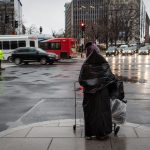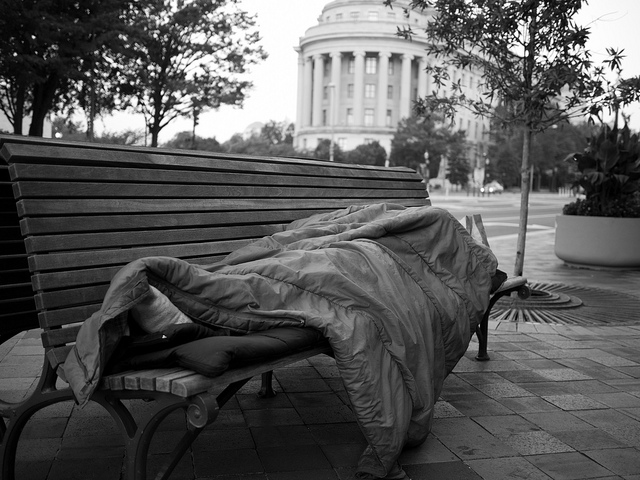
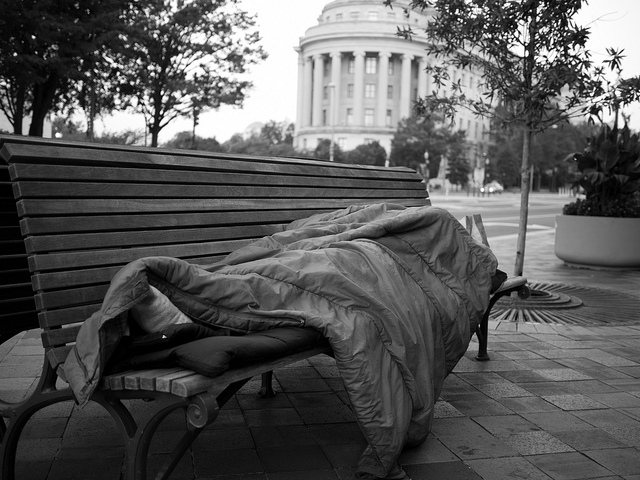
 Photo by Devin Smith.
Mayor Vince Gray will ask the Council for the ability to provide “provisional placement” for homeless families seeking shelter, meaning the city will have 14 days to place them with friends or family if possible.
The strongest blowback to this proposed idea came from Washington Post columnist Petula Dvorak, who urged the Council to reject the idea.
Has he ever hung out in the depressing lobby of D.C. General Hospital at night, when an exhausted mother is left at the curb, plastic garbage bags full of her life’s possessions, her toddler slumped over, having cried himself to sleep?
She’ll get turned away by the guards, then she’ll probably grab her child, go sit on the curb and cry.
If she had any safe place to go, a grandma’s house with a soft bed or a kind friend’s apartment with a pullout couch, why on earth would she show up at D.C. General? In most cases, believing she has alternatives is fiction.
The Washington Legal Clinic for the Homeless also rejects this plan, which Gray also brought to the Council last year, saying “it would have hurt rather than helped homeless families.”
Alongside other advocates, providers, and community members, we voiced our strong opposition to the passage of that measure. Simplified, the plan was fraught with problems – it proposed a way for getting families out of shelter without considering where these families would end up once they left; it denied families a right to return to shelter if the temporary placements fell through or were found to be unsafe; and it failed to protect families’ constitutional due process rights.
The Washington Legal Clinic also contends “the crisis isn’t that too many families are in DC’s shelters; the crisis is that so many families need shelter.”
The D.C. Fiscal Policy Institute sees positives with some parts of the plan, including hiring more staff for the rapid re-housing program, but took issue with the focus on provisional placement.
D.C. would provide a family with shelter, and then have up to 14 days to look for an alternative living situation – such as with a friend or relative. If an alternative is found the family would have to leave shelter. While helping families explore all options to avoid emergency shelter makes sense, the mayor’s proposal is so aggressive in keeping people from entering shelter that it would leave many vulnerable families in unsafe and unstable situations.
“Altogether, the mayor’s provisional placement plan appears primarily to be an effort to keep the shelter population down rather than an effort to help homeless families achieve stability,” the D.C. Fiscal Policy writes.
In an interview yesterday, Gray said the plan would not be “putting people out,” but providing resources to allow them to “reconnect with where they’ve been.” He’s also asking landlords with available units to contact The Community Partnership for the Prevention of Homelessness.