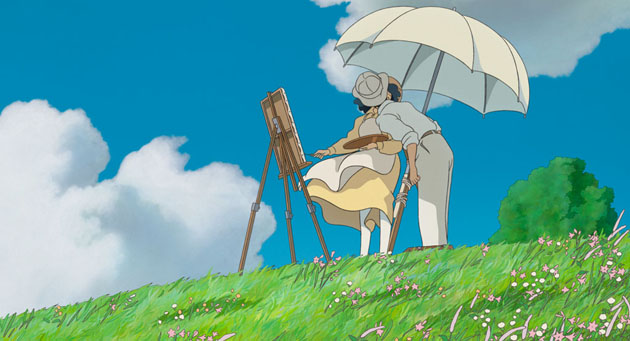
 (DIsney)
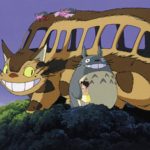
The animated features of director Hayao Miyazaki have introduced fantastical characters to moviegoers—from prowling cat buses and flying pigs to the goldfish who wanted to be a girl. Last year, the 72-year old director announced that his latest film, The Wind Rises, will be his last.
In a career defined by magical transformations, the worldly concerns of Miyazaki’s valedictory film may seem a departure, but this gorgeously animated film reaches the heights of fancy and flight viewers have come to expect from the director. And its themes are of a piece with the rest of his work, though its transformations are not from fish to human or from feline to public transit. The Wind Rises describes a transformation as basic as it is complex: The creative powers of art and imagination, the heights that the mind can reach, and the bitter reality that can send us tumbling to the ground.
Imagination transforms the world inside our heads, but despite our best efforts, the same gift of imagination that brings joy can bring horror. This is the undercurrent of The Wind Rises, which tells the story of Jiro Horikoshi, who designed the Japanese Zero fighter, an aircraft used at Pearl Harbor and other air attacks.
The film opens with a boy’s dream of flight, a sequence that acts as an overture to introduce the film’s themes and sum up the director’s concerns. Jiro’s subconscious sends him climbing to his rooftop into a beautiful single-passenger airplane. The boy revels in the physical thrill and visual beauty of that which birds must see. Not all is idyllic, however; his craft soars over a Japanese countryside ominously peppered with smokestacks, as his world is in transition from agriculture to industry. If his streamlined plane shows the grace and serenity of flight, he soon meets its dark underbelly: A nightmarish warship.
The subject of the film has caused some controversy, but Miyazaki does not glorify war or pardon violence. The director tells the same story he’s told his entire career: Of transformation. This time, from an idealistic dreamer to an artist whose good ideas are used for evil.
We see young Jiro as a gentle, altruistic soul. He sticks up for the bullied, he helps an injured young woman off a train after an earthquake, he offers food to poor children. In Jiro’s dreams of flight, he imagines meeting his hero, Italian aeronautical designer Caproni, and even in his dreams, his hoped-for mentor warns him that his obsession with flight can take him places he’d rather not go. Heroics are ultimately out of Jiro’s control. The wind rises and carries life, but it also brings death and destruction. Miyazaki’s film seems to look back on his own creative career as that of a man whose ideals were compromised. This is not a cartoon for children, but a vision both beautiful and horrific of the promise and perils of art.
Landmark’s Bethesda Row is screening both the original Japanese version of The Wind Rises, which is the version I saw; and an English version starring the voice talents of Joseph Gordon-Levitt, Emily Blunt, Martin Short, and Werner Herzog. That’s right, Werner Herzog. It is an insignificant bullet of a part for the German director, but it’s enough to make me consider foregoing my usual avoidance of dubbed Miyazaki.
—
The Wind Rises
Written and directed by Hayao Miyazaki
Rated PG-13 for some disturbing images and smoking
Running time 126 minutes
Opens today at Landmark Bethesda Row.