 Shutterstock.
By DCist contributor Jonathan Neeley
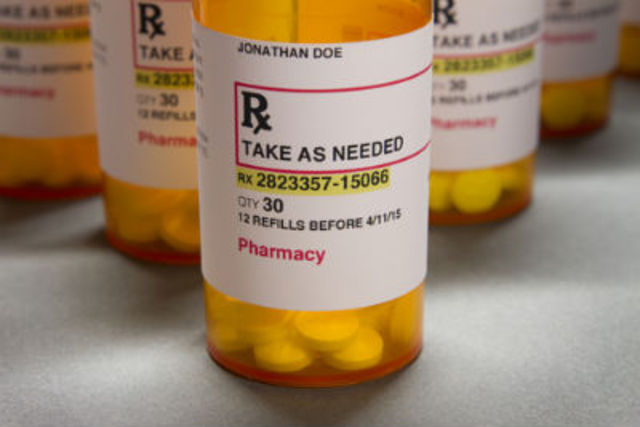
In an act seen by many as a “no brainer”, the D.C. Council earlier this month legalized expedited partner therapy, a practice that allows doctors to treat the sex partners of patients diagnosed with certain sexually transmitted infections by providing either prescriptions or medicines that the patient can take home to their partner without that person needing to come in for an evaluation.
While EPT was never illegal in D.C., a lack of explicit legality exposed doctors who used the practice to legal risk. Introduced by Councilmembers David Grosso (I-At Large), Anita Bonds (D-At Large), and Tommy Wells (D-Ward 6), and co-sponsored by six others, the Expedited Partner Therapy Act of 2013 will fully allow providers in the District to treat both infected patients and their partners, who are also likely to be infected. In taking this step, the District joins 35 states, plus the city of Baltimore, as locations where expedited partner therapy is legal.
“We’re very excited that it passed,” Christina Henderson, Grosso’s deputy chief of staff, said. “D.C. has a very high rate of STIs—not just initial infections but a high reinfection rate, particularly among our teen and women of color populations. This provides physicians in the District with another tool to help combat those increasing rates.”
According to the D.C. Committee on Health’s report on the bill, chlamydia and gonorrhea diagnoses rose a respective 18 and 22 percent from 2010 to 2011, and 71 percent of chlamydia cases and 62 percent of gonorrhea cases occur in people between ages 15 and 24. At the bill’s October 30 hearing, Hilary Wolf, an assistant professor of pediatrics at Georgetown, cited a 12-month chlamydia reinfection rate of 26 percent “often due to an untreated male sexual partner,” while Adam Tenner, the executive director of Metro TeenAIDS, noted “the most recent 2011 data show that chlamydia rates for teens are three times the national average and our gonorrhea rates are five times the national average.”
Executive witness Michael Kharfen, an interim senior deputy director for the Department of Health’s HIV/AIDS, Hepatitis, STD, and TB Administration, said the rate of STIs in D.C. has reached the point where prescribing medication without first examining patients—a practice viewed as acceptable in cases of emergencies and epidemics—is justifiable.
Chlamydia and gonorrhea can cause complications with pregnancy, increase the chance of infertility, and make those who are infected more susceptible HIV infection. Infection rates are highest in minority and low-income communities—groups that also have the most barriers to receiving treatment, like a lack of access to transportation or insufficient medical insurance. EPT is a way to reach those who are most in need of treatment, supporters say.
EPT has been authorized for use in California since 2001, and the Center for Disease Control began recommending that health departments use it in 2005. According to the National Coalition of STD Directors, U.S. taxpayers spend $850 million annually to fight chlamydia and gonorrhea— a cost that the use of EPT can help drive down. Combine this with how easy it is to treat chlamydia, gonorrhea, and “trich,” as it is known— often it’s just a single pill— and it’s evident that EPT’s legalization was long overdue.
Still, EPT remains prohibited or only “potentially allowable” in 15 states for reasons that often stem from lawmakers either not knowing about the issue altogether or being misinformed. Rep. Mary Lou Marzian (D-Louisville), the sponsor of the Kentucky EPT bill that has passed through the state House and is awaiting vote in the Senate, said that she only recently learned what EPT even was and that anything pertaining to sex and prescription drugs, let alone both, was bound to draw political scrutiny. In Michigan, where there is also a bill in front of the Senate, Health Policy Committee Chair Jim Marleau (R- Lake Orion) has objected to the bill because health officials in his home county worry that EPT could promote drug-resistant gonorrhea. The CDC’s 2013 Antibiotic Resistance Threat Report, however, made it clear that EPT is an effective way of fighting drug resistance because it keeps infection rates down.
Here in the District, Councilmember Yvette Alexander (D-Ward 7) — also the chair of the Committee on Health — raised questions before the final vote about whether EPT legalization would lead to more instances of sexually transmitted diseases going unreported. Her concerns led to additional language that requires health providers to report prescriptions written for both index patients and partners to the Department of Health.
With EPT having long-established credibility as a medical practice yet not fully legal in D.C., many doctors found loopholes to deliver care to their infected patients’ partners. “[Some doctors] candidly explained that they have bypassed the District’s lack of EPT laws by writing prescriptions to patients that contained two doses and prepared to justify it as a preventative measure ‘just in case the patient got sick and vomited’ while taking the first dose,” the Committee on Health’s report stated.
D.C.’s EPT bill was recently approved by Mayor Vince Gray’s office and is now subject to Congress’ 30-day review period. Henderson said that she expects the bill to become law in April or May.
“It’s a no brainer,” said Kentucky’s Marzian. “It saves money, it stops infection, it prevents infertility.”